
A déjà vu battle over districts
A partisan battle over congressional districts developed last year. In August, Texas’ Republican Gov. Greg Abbott, following pressure from President Donald Trump, approved a new map designed to give his party an opportunity to gain five House seats. Other Republican-led states — including Alabama, Florida, Louisiana, North Carolina, Ohio, Tennessee and Utah — have followed suit.
That led to states led by Democrats to retaliate, including California, New York and Virginia, though New York and Virginia’s efforts were quashed by courts.
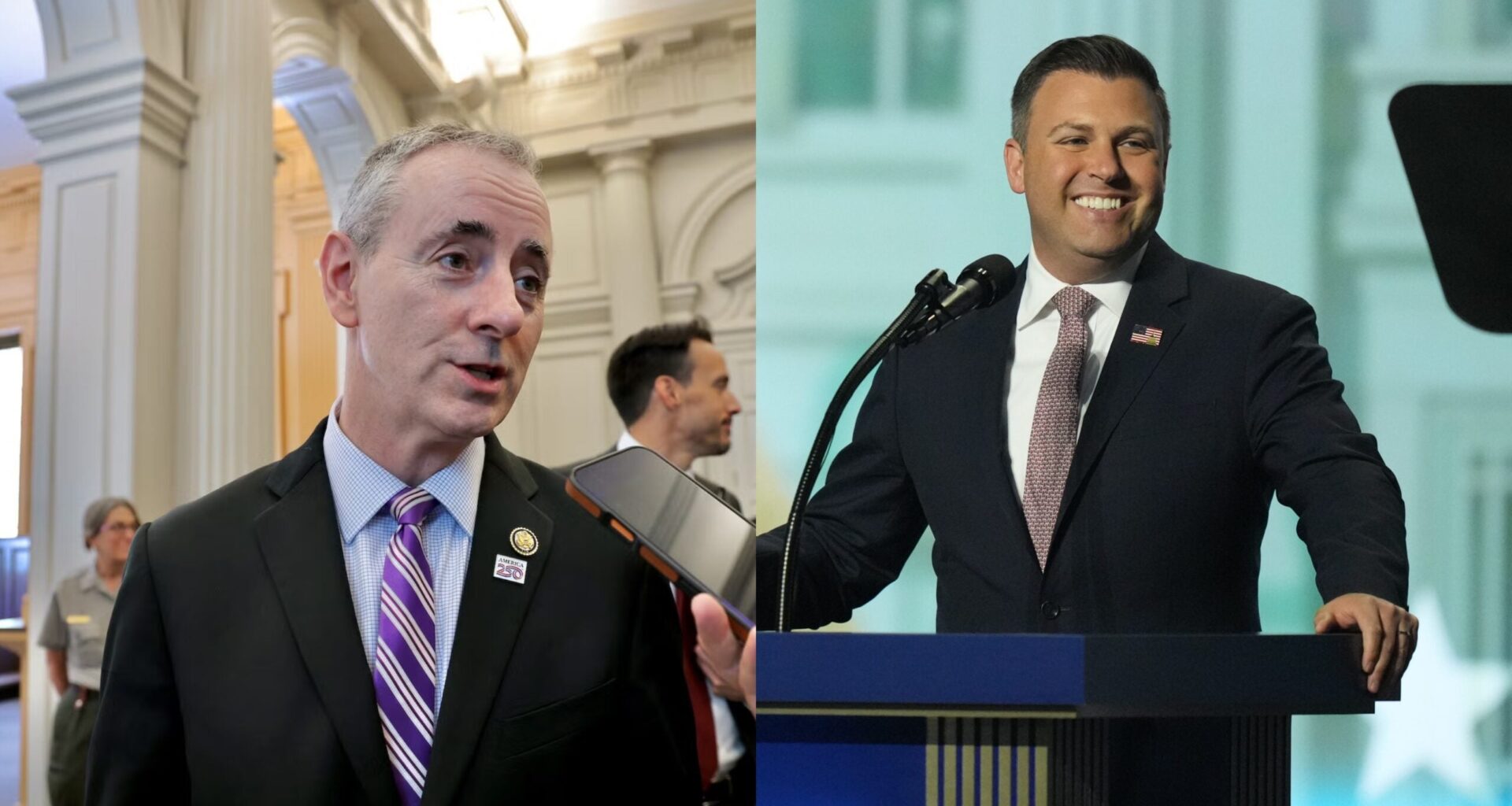
At the press conference, Mackenzie, who is still in his first term, said that “pragmatic solutions” such as the anti-gerrymandering proposal require bipartisanship.
“The American people deserve confidence that our elections are conducted on an even playing field and the congressional districts are drawn to represent communities, not to benefit individuals and their parties,” he said.
He also cited an instance when Pennsylvania congressional district maps drawn by a Republican-led legislature in 2011 were challenged and the state Supreme Court annulled them in 2018.
Mackenzie accused the state Supreme Court of “stepping in midterm,” saying they “unilaterally redrew maps and it threw our elections and the electoral process for voters, candidates and others into total chaos.”
Although the state was nearly evenly divided between Democrats and Republicans, under the map, Republicans won 13 out of 18 of districts in the commonwealth. Democrats and voting rights advocates challenged the old map, calling it the “worst” gerrymandered in the nation as they took their claims to state and federal courts.
The state Supreme Court agreed, ruling just days after hearing oral arguments in the case, that the Republican map “clearly, plainly and palpably” violated the state constitution. The U.S. Supreme Court declined a Republican appeal to overrule the state court.