
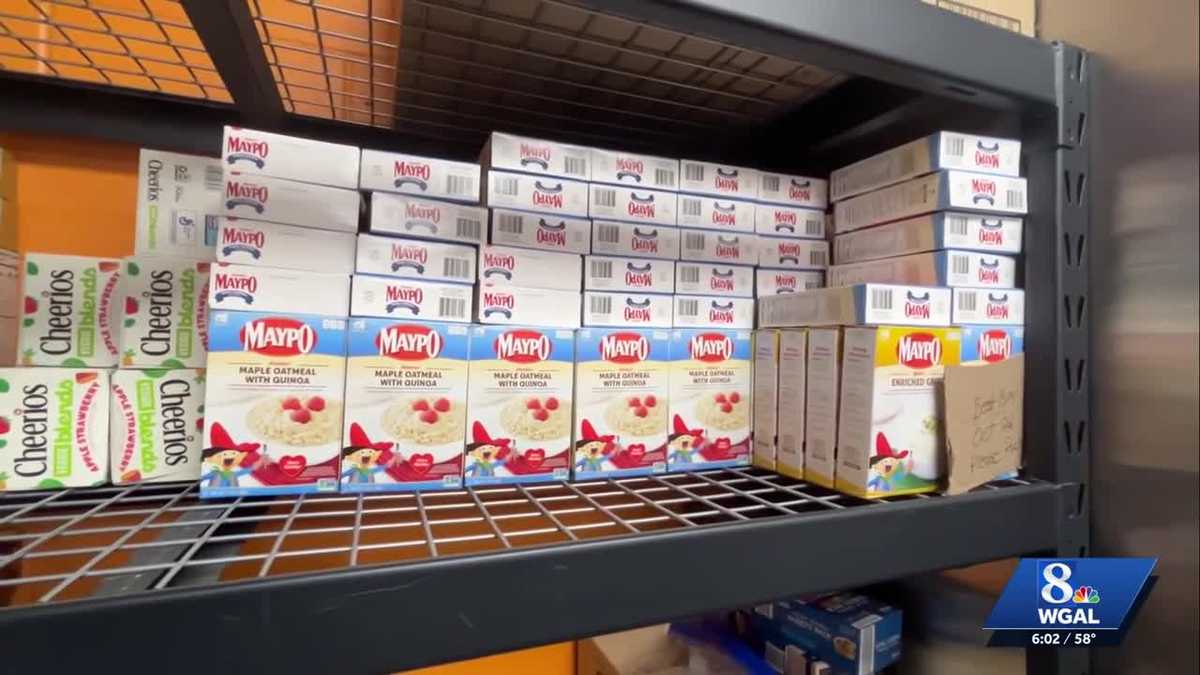
Pennsylvania food pantries face rising demand, shrinking resources, report says
 HARRISBURG, Pa. —
Food insecurity in Pennsylvania has increased sharply since 2021, leaving food banks and pantries struggling to meet growing demand with fewer resources, according to a new report.
Food insecurity rises 44% across Pennsylvania
The Food Insecurity in Pennsylvania report found a 44% increase in food insecurity since 2021. An estimated 1 in 7 Pennsylvania residents experienced food insecurity in 2024, meaning they did not always know where their next meal would come from.
Deidre Lenker, executive director of the Harrisburg Area Food Pantry, said the report’s findings were not surprising.
“We see new people every day,” Lenker said. “We’re registering people, and we can see that they’ve never even been here before. Fifteen households in a day could be new to receiving these services. So, that’s telling us that needs are changing all the time, and obviously not in a positive way.”
SNAP participation and federal food supplies decline
Although the federal government has discontinued its household food security reports, Feeding Pennsylvania has continued tracking other indicators of need, according to Julie Bancroft of Feeding Pennsylvania.
Bancroft said the organization recorded a decline of more than 296,000 Pennsylvania residents receiving benefits through the Supplemental Nutrition Assistance Program, commonly known as SNAP. Federal food distributions also fell by 54% over the past two budget years, representing a loss of about 37.5 million pounds of food.
“Food banks are trying to do more with less to serve those neighbors who are also feeling the pinch,” Bancroft said.
Rising fuel costs strain food bank resources
Food banks are also facing higher operating costs. Shila Ulrich, CEO of the Central Pennsylvania Food Bank, said rising diesel prices have made it more expensive to deliver food to pantries and other programs across the region.
“We fortunately have budgeted for a high diesel price,” Ulrich said. “We’re hoping it doesn’t go much further. But we do have 20 trucks online every day making deliveries to our 1,130 agency partners and programs. So, it’s certainly putting a little dent in our pocket.”
Ulrich said higher fuel costs, combined with fewer pounds of food available for distribution, are stretching the organization’s resources.
She encouraged state and federal lawmakers to examine ways to provide additional support.