
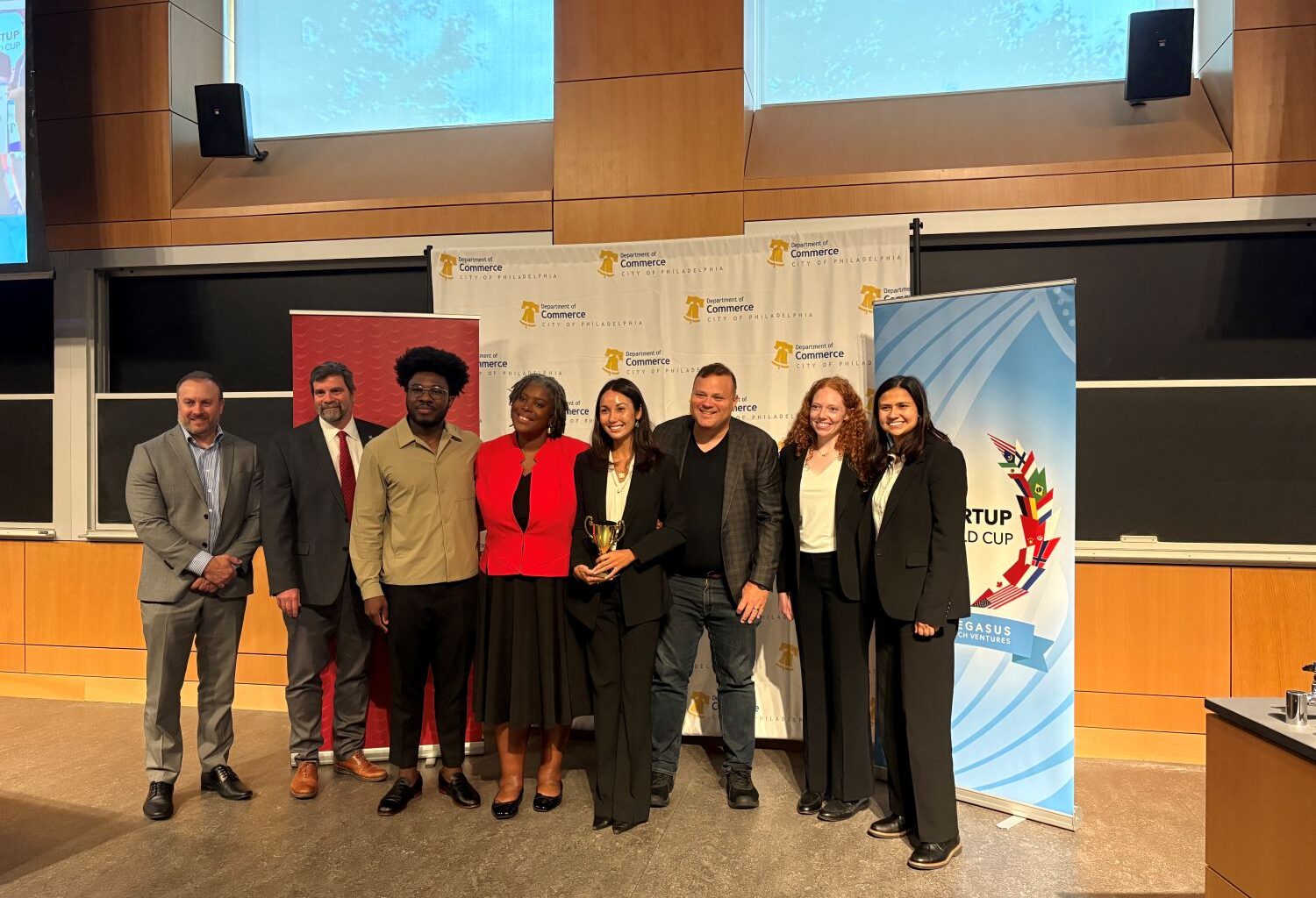
After moving her startup to Philly for better opportunities, founder Celine King will now get a chance to represent the city on a world stage.
Her company GreenIRR, a platform that tracks emissions, fuel consumption and vehicle performance in the trucking industry, won this year’s Philadelphia Startup World Cup last Friday.
“Philly does have some … badass tech, and is the real deal.”
Celine King, greenirr
King plans to put the $25,000 grand prize toward the company’s European patent and will attend the global Startup World Cup competition in November.
“It’s an honor to represent not just the Philly tech scene,” King said, “but the Philly startup scene on a global stage and show them that Philly does have some … badass tech, and is the real deal.”
Originally from Philly, King recently moved her company here from New York. Being in a bigger ecosystem meant there were more opportunities, but it also felt hypercompetitive, she said. She found herself fighting against more mature startups for the same wins, and it didn’t feel beneficial to the company.
Since moving back, King has been able to build consistent business relationships that helped spur growth, she said.
“We’re able to work more closely with the same people, seeing the same faces,” King said. “I feel like everyone has a vested interest geographically, which is something that I’ve never experienced.”
And these efforts have proven successful this year. The company recently closed a $2 million round and won PACT’s Startup Sprint pitch competition during Philly Tech Week.
Over the next 18 months, the company will be focused on getting customers to use the technology throughout their supply chain, proving that it works at scale, according to King.
“Even on the business side, our traction’s really taking off, and it feels really good,” she said.
A bigger network for Philly’s next generation of startups
2026 is the third consecutive year that Philadelphia has participated in the Startup World Cup program, led by the city’s Department of Commerce.
Sonura, which is creating a beanie for NICU babies that blocks out harsh noises and allows parents to talk to their baby, took home the $10,000 second-place prize.
Third place and $5,000 went to Mexar, a medtech startup developing a wearable device that lowers core temperature, with the goal of preventing heat-related deaths.
Six additional companies pitched:
Siah Labs’ platform allows business owners to track institutional knowledge and create a succession plan.
Animal behavior data platform AgriGates is working to provide insights to farmers.
Earable Intelligence developed a wearable system to track seizure activity and produce reports for healthcare providers.
FlowEHR is an electronic health record system specifically for the dermatology space that helps automate providers’ tasks.
Snaprefund’s platform helps insurance workers pay insurance claims digitally.
Phyll is collecting footage from existing cameras to identify infrastructure repairs in municipalities.
Going into this year’s program, the goal was to provide more growth opportunities to the top 10 companies, Tempest Carter, director of strategic technology initiatives for the city’s Department of Commerce, told Technical.ly.
Carter put together a stakeholder dinner for the founders, judges, local investors and other tech ecosystem leaders before the pitch competition, to get the founders more face time with people who could help their startups, she said.
“They were able to share their story, engage with each other, and figure out who in that room could really help them grow without the hot lights on them,” Carter said.
She also hosted an alumni breakfast for past pitch competition participants with the goal of putting them in front of Ben Franklin Technology Partners again, now that they’ve made progress, she said. In the future, she’d like to include other investment firms as well.
For the next competition, Carter would like to bring in more stakeholders from different sectors so the founders can connect with potential partners without having to look outside the region.
Companies that have participated in the pitch competition in past years have gone on to see success. FSH Tech, which pitched in the first year, just raised $20 million. Carbon Reform, which won the first year, raised $5.5 million after pitching at the global competition.
“Oftentimes you’ll hear, Philly doesn’t have the talent, Philly doesn’t have the type of founder that makes unicorns. There’s no capital here,” Carter said. “Events like this shatter those notions.”
This story is made possible thanks to support from Ben Franklin Technology Partners of Southeastern Pennsylvania, a nonprofit that leads the Philadelphia region’s equitable economic growth by nurturing and investing in innovative, early-stage companies, and through purposeful involvement in regional and national initiatives. All stories are independently reported, with no partner review.