
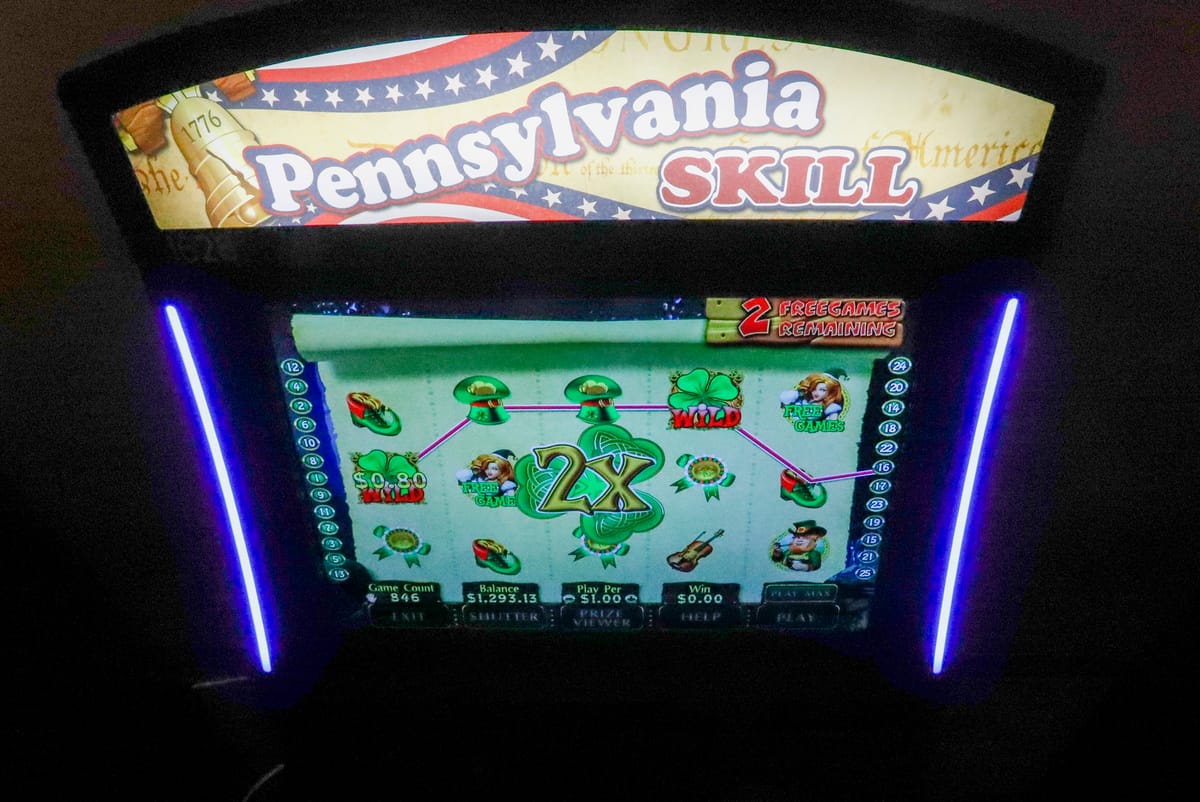
BETHLEHEM, Pa. – For one Pennsylvania bar owner, skill games have been more than a source of entertainment. They’ve helped keep a small business afloat in the years since the COVID-19 pandemic changed how people spend their time and money.
Now, with a state Supreme Court ruling putting the machines’ future in jeopardy and state police warning they could begin seizing them as soon as Oct. 14, the bar owner fears some small establishments could close if they lose that revenue.
“Without these games many small businesses will be gone,” the bar owner wrote in an email to Lehigh Valley Public Media.
They did not provide their name, reflecting a concern shared by nearly a dozen local businesses we reached out to. None agreed to speak on the record, with many highly reluctant to have their names or business names published.
The owner believes lawmakers should regulate skill games rather than eliminate them, suggesting limits on the number of machines, wagers and jackpots, along with age restrictions and a 15% tax.
The debate comes as Pennsylvania businesses face an uncertain future for the machines, which have become a lifeline for some bars, taverns, restaurants, convenience stores, social halls, private clubs and other establishments across the state.
A deadline with real consequences
In June, the Pennsylvania Supreme Court ruled that skill games meet the definition of slot machines under the state’s Gaming Act. The court stayed its ruling for 120 days to give lawmakers time to address the issue.
That window is closing rapidly.
The Pennsylvania State Police have warned establishments to remove the machines by Oct. 13. Beginning the next day, police could seize machines and pursue criminal charges. Simply unplugging or disabling the machines will not satisfy the state’s compliance expectations, according to guidance from state police and the Pennsylvania Gaming Control Board.
The ruling could affect about 70,000 machines statewide, according to Spotlight PA.
For businesses that have come to rely on skill games revenue, the deadline raises questions about how they will make up the difference once the machines are removed.
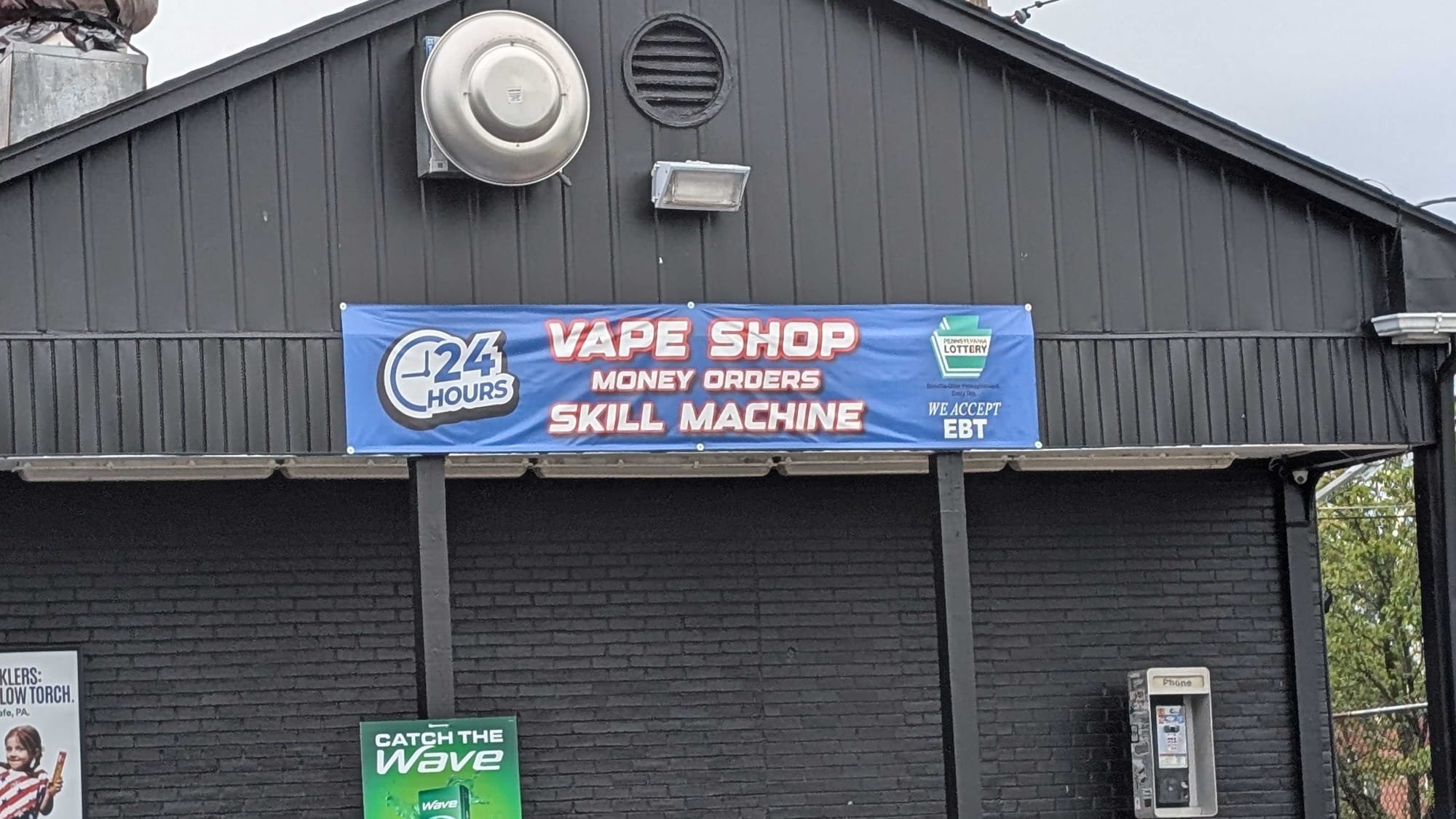 A banner at a gas station on Union Blvd in Allentown advertises a skill machine inside. (Stephanie Sigafoos/Lehigh Valley Public Media) Lawmakers push for more time
Some lawmakers have proposed deadline extensions, but none have been formally submitted for introduction.
In a memo circulated Sept. 16, Rep. Manuel Guzman, D-Berks, proposed extending the deadline through April 13, 2027.
“The transition would provide certainty for small businesses, organizations, employees, distributors, manufacturers, and others affected by the current legal landscape, while allowing additional time to address these complex issues,” Guzman wrote, emphasizing the legislation “would not predetermine the tax rate, regulatory structure, revenue distribution, or other elements of the final framework.”
Rep. Brad Roae, R-Crawford/Erie, also has introduced a similar proposal.
The state legislature remains divided over skill games regulations, including tax rates, limits on the number of machines and how revenue should be used.
With lawmakers scheduled to be in session only a handful of days before the mid-October deadline, the prospect of legislative action looks highly unlikely.
Businesses organize
The fight over skill games also is prompting some business owners to organize.
Joe Magee, a bar owner with multiple locations in Delaware County, said in an email that a suspension of skill games would dramatically affect his businesses.
Magee is hosting a skill games informational session from 4-6 p.m. Oct. 1 at one of his locations in Prospect Park (1110 Lincoln Ave). The event, promoted by the Pennsylvania Taverns & Players Association, is intended to inform attendees about proposed legislation to regulate skill games before the Oct. 13 deadline.
The event flyer lists support for small businesses, veterans organizations and volunteer fire departments among the reasons to support skill games.
For some small businesses, skill games provide revenue that owners say helps them keep prices down, cover expenses and support their communities.
Kristopher Allan of RoboVending said skill games make up a small portion of his company’s business. But losing the machines could have a significant effect on some of the establishments that host them, he said.
Allan said his locally-based company may explore alternatives, including claw machines and other revenue-sharing options. Still, he worries that some mom-and-pop businesses could close if they lose the income.
Ashley Campbell, owner of the Freeburg Hotel, about two hours west of the Lehigh Valley, said skill game revenue helps her control food prices for customers.
“With skills money, I can make my menu affordable for families. You can’t find a deal like that,” Campbell said.
She pointed to the hotel’s $2 Taco Tuesday and $10 fresh half-pound burgers with fries on Wednesdays.
Campbell said the revenue can be especially important when business slows down.
“In your slow months in the summers, that keeps bars open when there are only 4 or 5 people sitting in the bar,” she said.
She also said businesses use the money to support their communities, including donations to fire victims, cancer patients and schools.
Readers divided
Facebook comments from readers reflected a range of views on the machines.
Some said skill games help sustain local businesses and fund community programs, including veterans’ organizations. One commenter who identified himself as a Veterans of Foreign Wars commander said revenue from the machines supports veterans in need, scholarships and other community causes.
Others questioned whether businesses should rely on gambling revenue or argued that machines should be limited to bars and social clubs rather than convenience stores.
The comments are not a scientific survey of public opinion, but they illustrate the competing views surrounding the machines and their role in local communities.
What happens next?
As the Oct. 13 removal deadline approaches, businesses that rely on skill games are waiting to see whether lawmakers will act or enforcement will begin as state police have warned.
For the anonymous bar owner, the concern is not just losing entertainment; the fear is losing revenue that has helped keep a small business operating.
“Without these games, many small businesses will be gone,” he said.