
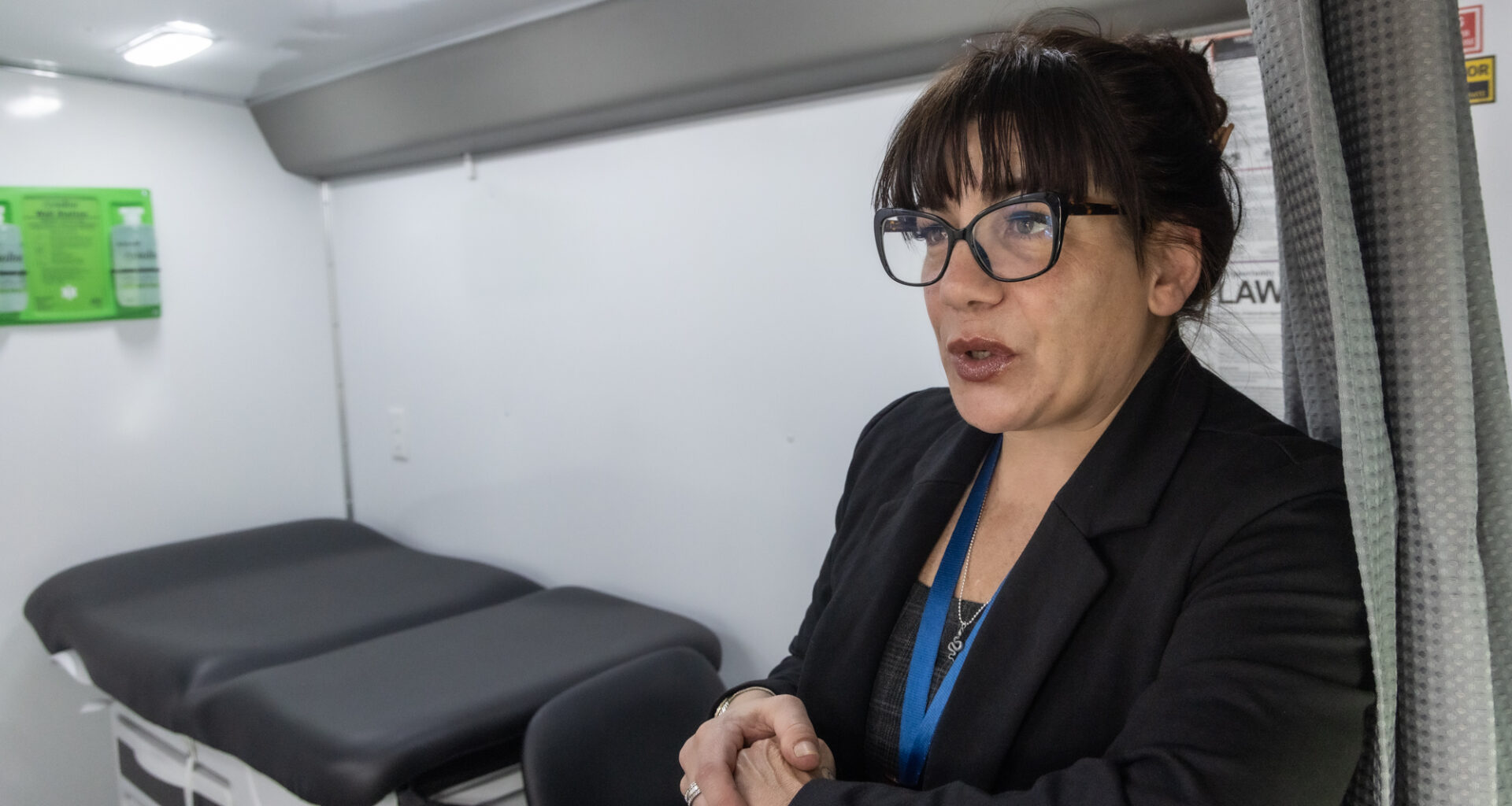
The exams and treatment intake process is thorough but done as quickly as possible, Marino said, because people with opioid use disorder can go into withdrawal rapidly.
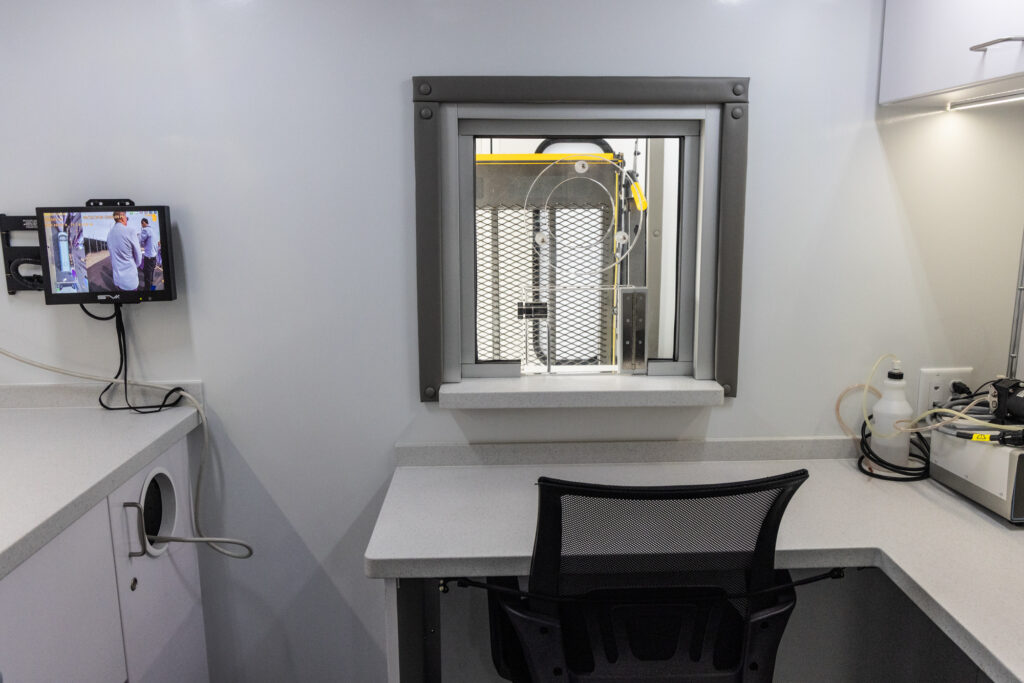 Nurses administer methadone behind a window in Merakey’s Mobile Methadone Unit, which has security cameras and officers. (Kimberly Paynter/WHYY)
It addresses one of the most common challenges people in active addiction have when seeking treatment at brick-and-mortar clinics, which can be located far away from the local street drug supply and have long wait times.
This can trigger painful withdrawal symptoms, especially in people who are frequently using street drugs containing fentanyl, a highly potent synthetic opioid, and medetomidine, a powerful veterinary sedative.
“And it depends on the patient, but a lot of them are sick,” Marino said. “So, we’re getting them on the methadone quickly. We’re not having them sit for hours and things that a lot of people will associate with methadone intake.”
Meanwhile, a team of clinicians, counselors and peer recovery support specialists are working to address a person’s other concerns and needs.
“We’re meeting their housing needs, their hygiene needs, finding them shelters, some light wound care, things like that,” she said.
After about a two-week period of someone coming to the mobile methadone van in Kensington, Merakey staff work to transition people to long-term outpatient programs and brick-and-mortar methadone clinics, but only when they’re ready, Marino said.
“If a person is medicating consistently, their head starts to clear a little, right? And they start to use [street drugs] less. It’s just what naturally starts to happen. They’re getting here a little quicker, more regularly,” she said. “Getting them to the point where they can leave the area for longer periods. Typically, we’re not transferring somebody till we see those types of changes.”
Methadone isn’t for everyone, Marino said. But she’s seen it help many people move away from street drugs and enter addiction recovery. The mobile van just provides an easier way for more people to get that opportunity.
“I think this pathway is super important for high-risk patients when they’re not ready to be overwhelmed with treatment or therapy,” she said. “And when we’re transitioning them later, we’re putting them in an environment that they’re more prepared for.”
Early success with mobile methadone delivery
Startup funding for the mobile methadone van came from Philadelphia’s share of settlement money from national lawsuits against drug distributors and manufacturers accused of fueling the opioid addiction epidemic.
Merakey soft-launched the van at the Kensington Wellness Support Center location in October 2025. Between then and this past August, the mobile program has connected 567 people to methadone medication, program leaders said. About 90% of mobile patients were homeless at the time of treatment, they added.
While the van is currently located in Kensington to meet a high demand for services there, Vigderman said the unit is intended to serve the whole city and may add other locations in the future.
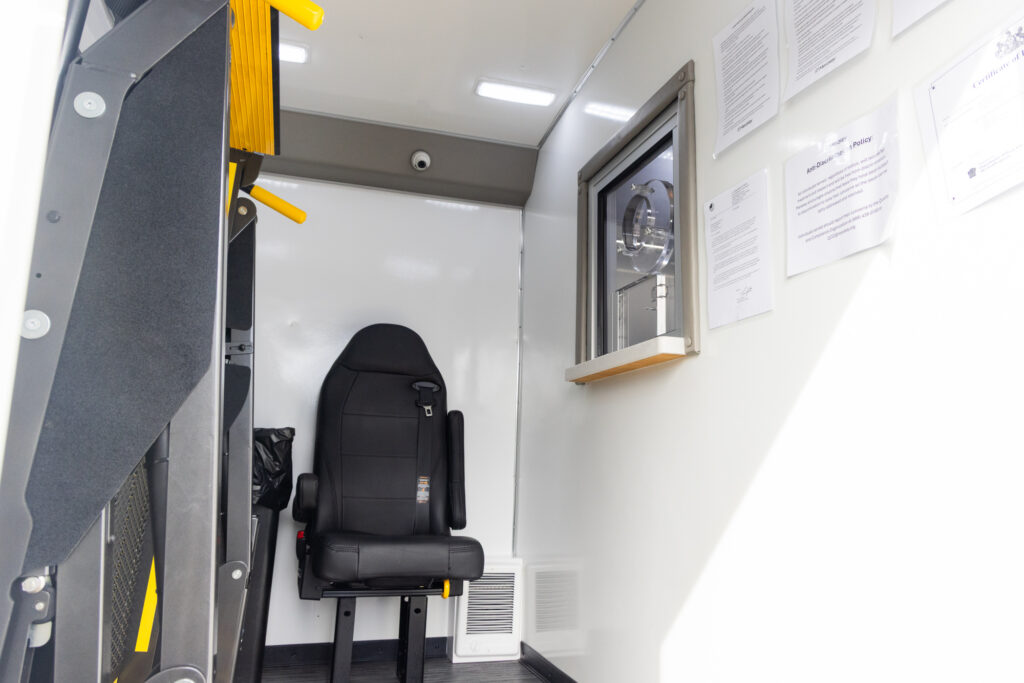 Patients of Merakey’s Mobile Methadone Unit receive treatment through a window from a nurse. (Kimberly Paynter/WHYY)
A mobile treatment delivery method for methadone was a long time coming in Philadelphia, he said, and greatly needed in a city where hundreds of people continue to die from drug overdoses every year.
“What we’re also excited to show is how we envision ourselves continuing to grow. I think that what we’ve been able to do is really just the beginning,” he said. “I really believe that these mobile services we do are necessary in the continuum of Philadelphia’s treatment system as you look at addressing opioid addiction and the epidemic.”