
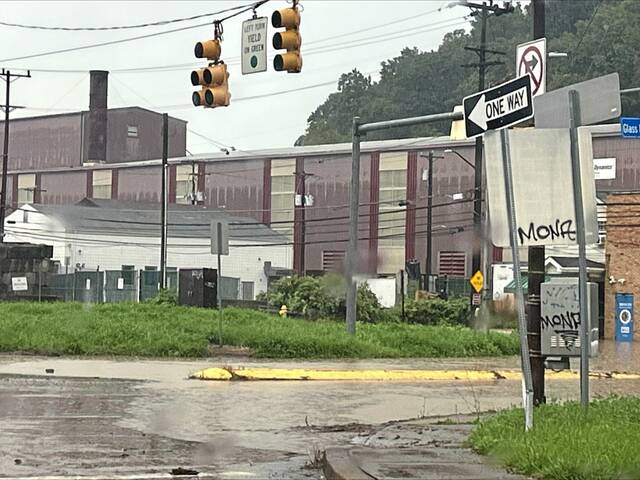
Across Southwestern Pennsylvania, summer weather has hit with a force our region’s aging infrastructure was never built to handle. In recent years, downpours have turned neighborhood streets into torrents, overwhelmed storm basins and triggered destructive hillside landslides that rip out municipal roadways and threaten homes. Hotter summers add another strain: More air-conditioning demand can increase pressure on the electric grid just as extreme rainfall is testing roads, stormwater systems and hillsides.
Even though our region was just inundated with 2.6 to 5 inches of rain on Sept. 3, this is more than a story about Pittsburgh’s famously rainy weather. Climate Central’s analysis of NOAA data found that Pittsburgh’s hourly rainfall intensity increased 28% from 1970 to 2024. In a region of steep hillsides and aging infrastructure, more intense bursts of rain can increase the risk of flash flooding, slope failures and damage to roads and other infrastructure. Many standard homeowners policies exclude landslide and other earth-movement damage, potentially leaving property owners with substantial uninsured losses. Meanwhile, reducing combined-sewer overflows requires major investments. ALCOSAN, the region’s ratepayer-funded wastewater authority, has raised its rates 7% annually from 2022 through 2026 to help finance its Clean Water Plan.
At the same time, our region faces another mounting pressure: an unprecedented boom in power demand. Across the PJM regional electrical grid — which powers Pennsylvania and 12 other states — the rapid expansion of artificial intelligence, massive data center developments and industrial electrification is straining supply. In recent PJM capacity auctions, power market prices spiked to historic highs. Those higher capacity costs can ultimately put upward pressure on electricity bills, making it increasingly important to determine how the costs of serving large new loads are allocated among data centers, utilities and other customers.
How we meet this double challenge — severe weather resilience and surging energy demand — is a central economic and health question for Southwestern Pennsylvania.
Fortunately, Southwestern Pennsylvania is already demonstrating practical clean-energy solutions. At Pittsburgh International Airport, a 20-megawatt
natural-gas generation system is paired with a 3-megawatt solar array on a capped landfill, with plans for another 4.7-megawatt of solar capacity. At Hazelwood Green, the former Mill 19 steel complex has been redeveloped as an advanced manufacturing center with a 2-megawatt rooftop solar array that produces enough electricity to power the facility. Pittsburgh-based Eos Energy Enterprises is manufacturing zinc-based, nonflammable batteries for long-duration energy storage.
These projects show how Southwestern Pennsylvania can use its industrial assets, infrastructure and workforce to provide more “climate-friendly” clean energy, reduce exposure to fossil-fuel price volatility, enable more resilient energy supply and create more clean energy jobs. Turning these opportunities into lasting benefits will require thoughtful public policy and effective oversight.
This is where voters have the power to make a difference. When considering candidates for congressional, state and local office, voters should ask:
• How will you help ensure that our region transitions rapidly to reliable, clean and affordable electricity?
• How will you enforce and, where necessary, strengthen protections to ensure that large new power users — not residential customers — bear the costs of the infrastructure needed to serve them?
• What will you do to help communities prepare for heavier rainfall, flooding, landslides and other climate-related risks to roads, homes and public infrastructure?
Southwestern Pennsylvania helped build America’s industrial economy. Today, we have an opportunity to apply that same ingenuity to the challenges ahead: strengthening our power grid, protecting communities from increasingly costly weather risks and creating new opportunities for investment and jobs. The choices made by public officials now will help determine whether that opportunity becomes a source of greater resilience and prosperity for the region.