
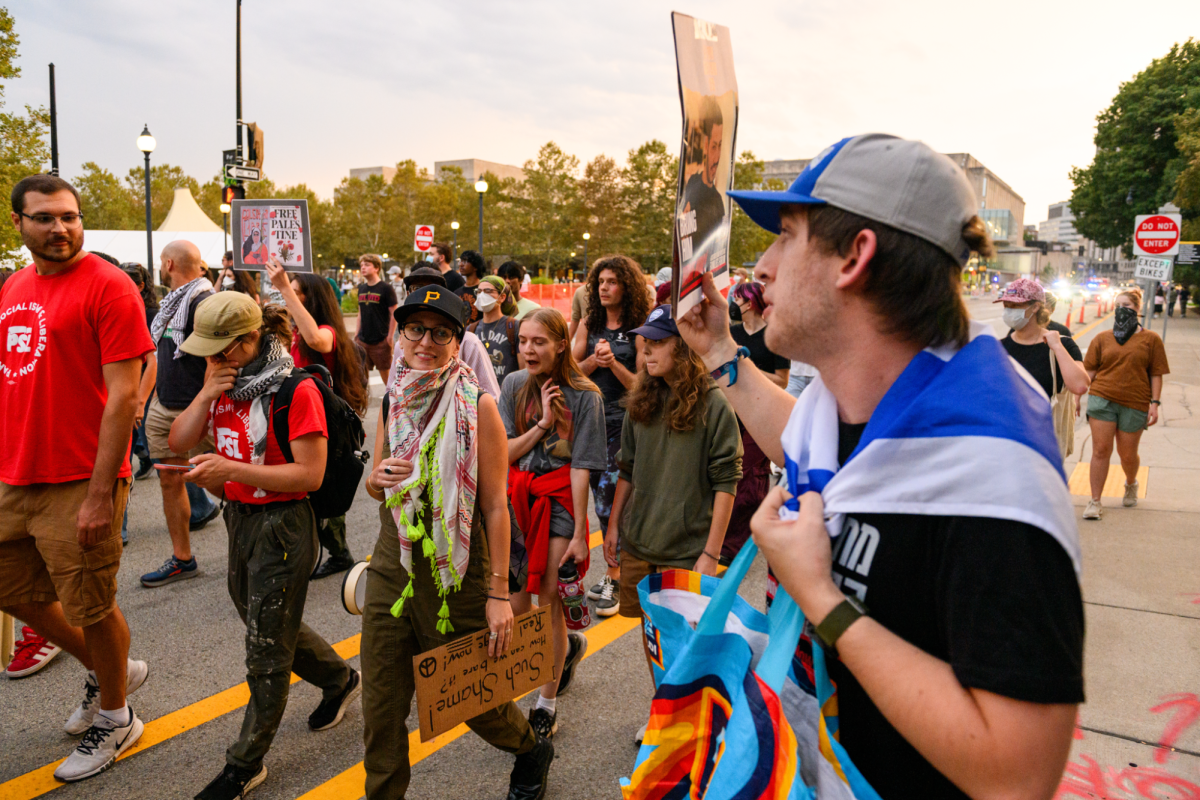
For the fifth consecutive year, Pitt earned an F in the Foundation for Individual Rights and Expressions’s free speech rankings.
FIRE released its 2027 College Free Speech Rankings earlier this month, ranking Pitt at No. 205 out of 261 colleges for free speech nationally. Other higher education institutions in Pennsylvania also received low free speech grades, and Pitt students report feeling mixed about the ranking.
The ranking considers six factoring categories, including comfort expressing ideas, disruptive conduct, openness, self-censorship, administrative support and political tolerance. The overall rating is based on both student survey results and university policy.
The highest grade Pitt received was a C+ in disruptive conduct, which measures how acceptable students think it is to disrupt a campus speaker. Pitt’s lowest rankings were in administrative support, which measures students’ perceptions of whether their university administration supports free speech, and political tolerance. It received failing grades in both.
Pitt’s ranking in how comfortable students feel sharing their views on controversial topics on campus moved up 108 places from the previous year, with the University now landing at No. 142.
On average, the 15 colleges and universities in Pennsylvania evaluated by FIRE received an F as their free speech grade. The national average was a D-.
Asked to comment on the ranking, University spokesperson Meredith Herndon said in an email Pitt is “deeply committed” to affirming free speech on campus and that it has a “strong record of supporting free speech” for students, faculty and staff.
“While we acknowledge there are always opportunities to improve in this ongoing work, we will continue to approach it with steadfast dedication and determination to get it right,” Herndon said.
FIRE also gave Pitt a “yellow-light” for its “Spotlight” rating, which evaluates written university policies regarding student expression. The “yellow-light” rating is the result of having one or more ambiguous policies that could be misused by the university administration.
As for how Pitt students feel about the rankings, it’s a mixed bag.
Eddie Conn, a junior data science major who was not previously aware of the rankings, said he “doesn’t feel great about it,” considering Pitt’s effort to market itself as diverse and inclusive.
However, Conn does not believe that knowing this rating prior to attending Pitt would have stopped him from enrolling.
“I don’t think it would have decided it, but it would definitely be in consideration,” Conn said.
Anders Jacobson, a junior film and media studies and public and professional writing major, said he feels the University adequately addresses free speech, recalling a discussion during his first-year convocation about free speech and diversity on campus.
“The important thing for colleges to do is to give students the tools to speak and express themselves clearly, but respectfully,” Jacobson said. “I think the fact that there are expressions of distaste from students is a sign that free speech is at least alive.”
Fabio Lauriano, a senior biology major, said he would have considered the ranking before attending Pitt.
“If you think the University’s not going to support you and your opinion and you might get in trouble for it, you might not be willing to say what you think,” Lauriano said.
Bryn McGhiey, a first-year law, criminal justice and society student, said she believes college is a time for expanding knowledge and that if Pitt doesn’t allow expression of free speech, it’s “just not good.”
McGhiey said she thinks University administration can make improvements in free speech and provided suggestions.
“[They could] talk about how important it is and maybe encourage students to use their free speech with friendly protests against things that students feel passionate about and to not shut it down,” McGhiey said.