
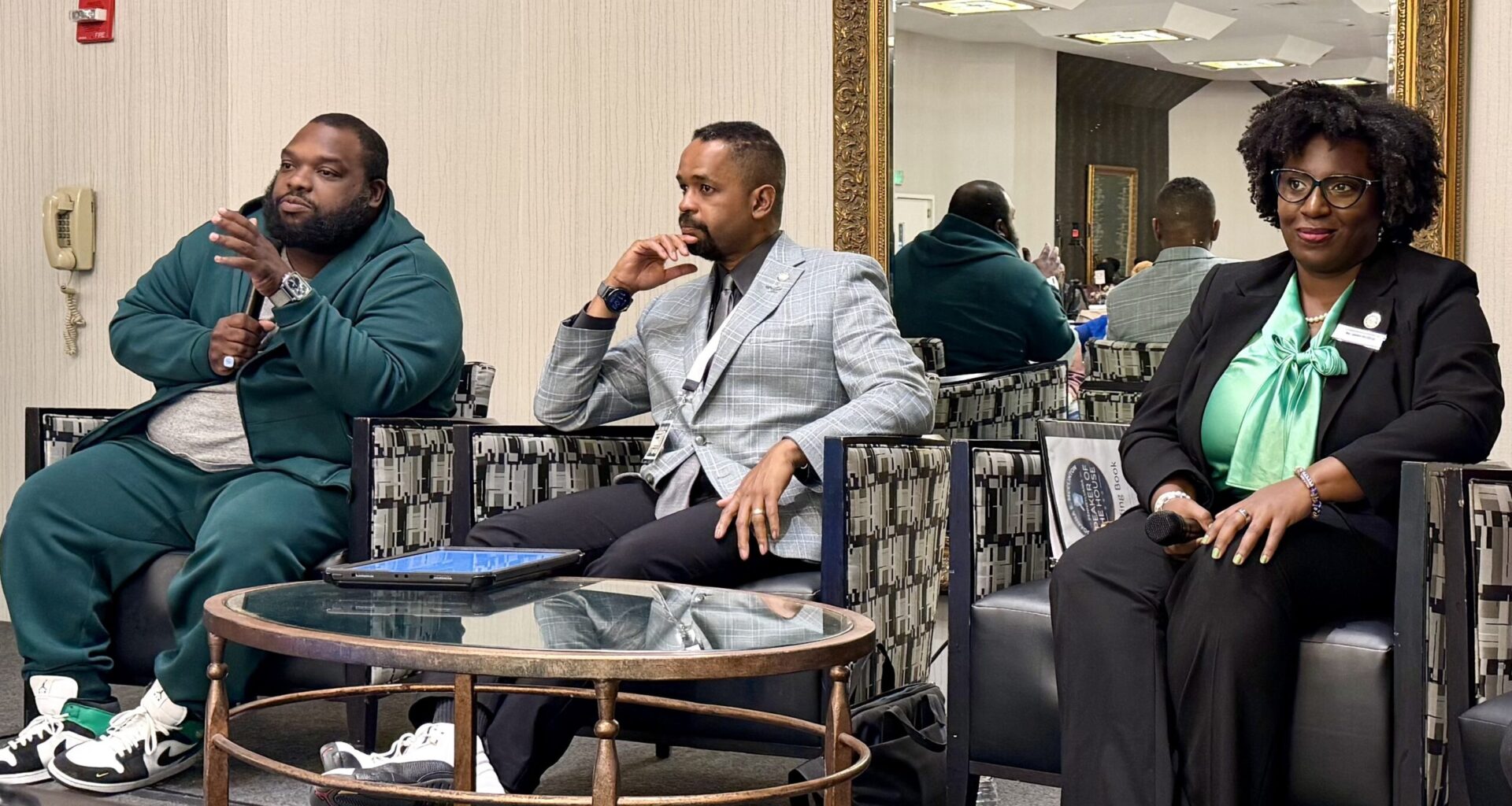
Street said a number of Republican senators already support legalization, but the majority leadership has blocked measures from coming to the floor for a vote. Republican supporters include Sen. Dan Laughlin, R-Erie County, who co-sponsored a bill with Street last year that would allow private dispensaries overseen by a new Cannabis Control Board.
Gov. Josh Shapiro has repeatedly included legal marijuana sales in his budget proposals as a source for new state revenues, but they have been removed during budget negotiations. Street said some Republicans are frustrated by the stalemate and may push the issue when they choose their Senate leadership early next year, regardless of the election outcome.
The tax revenue and economic activity that other states are seeing from recreational marijuana sales have broadened the appeal of legalization, the lawmakers said.
“It is the finances that’s going to finally drive the conversation,” said state Rep. Jordan Harris, D-Philadelphia. “Regardless of how we personally feel, at the end of the day, it’s going to be about the money, and I think that money is going to drive us to actually legalizing adult use very soon in the commonwealth.”
Harris chairs the House Appropriations Committee, which plays a key role in crafting the state budget.
State Rep. Chris Rabb, who is the Democratic nominee for Congress in Pennsylvania’s 3rd Congressional District, said the financial argument could trump what he described as reflexive opposition by some legislators to any bill perceived as beneficial to Philadelphia and Black people.
“It’s not popular in Harrisburg to frame anything as ‘Blackety Black.’ But the basis for this argument is, if you help Ray Ray and them on the corners, you help everybody. There’s a strong economic justification to framing it in that way,” he said.
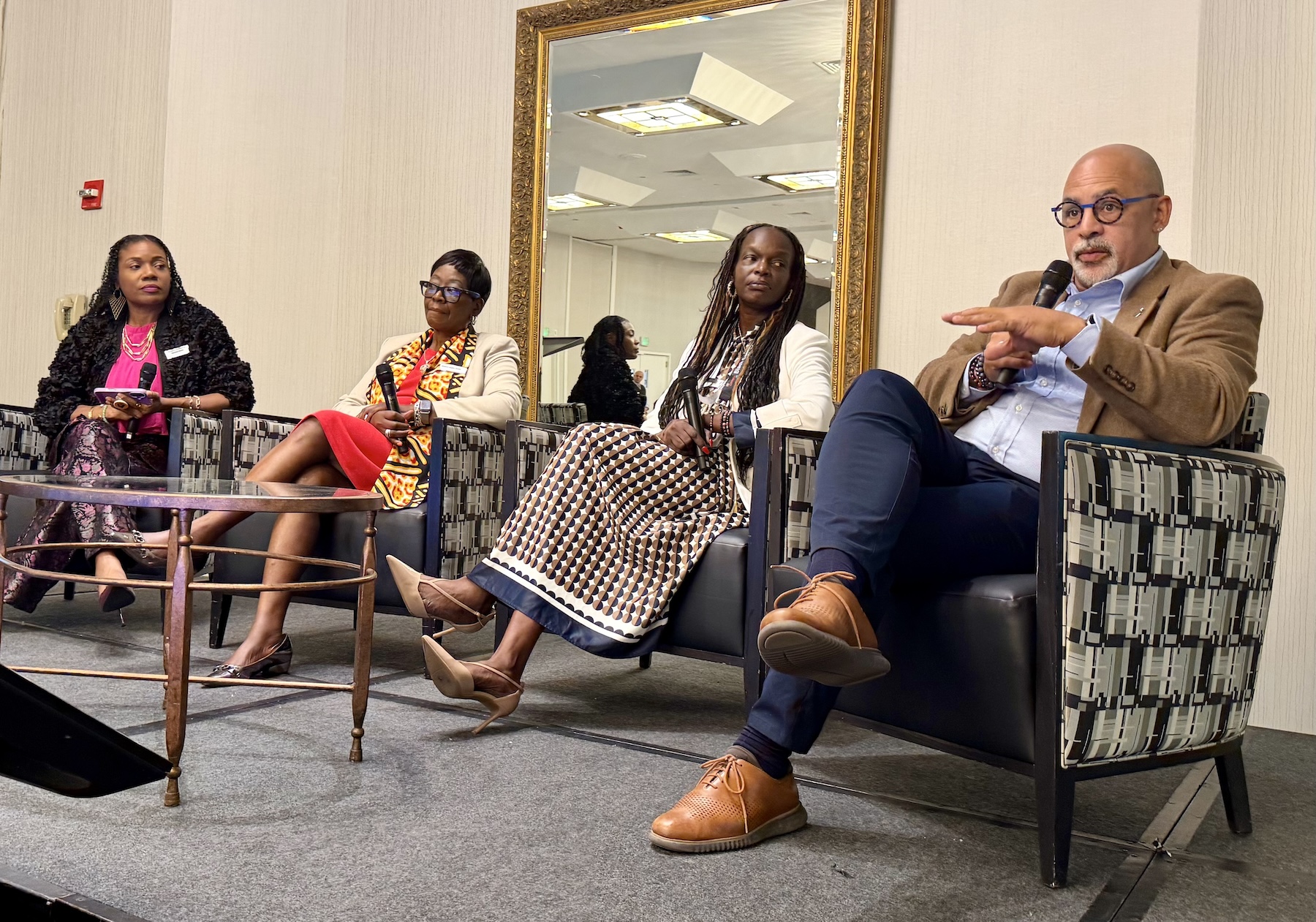 State Rep. Chris Rabb, right, speaks the Cannabis Opportunities Conference in Philadelphia on Friday. Sept. 25, 2026. (Meir Rinde/WHYY)
McClinton and others noted that Pennsylvania has become a virtual “island” with regard to cannabis policy following the legalization of recreational marijuana in Delaware, Maryland, New York, New Jersey and Ohio in recent years. Of the bordering states, only West Virginia has not legalized cannabis for adult use.
However, some speakers at Friday’s event cautioned that legalization is a complex process that does not automatically provide economic opportunities for communities impacted by past drug enforcement or a guaranteed ongoing windfall for a state.
John Kagia, who oversees New York’s 720 dispensaries as executive director of his state’s Office of Cannabis Management, urged Pennsylvania officials to take a go-slow approach.
Policymakers should begin community engagement first, he said, to make sure women, minorities, veterans and people from communities disproportionately affected by the criminal justice system are able to become dispensary licensees. In addition, he advised that the state should minimize the lag time between legalization and the opening of dispensaries, to avoid a surge in illegal non-dispensary sales; and invest in research on use patterns and potential medical benefits.
He also noted that states that were early to legalize the drug, like Colorado, have seen drops in tax revenues as marijuana prices gradually declined over time, and he warned against high expectations for state budget relief.
“While I understand that tax revenue ends up being an animating part of this conversation [as] one of the ways to get conservatives and fiscal conservatives into this, I think there are a lot of other very good reasons to legalize without pinning it on the tax revenue,” he said. “This is a dynamic market, and you don’t want the expectation about tax revenues to meet the realities of program implementation.”