
The Alexis Joy D’Achille Center: A decade after her death, her mission is helping mothers heal
The center is the first of its kind in Western PA to offer this type of maternal mental healthcare
 PITTSBURGH —
It’s been over a decade since Alexis D’Achille died, but her legacy lives on through the Alexis Joy Foundation. Based inside West Penn Hospital, it’s a resource for mothers experiencing perinatal mood and anxiety disorders.
“This isn’t healthcare that people need; it’s healthcare that women and families deserve. They deserve the kind of care that we offer here,” said Steven D’Achille.
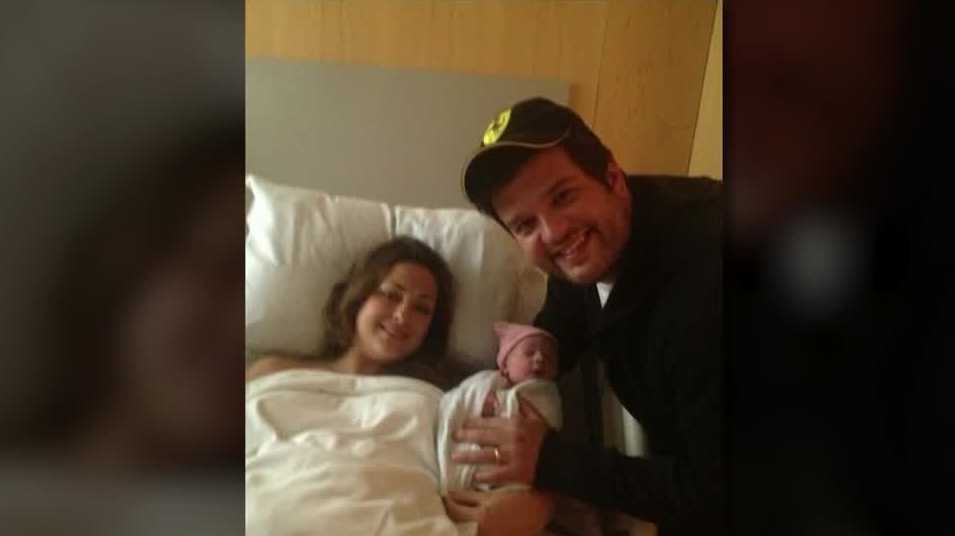
The founder and president of the foundation is a man who knows the devastating pain of losing a wife and new mother. Steven D’Achille’s wife, Alexis, took her own life just six weeks after she gave birth.
“She knew she was in trouble.”
“Our lives changed that day in the delivery room. It was a traumatic birth. Shortly after that, my wife was diagnosed with PTSD from the delivery,” Steven said.
PTSD developed into postpartum depression, OCD, anxiety and eventually psychosis. But unlike most women, Alexis was aware of the problem and knew she needed help.
“She did not suffer in silence. She knew she was in trouble. She was scared, and she was desperately seeking help,” Steven said.
But the people Alexis was looking to for help turned her away multiple times. Steven says he and his wife visited at least seven psychiatric facilities.
“She begged and pleaded to be admitted, but every time she saw someone, I feel like nobody listened to her,” Steven said.
The wait for help: “She was gone on Monday”
There was one visit in particular Steven says he’ll always remember. They arrived early to a facility where she was ignored and pushed down the list of importance. Then, ultimately, the D’Achilles were told all the physiatrists had left for the day.
“On Monday they’ll be back, and you’re gonna be our priority, so come back on Monday, and we’ll make sure that you got to see a doctor. Then she was gone on Monday,” Steven said.
And days later, in the middle of that unimaginable grief, Steven said he locked himself in a bathroom and wrote down the idea for what is now the Alexis Joy D’Achille Center for Perinatal Mental Health — turning sorrow into action.
“We have to build something; we have to build a place that I believe could have saved her,” Steven said.
Turning Sorrow into Action
After five years of weekly meetings with different board chairs within Allegheny Health Network and West Penn Hospital, his pen-and-paper dream opened in December 2018.
“The goal was to not just build a center but to evolve and to learn and to always do more, and that’s what we’ve done with the program,” he said.
And it’s the first of its kind in Western PA.
“Here in Pittsburgh, we are actually very fortunate to have higher levels of care,” said Dr. Sackey, who is the medical director of the center.
Steven said it’s now more important than ever to highlight such a facility, as the national spotlight is on Lindsay Clancy, the Massachusetts mother whose case centers on the deaths of her three children. Her defense argued she had been suffering from postpartum psychosis and therefore lacked criminal responsibility. The topic of postpartum psychosis and postpartum depression is now at the center of the conversation.
“I am energized, and I’m ready to go, and I’m like ready to fight more than ever,” Steven said.
Postpartum Depression and Postpartum Psychosis
Sackey is the medical director for women’s behavioral health at West Penn Hospital. She says both postpartum depression and postpartum psychosis have similar risk factors and causes, but are different.
“With postpartum depression, risk factors can include childhood abuse, can include having a history of depression, a family history of postpartum depression, having social aspects going on,” Sackey said.
With postpartum psychosis:
“Postpartum psychosis that is a frank emergency,” Sackey said.
She says both can look like mothers having low interest in things they’ve enjoyed, showing disinterest in the baby or feeling like she can’t parent.
“And then, in severe cases, people might’ve thought ‘I don’t want to be here anymore. I want to die,'” Sackey said.
How the Alexis Joy D’Achille Center is helping
The Alexis Joy D’Achille Center provides individual and group therapy, an intensive outpatient program, behavioral therapies, as well as outpatient medication management. The center has helped over 20,000 mothers in less than 10 years.
“When people know that there’s treatment on the other side and there are resources there to help them and they can be vulnerable and honest, I think it makes it easier sharing what their experience is,” Sackey said.
And while Steven says he created his center to honor his late wife, he also did so with his daughter in mind, who is now genetically predisposed to postpartum depression.
“I had to know that the care she needed, it would be there when she needed it, if she needs it. I know my wife is proud of me,” Steven said.
In Crisis? Call the Suicide & Crisis Lifeline
If you or someone you know needs help, you can talk with the Suicide & Crisis Lifeline by calling or sending a text message to 988, or you can chat online here.