
The Anti-Human Trafficking caucus called for continued momentum on updating laws to prevent trafficking and support victims and survivors.
“What I’m looking for is the next wins, you know, wins beget wins. So we’re looking ahead. What can we still get done this fall,” said Rep. Clint Owlett, a Republican from Tioga and Bradford Counties who has taken on the issue in recent years.
The coalition launched in March this year; anti-trafficking policy is one area keeping legislators united, regardless of political ideology.
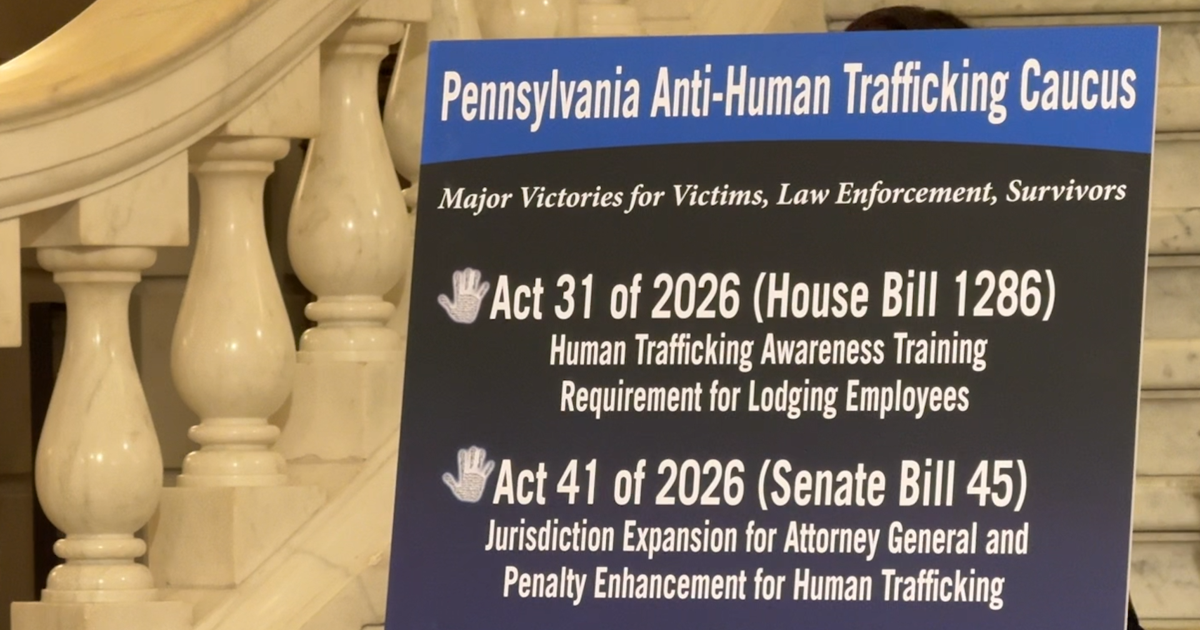
During the summer, Gov. Josh Shapiro signed two bills into law that address the issue.
“I think we’re all seeing it in our districts, we’re hearing about it and it’s making us all really sick to our stomachs when we hear about these crimes. It makes us want to act,” Owlett said.
On the two new laws- one requires training to recognize signs of human trafficking for staff in hospitality industry, like hotels or air bnbs.
The other law increases penalties for trafficking of children. It also moves the prostitution crime of buying sex to the human trafficking section of the crime code. This expands authority for the Attorney General’s office to investigate those cases.
“Human trafficking is a supply and demand issue. And if we don’t have people buying sex, we don’t have a demand, and therefore we don’t have traffickers,” said Heather Castellino, chief deputy attorney general for the human trafficking section in Pennsylvania.
There’s growing conversation in human trafficking advocacy about overlap between sex trafficking and prostitution.
Castellino says those who buy prostitutions services need education on how the act is illegal AND that people they sleep with could be victims of trafficking.
There is a social movement within the U.S. to legitimatize sex work, but experts say it can be hard to differentiate someone freely choosing prostitution, someone being there from other life instabilities or even being trafficked into the industry when they were younger, or someone actively being controlled.
“Most people who are engaged, at least in my experience, in selling sex– are not doing so because they want to,” Castellino said. “For some reason or another, they are either at that time being forced by a trafficker or they are exposed to certain circumstances that leave them no choice.”
Lawmakers today said 40% of human trafficking happens within families.
“Most of these people enter into this space through somebody they love,” said Rep. Regina Young, a Democrat from Philadelphia who sponsored the hospitality education law.
The legislators advocated that trafficking ends when people learn what it actually looks like: manipulation, isolation, and exploiting circumstances. The best way to counter those strategies?
“Identify what love looks like, but in a healthy way,” Young said. “So we all have a responsibility of helping each other identify a healthy love.”
In 2025, the Institute to Address Commercial Sexual Exploitation reported that 26 counties filed human trafficking charges– including Erie, Warren, Tioga and Susquehanna Counties– against a total of 79 defendants.