
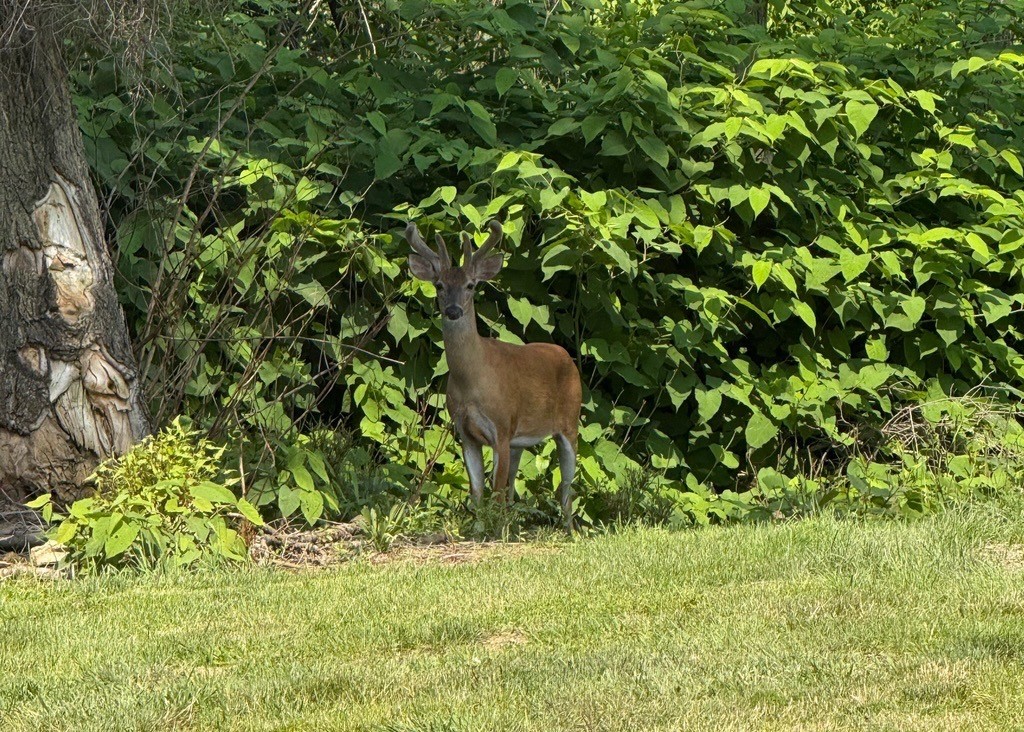
Deer have been increasingly wandering around Pittsburgh’s urban streets.
To help quell the surge, Pittsburgh is expanding its 2026-27 deer management program to include two new parks, Sheraden Park and Spring Hill Garden and Greenway. Experts knowledgeable in deer management explained the program’s necessity and safety in Pittsburgh.
The program, which started in 2023 and includes archery hunting and targeted harvesting, already covers the parks of Frick, Riverview, Emerald View, Schenley, Hays Woods, Highland, McKinley, Southside, Hazelwood and Seldom Seen Parks/Greenways. The program is intended to address growing deer populations, which can cause damage to vegetation and landscaping in parks and neighborhoods.
According to Pittsburgh park ranger supervisor Erica Allwes, the City expanded the program in order to have larger geographic control over deer populations and incorporate safe archery into smaller parks and greenways.
“We were really lacking locations in the North Side, and we didn’t have any territories in the true West End. We wanted to make sure those residents got the ability to participate, and also experience some of the benefits of a healthier deer population in their neighborhoods,” Allwes said.
65 archers are participating in Pittsburgh’s 2026-2027 hunting season. The hunting season, set by the Pennsylvania Game Commission, runs from Sept. 19 to Dec. 13 and picks back up from Dec. 26 to Jan. 24. Hunting is prohibited on Sundays in park territories, except for mentored hunts in Hayes Woods.
Pittsburgh does not have an exact count of the deer living in Schenley Park and other parks across Pittsburgh. According to Jeannine Fleegle, a wildlife biologist at the Pennsylvania Game Commission, conducting a population survey for deer is difficult due to deer movement and constant population change.
Fleegle said the best measurement for a healthy deer population is based on the impact of deer in communities.
“Are you getting fewer complaints about damage? Are you seeing fewer deer-vehicle collisions? Those are the things that you can actually measure, and those are the things that actually matter to the community,” Fleegle said. “It’s not about the number. It’s about the impact of those animals.”
According to Shayne Hoachlander, a former Pennsylvania Game Commission land manager, urban environments tend to attract deer because of the vegetation and protection from predators.
“You have a lot of lawns, a lot of landscaping, and you have a lot of shrubs and trees that are fertilized, so they have a lot of nutrition available to them,” Hoachlander said. “We’ve unintentionally created a perfect scenario for them.”
Hoachlander said that when there is an overpopulation of deer, they can pose challenges to the communities and ecosystems they live in. Because deer can selectively eat a large amount of vegetation, Hoachlander said they can change the composition of an “entire system.”
“In an urban setting like Pittsburgh, then part of the conflict is they’re feeding on somebody’s highly valued landscaping,” Hoachlander said. “One of the other issues would be automobile collisions, and so obviously there’s a cost associated with that.”
Allwes said the City does not allow Sunday hunting in most Pittsburgh parks, including Schenley.
“That allows individuals that are really terrified of potentially seeing an archer the opportunity to still come to the parks with a guarantee that they will not see an archer,” Allwes said.
Allwes said archery is a safe form of hunting with few shooting related incidents, adding that the City goes through extensive background and safety checks as part of the archer application.
“We also sent our archers to an accuracy test. We made them shoot three different targets at unknown distances, and if they missed, they were immediately dismissed from the program,” Allwes said.
According to Hoachlander, archery hunting can be effective in managing a deer population in localized areas like parks but has limitations in an urban environment.
“When deer are as overabundant as they are in these urban settings, it will be very difficult to get those populations under control using only archery,” Hoachlander said.
Allwes said the City’s goal is not to eliminate deer from Pittsburgh but to maintain a healthy herd over time while reducing the problems associated with the high deer population.
“It’s going to take some time. Deer management plans take a long time to see the effects of it,” Alwess said. “We want a healthy deer population and healthy deer herds.”