
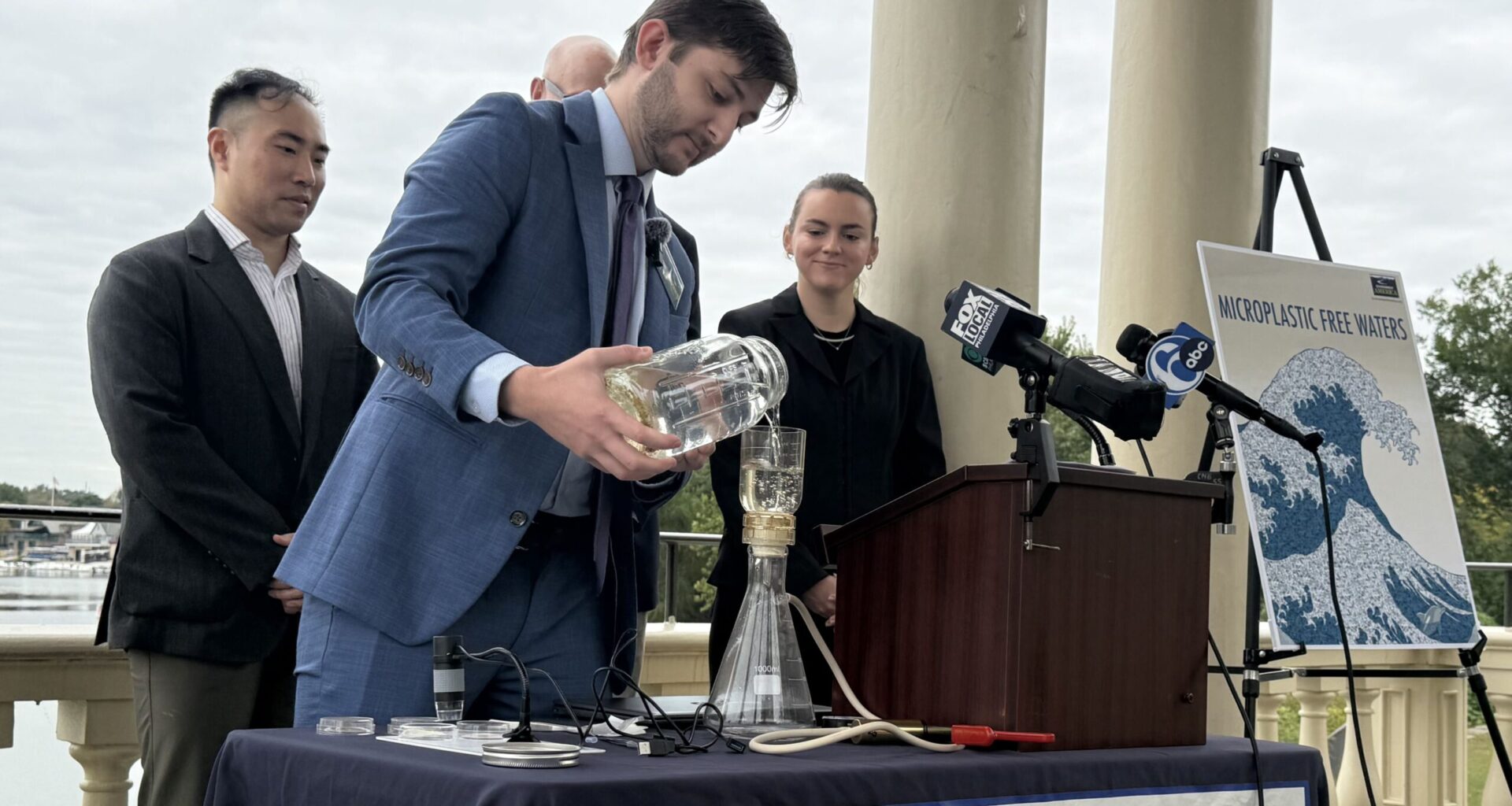
Microplastics and nanoplastics are often invisible to the human eye and are easily ingested. These particles have been detected in the human bloodstream, brain tissue and other organs, and some researchers say exposure could increase the risk of heart attack or stroke.
Research is ongoing, however, and scientists don’t know the specific harms on the human body.
“Plastics and microplastics are everywhere, from our clothing to the ubiquitous water bottle,” said David Velinsky, an environmental scientist and professor who helped guide the microplastic testing at Drexel.
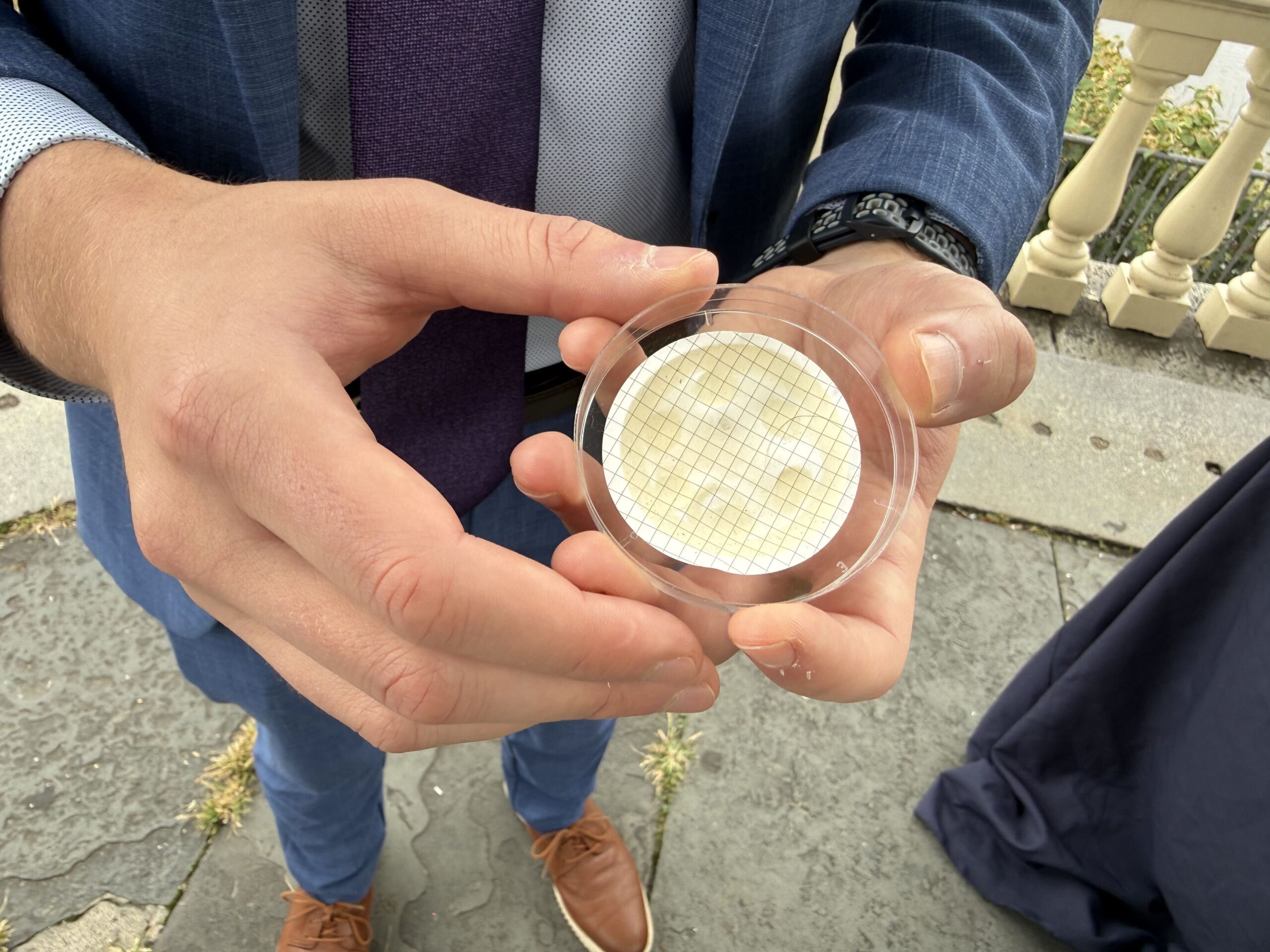 Microplastics and nanoplastics are often invisible to the eye. (Zoë Read/WHYY)
“When plastic is not properly disposed of, it can break down into smaller and smaller pieces, and can travel great distances through the air and in the water,” Velinsky said. “While we have seen striking images of birds and seals entangled in plastics, we are now learning that microplastics can also be taken up by animals, including humans, and plants.”
After PennEnvironment and Environment New Jersey collected samples from waterways in Pennsylvania, New Jersey, New York and Delaware, Drexel University students and staff tested the samples for four types of plastics: fibers, film, fragments and microbeads.
Microplastic fibers, which are commonly found in items like clothing and textiles, were found in every waterway the team sampled. Plastic fragments, which typically break off of products like bottles and tires, were detected in 82% of waterways.
Film, which comes from plastic bags and packaging, was found in 77% of waterways. Microbeads, from cosmetics and personal care products, were in 27% of the sampled waterways.
The study did not evaluate the origins of the microplastics or the level of contamination in each waterway.
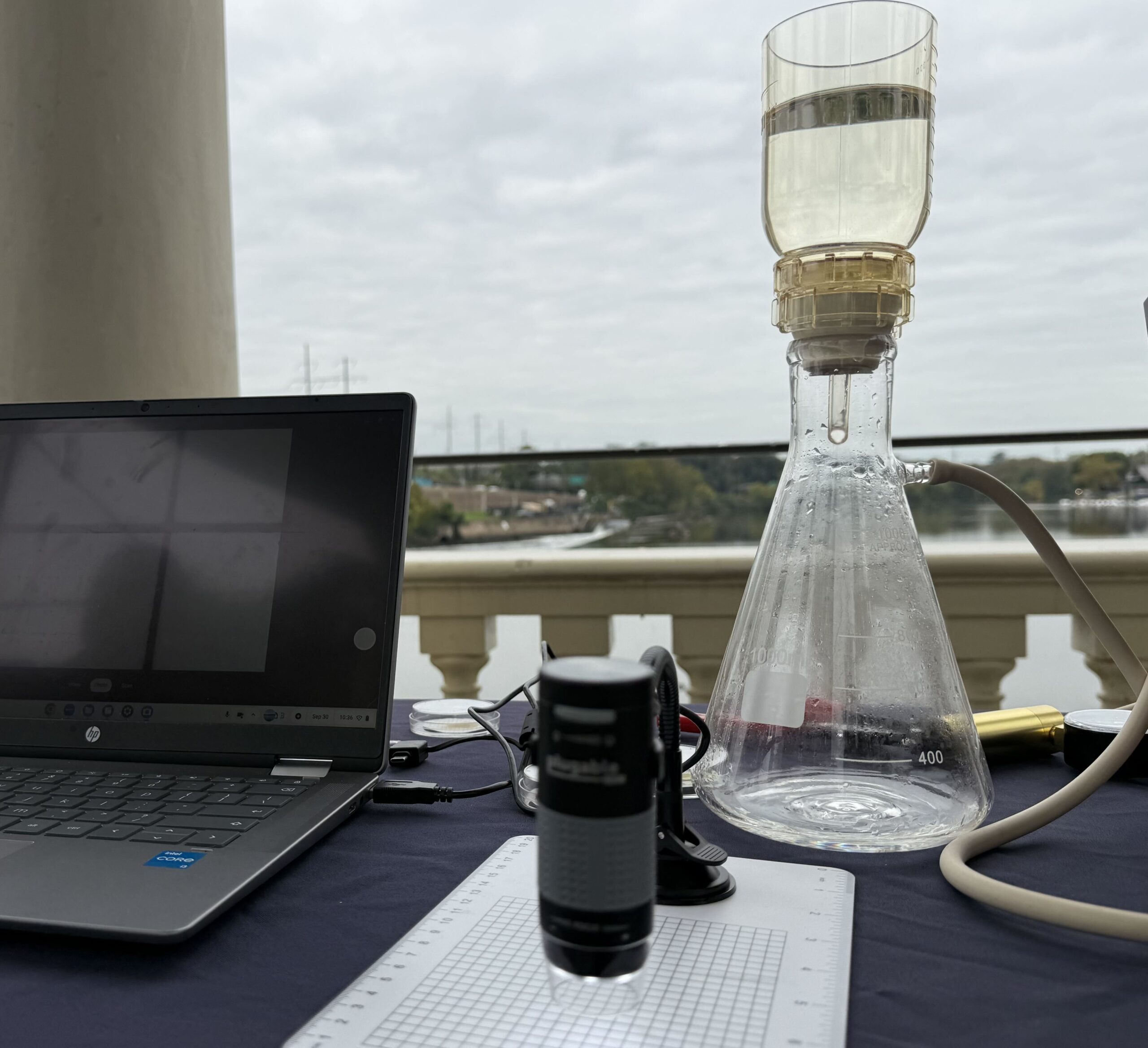 Researchers from PennEnvironment and Drexel University found microplastics across the Delaware River Watershed. (Zoë Read/WHYY)
PennEnvironment is calling on federal, state and local officials to pass laws that force packaged goods producers to pay for the waste management and recycling of plastics, also referred to as extended producer responsibility. The nonprofit is also urging lawmakers to expand single-use plastic bag bans. Pennsylvania is the only state in the Delaware River region that has not banned single-use plastic bags statewide.
PennEnvironment is also calling for new laws that would prevent plastics facilities from releasing pellets into waterways through wastewater discharges, leaks and spills.
Reports find that most plastics that people toss into recycling bins are not recycled, and instead end up in landfills. Savitz said the only way to tackle plastic pollution and microplastic contamination is to reduce plastic production and use.
“If we want to protect our environment and our health, it requires a multipronged societal approach,” he said. “We need to change the way that we produce and consume goods to make the products that consumers use and buy more sustainable. We need to make the creators of an environmental hazard like plastic pollution take responsibility for the waste that they create.”