
Pittsburgh Public Theater and the Pittsburgh CLO are no more, but developments at Confluence Theater of Pittsburgh, which resulted from their merger, continued apace this week as the group announced most of its 2027 season.
After this fall’s “prologue season” and some legacy holiday shows, the group will launch its official inaugural season. It includes three classic musicals, a recent Pulitzer Prize-winning drama and more.
‘A great dinner party’
As previously announced, Confluence programming will run year-round, with no real seasonal breaks like those traditionally taken by its predecessors. And the choices, announced Wednesday, reflect the blend of the two iconic troupe’s legacies that organizers promised.
“We programmed this season like a great dinner party, bringing together guests who might not normally share a table,” said interim artistic director Kyle Haden in a statement.

The Byham Theater will host Confluence’s production of “Les Misérables” next June.
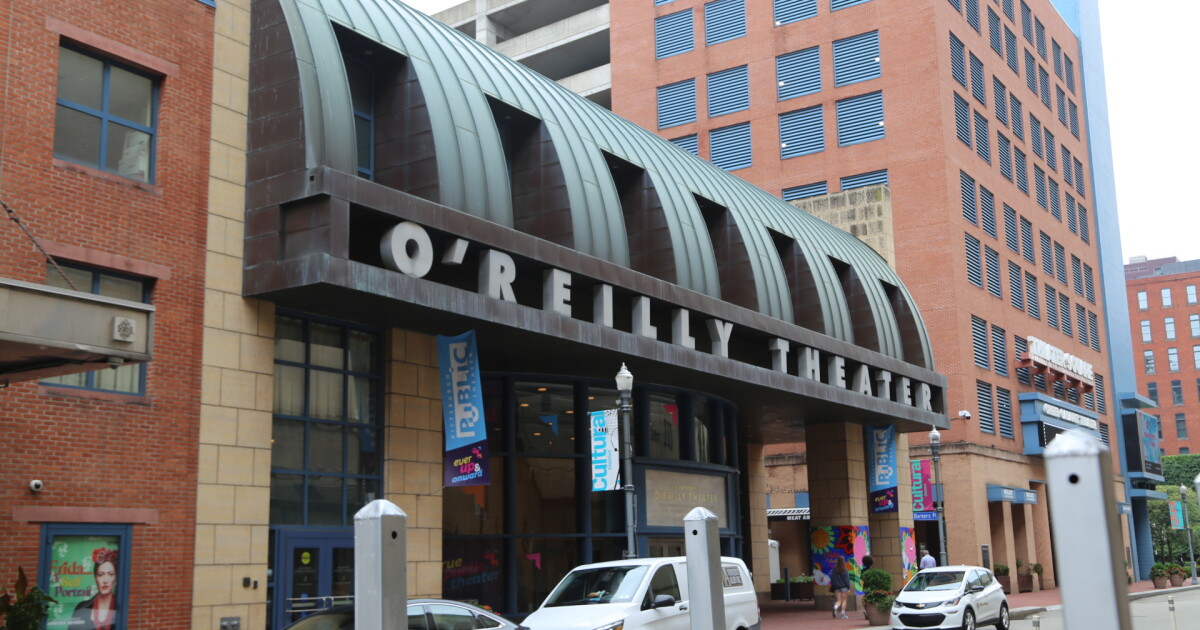
The season will begin in February at the O’Reilly Theater with “She Loves Me,” the 1963 hit Broadway romantic comedy by Sheldon Harnick and Jerry Bock (“Fiddler on the Roof”) that inspired the film “You’ve Got Mail.”
It continues at the O’Reilly with the Pittsburgh premiere of Branden Jacobs-Jenkins’ “Purpose,” a drama about a prominent Black family and its secrets. That’s followed by “Les Misérables,” at the Byham Theater, and Kander and Ebb’s “Cabaret,” at the O’Reilly.
In August, the Greer Cabaret Theater will host Confluence’s staging of “Matt and Ben,” Mindy Kaling and Brenda Withers’ satiric comedy about Matt Damon, Ben Affleck and the writing of “Good Will Hunting” in which both lead characters are played by women.
And, as previously announced, Confluence will stage Shakespeare’s “The Comedy of Errors,” a farce about two sets of twins, starting in September at the O’Reilly.
A seventh show is yet to be announced, Confluence said in a statement.
Laura Greenawalt, Confluence’s transition project manager, said many of the picks were based on feedback from subscribers dating back a few years.
“We know the CLO audience really well, we know the Pittsburgh Public Theater audience really well, and so we looked for things where we felt like there was a good opportunity for overlap, where both could find some riches in the shows we chose,” she said.
Tickets are already on offer to subscribers and will be available to the general public later this month, Greenawalt said.
Other developments
Greenawalt also confirmed that Confluence had hired back all employees of the Public and CLO who had expressed a desire to return, including the 11 Public staffers who were laid off in May.
“We approached everybody who was currently employed by Pittsburgh CLO and everyone who was impacted by the layoffs at the Public Theater earlier this year,” said Greenawalt. “And anyone who said they wanted to come along found a place.”
Confluence now has 39 employees, 18 of whom are seasonal full-time production workers on union contracts previously employed by the Public. The staff also includes workers in marketing and development, education and community engagement and administration, she said.
The director of production is Monica Bowen, longtime director of production and operations at the Public.
Nine positions remain to be filled, according to Greenawalt including the top spots of executive producer and artistic director, now being filled on an interim basis by, respectively, Brett Ashley Crawford and Haden.
Greenawalt said Confluence has a budget of $12.8 million for fiscal year 2026-27. That figure includes productions in the previously announced prologue season, highlighted by the Pittsburgh premiere of Jacob Ming-Trent’s acclaimed solo show “How Shakespeare Saved My Life,” which opens in November at the O’Reilly.
The budget is roughly equivalent to the combined total of the final-year budgets of the Public and the CLO.
Also as announced this week by the Allegheny Regional Asset District, the budget will include a RAD Connections Grant of about $241,000. Connections Grants are meant to encourage resource sharing by groups funded by RAD. Greenawalt said the funds would be used to cover “costs associated with the transition” as well as “marketing and communication strategy for this fall to spread the word about the merger happening.”
Confluence had also requested $400,000 in operating funds from the taxpayer-funded RAD. RAD’s preliminary budget, also announced this week, allocated it $200,000. The total of that and the Connections Grant is $441,000, about $100,000 less than the Public and CLO had received in total for 2026.