
Staff Sgt. Norman Reifsnyder was a survivor.
As a radio section chief in the Army’s 80th Division, he supported troops through some of World War II’s fiercest battles, even facing combat himself, and was recognized with medals for heroism.
As a father and farm owner, Reifsnyder lived a life of deep commitment to his family and community.
Now, Reifsnyder has received another honor, this time posthumously. He died in February at age 103.
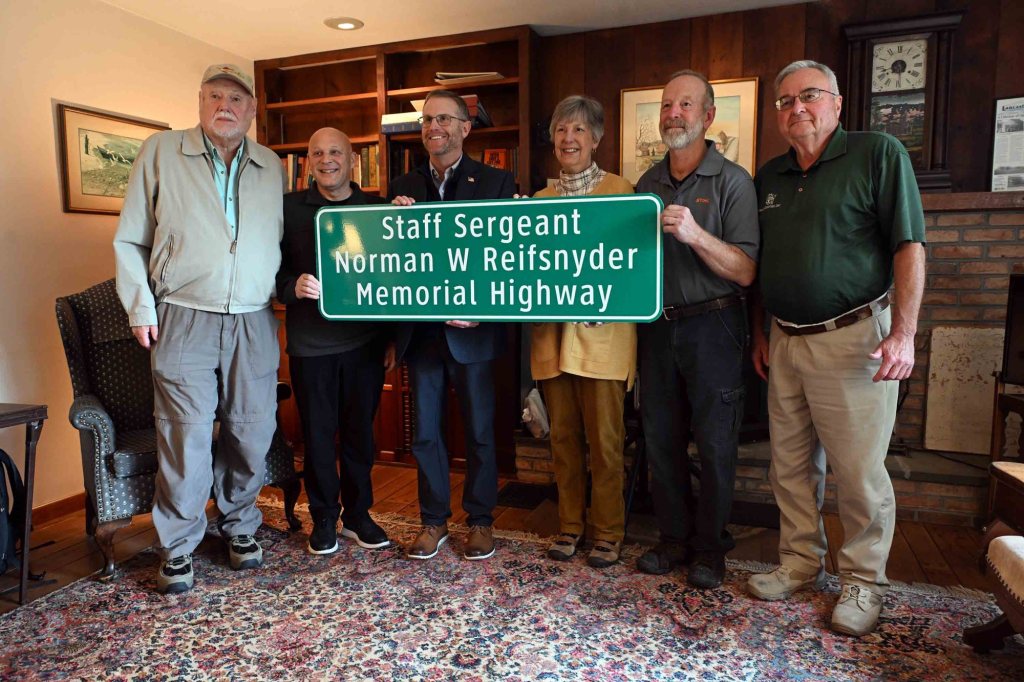
Last week, part of Route 183 between Mount Pleasant Road and the bridge over Licking Creek was officially renamed the Staff Sgt. Norman Reifsnyder Memorial Highway.
The renaming was celebrated with a dedication ceremony at Reifsnyder’s former home, where state officials, friends and family gathered.
State Sen. Chris Gebhard thanked Jeff Schatz, a friend of Reifsnyder’s, for reaching out with the proposition to dedicate part of Route 183 surrounding Reifsnyder’s 6-acre property in Bernville.
A bill approving the dedication passed with bipartisan support in June.
“We may not agree on what this country should look like, but we do agree on the people that made it what it is today,” Gebhard said at the dedication. “Those are the people we should celebrate.”
Schatz said Reifsnyder served overseas in engagements with Nazi forces that took him across Europe, from France’s Omaha Beach to Luxembourg.
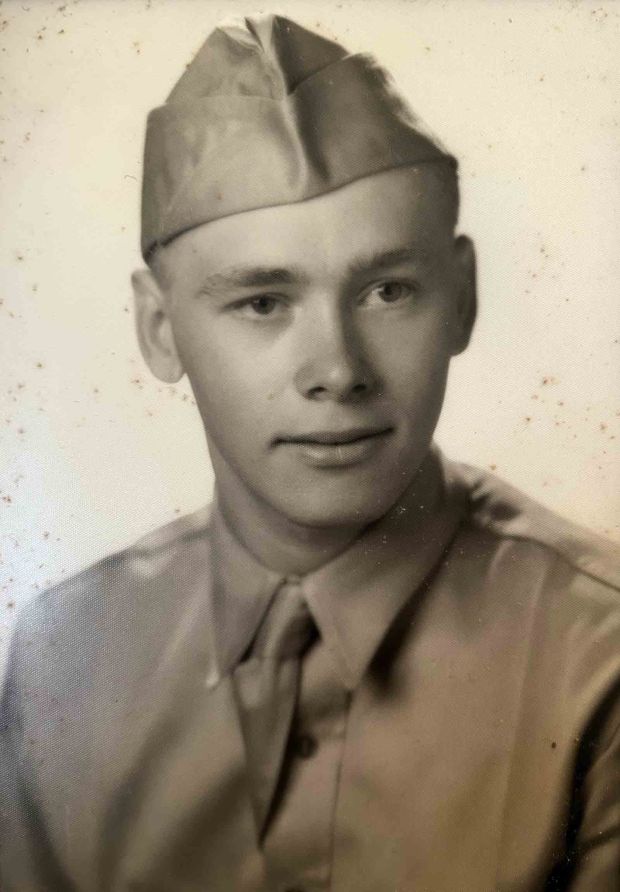 Staff Sergeant Norman W. Reifsnyder during World War II. (Courtesy of Reifsnyder family)
“(During a skirmish in France) an artillery shell hit so close to Reifsnyder’s radio jeep that it blew out all the tires, but he was uninjured,” Schatz said. “That same day, the division was rushed into Luxembourg to fight in the Battle of the Bulge.”
Throughout that battle — World War II’s largest and deadliest involving U.S. troops — Reifsnyder weathered sniper fire, mortar shells and a direct attack by German soldiers on Christmas Eve, all to keep communications flowing among the battalion’s officers.
For his efforts in the war, Reifsnyder was decorated with the Bronze Star and the Soldier’s Medal — the Army’s highest honor for noncombat heroism.
After being discharged in 1945, Reifsnyder went on to live another 80 years as a farm owner, churchgoer and beloved family man.
“My dad was a survivor,” Pete Reifsnyder said. “He was just a normal guy. Humble but whatever life gave him, he dealt with it. A man of deep faith and a good sense of humor.”
He said his father didn’t talk much about the war until his later years, when his grandson asked him about it.
“He had some interesting stories,” Pete Reifsnyder said.
He recounted one story in which his father and his radio crew were staying at a house in a small town overseas.
“They were camped out in this bedroom,” he said. “At about 11 at night, somebody higher up came in and said, ‘Norm, you go down into the living room and sleep. An (artillery) shot hit the house that night and sent a splinter from a beam through the guy’s neck that was on the bed where my dad would have been (sleeping.)”
Reifsnyder said buckling down and moving on with life after hard times was a hallmark of his father’s generation.
After the war, Norman Reifsnyder and his family operated a dairy farm for 21 years and were named the Reading Fair Outstanding Farm Family in 1962.
He was active in the Penn State Berks County Master Gardener Program, a lifelong member of the North Heidelberg Church, and an avid birdwatcher.