
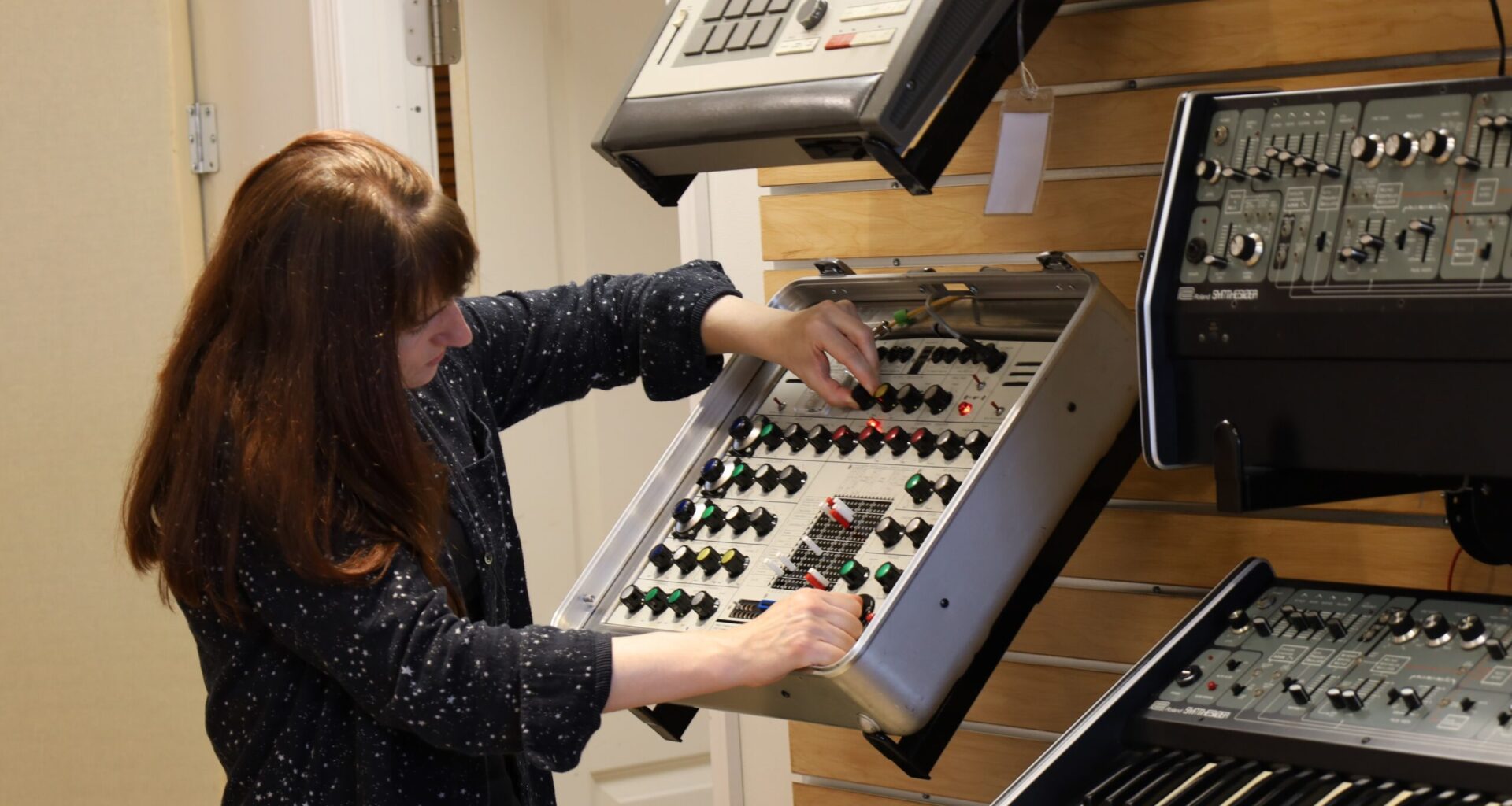
Stout said that while 10 years “sounds like a lot,” it pales in comparison to some of the instruments they work on, some of which are more than 60 years old.
“There are also the oldheads who have been doing this since before we were born,” Stout said. “But there is sort of a whole generation of techs who are retiring right now. There are a lot fewer people doing this than there were even when I started, which means that at this point, we’re actually among the more experienced shops in our area of the country.”
Beyond the scarcity of shops, their dedication to the craft is what has ensured repeat customers.
“What I really like about the job is treating it like a puzzle,” Scatton said. “Learning all of the little parts, what they all do, and then taking the problem at hand — like the circuit that’s not working — and piecing it together and figuring out why it’s not working.”
The variety of synthesizers available also adds to the shop’s demands, but common threads tend to connect the instruments down the line.
“I think one of the most important things to unlock has been just how a lot of it will just be the same type of circuits, just executed in slightly different ways and just being able to hone in and say, ‘Oh, I know what this part of the circuit is doing,’” Stout said. “That means you know the input, you know the output. All you have to do is figure out what’s going on in between and how it’s executed.”