
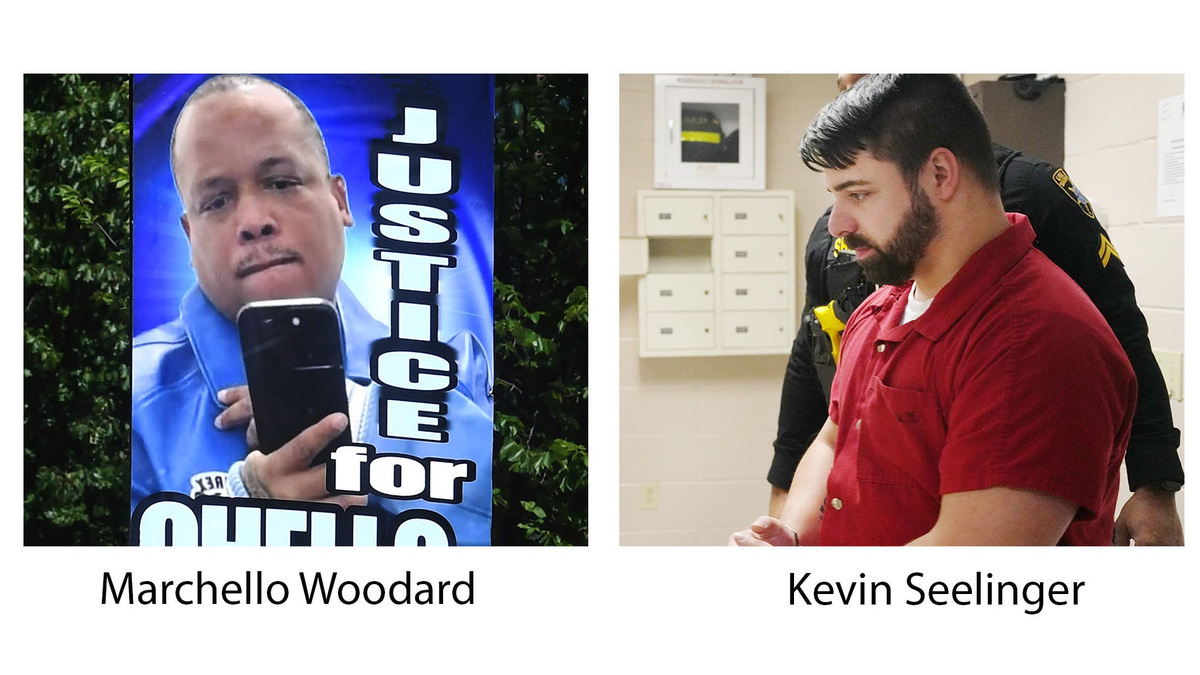
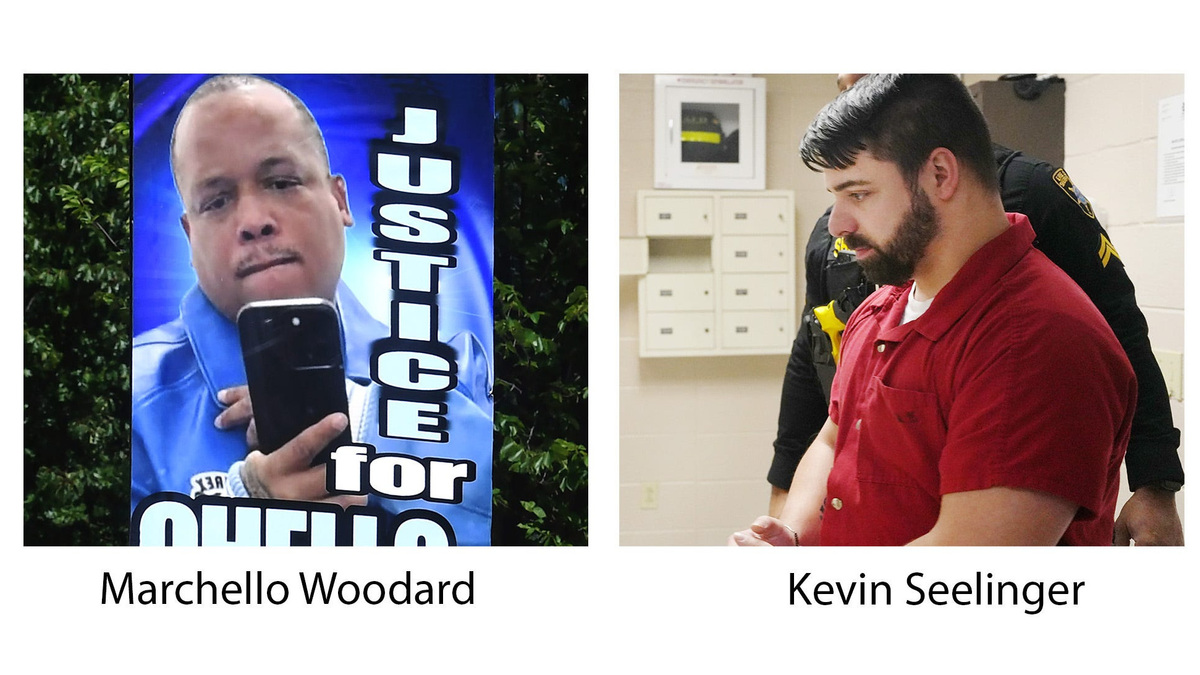
Marchello D. Woodard, left, was shot and killed by Pennsylvania state parole agent Kevin J. Seelinger on July 2, 2025. Testimony in Seelinger’s trial started in Erie County Common Pleas Court on Oct. 5.
GREG WOHLFORD/ERIE TIMES-NEWS
USA TODAY Network, Reuters
The prosecution and defense focused on the state of mind of Pennsylvania state parole agent Kevin J. Seelinger as his homicide trial opened in the Erie County Court of Common Pleas.
Erie County District Attorney Elizabeth Hirz questioned whether Seelinger was in danger of death or serious bodily injury when he fatally shot parolee Marchello D. Woodard during a compliance check in Erie in July 2025.
Seelinger’s lead lawyer, Chad Vilushis, countered that Seelinger feared death or serious bodily injury when he fired at Woodard, who was in the driver’s seat of Woodard’s car in the 400 block of East 27th Street.
“This case is about a decision – a decision to use deadly force,” Hirz told the jury in her opening statement on Oct. 5. “What danger did the defendant face before he pulled the trigger and killed Marchello Woodard?”
She called Woodard’s killing “a single, violent event.”
Vilushis said Seelinger made “the split-second decision” to shoot Woodard “to save his own life” and stop Woodard from driving away as Seelinger was being dragged.
Vilushis said Seelinger was “absolutely justified to use the force he did under Pennsylvania law.” He said the District Attorney’s Office would fail to present evidence to show that Seelinger, who had supervised Woodard on parole for more than two years, intended to kill Woodard and is guilty of first-degree murder.
“In essence,” Vilushis told the jury, Hirz is arguing that Seelinger “executed parolee Woodard. For what reason, I don’t know.”
“The evidence needed to accomplish this,” Vilushis said, referring to a conviction for first-degree murder, “is not here, and never has been.”
Drugs, use of force central to trial
Prosecutors called witnesses immediately after opening statements.
Seelinger’s trial is expected to last at least a week, with Erie County Judge John J. Trucilla presiding in the historic Courtroom H, the largest at the Erie County Courthouse. About half of the courtroom, which can seat 250 to 275 people, was filled during the opening statements.
The case has attracted significant attention from the start.
Woodard’s family and supporters pushed for a charge of murder. The death of Woodard, 43, who was Black, led to protests in Erie, with many demonstrators connecting the case to the Black Lives Matter movement. The Fraternal Order of Police has criticized Hirz’s decision to charge Seelinger.
Woodard, known as Chello, was fatally shot as he sat in the driver’s seat of his car about 9:45 p.m. on July 2, 2025. He had parked in front of his girlfriend’s house in the 400 block of East 27th Street, between Parade and Wallace streets. He was not armed, according to the prosecution and the defense.
Police found 26.4 grams of cocaine in Woodard’s shorts and $1,500 in cash following a search of his clothes and car, according to evidence that neither side disputed. An autopsy and toxicology tests showed Woodard had a lethal amount of cocaine in his system as well as alcohol, the opioid painkiller hydrocodone and marijuana.
The defense is contending that Woodard’s possession of drugs gave him an incentive to flee from Seelinger by driving away. The prosecution says the existence of the drugs did not make Woodard “less entitled” to be protected from harm, Hirz said in her opening statement.
Location of Woodard’s wounds part of DA’s case
Seelinger, 43, shot Woodard three times, including once in the back, striking his lung and aorta, Hirz said.
A key prosecution argument supporting the first-degree murder charge is that Seelinger shot Woodard in a vital organ, according to pretrial filings. Pennsylvania law allows intent to be inferred from the use of a deadly weapon upon a vital part of the body.
She characterized the fatal shooting as an incident that could have been avoided. “Within seconds, the defendant fires three shots, striking Marchello,” Hirz said in her opening statement.
Shooting was not captured fully on video
State parole agents were not outfitted with body cameras at the time of the shooting. Investigators were able to get two surveillance videos from neighbors, but neither video shows the complete shooting, the prosecution and defense said.
The lack of comprehensive video increases the importance of witnesses’ testimony, as well as statements from Seelinger and his partner, Aaron Osborne, based on what the prosecution and defense said in their opening statements.
Using the available evidence, the jury will have to determine Seelinger’s state of mind and, as Vilushis told the jury in his opening statement, whether “agent Seelinger was justified under the law.”
Contact Ed Palattella at epalattella@usatodayco.com or 814-870-1813.
This article originally appeared on Erie Times-News: Two narratives take shape as murder trial opens over death of parolee
Reporting by Ed Palattella, Erie Times-News / Erie Times-News
USA TODAY Network via Reuters Connect
Copyright Reuters or USA Today via Reuters Connect
This story was originally published October 5, 2026 at 1:00 PM.