
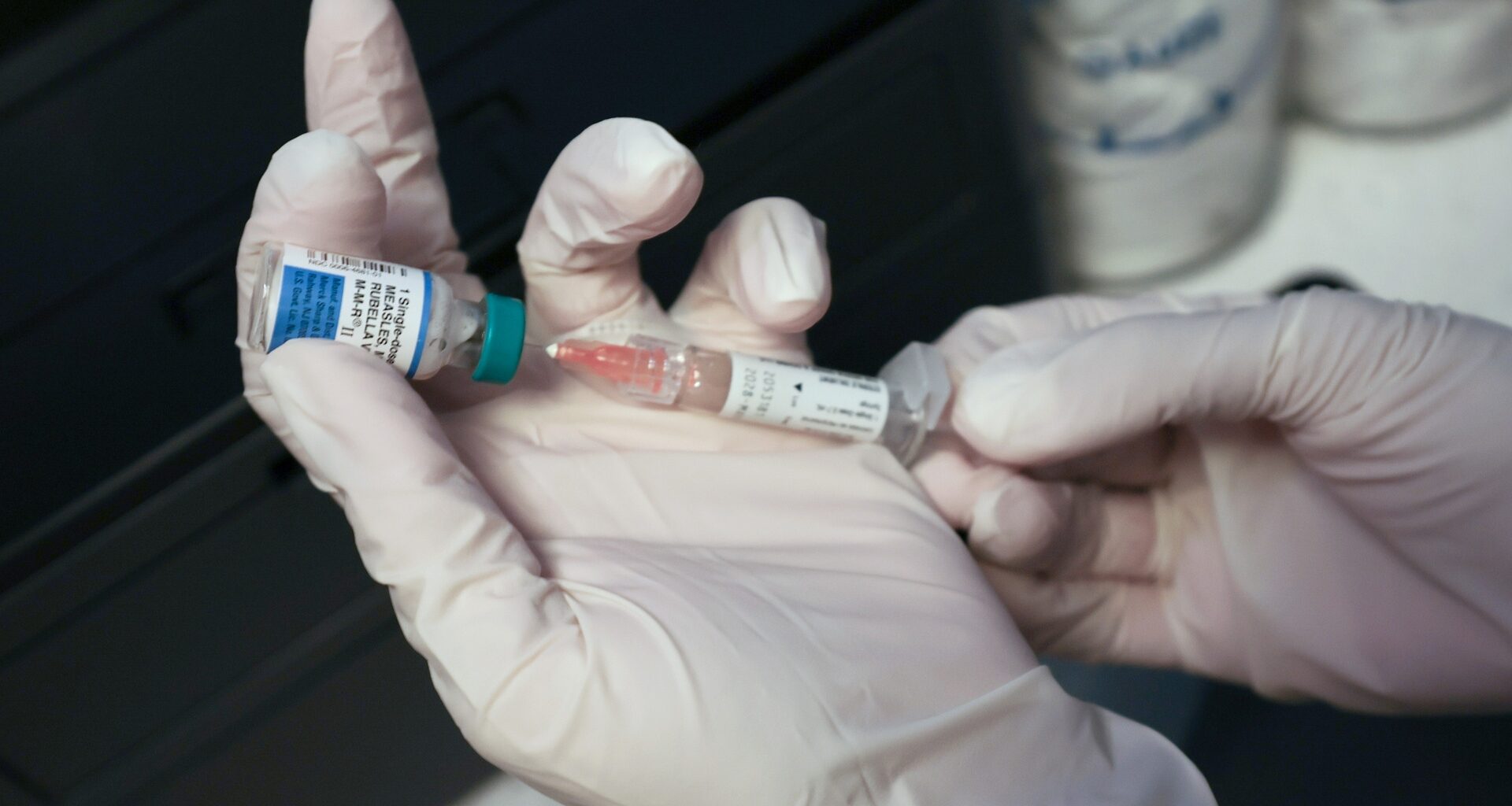
The U.S. is in the midst of a measles outbreak like it hasn’t seen in 35 years, and Pennsylvania is at the epicenter. The state has now surpassed more than 1,000 cases this year, accounting for nearly a third of recorded cases nationwide.
According to Monday’s update from the Pennsylvania Department of Health, the state has seen 1,004 cases across 39 counties so far in 2026. Data also shows at least 198 people have been hospitalized and five people have died since the outbreak began.

Download the Straight Arrow app today to get the stories that matter free from manipulation, bias or agenda.™
Point phone camera here
Pennsylvania’s epicenter
While Pennsylvania is at the epicenter of the U.S. outbreak, Lancaster County is at the epicenter of the state’s outbreak, with nearly 400 cases reported so far. Lancaster County is home to the state’s largest Amish community.
Vaccination is often viewed as a personal preference among the Amish, and many choose not to partake.
Fear No Fact.
The largest measles epidemic in the U.S. since the first vaccine was licensed in 1963 spanned from 1989 to 1991, with more than 55,000 cases reported, according to the CDC.

Dr. Patrick Gavigan, a pediatric infectious diseases specialist at Penn State Health Golisano Children’s Hospital — which borders Lancaster County — told The Washington Post that before this outbreak, measles was so rare in his area that he’s only encountered a single case while he was in training.
Gavigan said not only does he find the volume of cases shocking, but also how many severe infections he’s seen in previously healthy individuals, and how many involved non-respiratory symptoms. The doctor said while pneumonia is common with measles, he’s seen multiple patients with vomiting, diarrhea and elevated liver enzymes who were diagnosed with hepatitis.
Gavigan said he’s also seen some patients develop encephalitis — inflammation and swelling of the brain tissue — which can lead to severe symptoms like seizures, paralysis and permanent brain damage.
He also raised concerns about how many people may have measles but are not accounted for in the state’s data.
“Every pediatric patient that we’ve had at the hospital, when we talk to the family, everyone or nearly everyone at home has had a measles-like illness,” Gavigan told the Post. “When clinicians ask whether those family members were tested, the answer is no unless they, too, were sick enough to go to the hospital.”
He said that means the number of infections is almost certainly far higher than what the state is reporting. Gavigan said that’s also likely what’s making the outbreak so hard to contain.
Not just Pennsylvania
It’s not just Pennsylvania seeing a major outbreak. Forty-four other states and Washington, D.C. have reported cases.
South Carolina and Utah have the most cases after Pennsylvania, with 370 and 535, respectively, according to the CDC’s latest report published Oct. 2.
Ohio, which has reported nearly 150 cases, is also seeing an outbreak in Amish communities.
New York has documented 108 measles cases so far this year, according to an executive order by Gov. Kathy Hochul on Tuesday. In the order, she declared a statewide disaster emergency over the outbreak.
Of those cases, 92 were reported in “under-immunized rural communities” across 18 counties in the state. Hochul’s order also authorized more health professionals to administer the measles-mumps-rubella (MMR) vaccine.
“No one should get seriously ill or die from a vaccine-preventable disease,” Hochul said in a statement.
Hochul’s order lasts through Nov. 4.
What to look out for
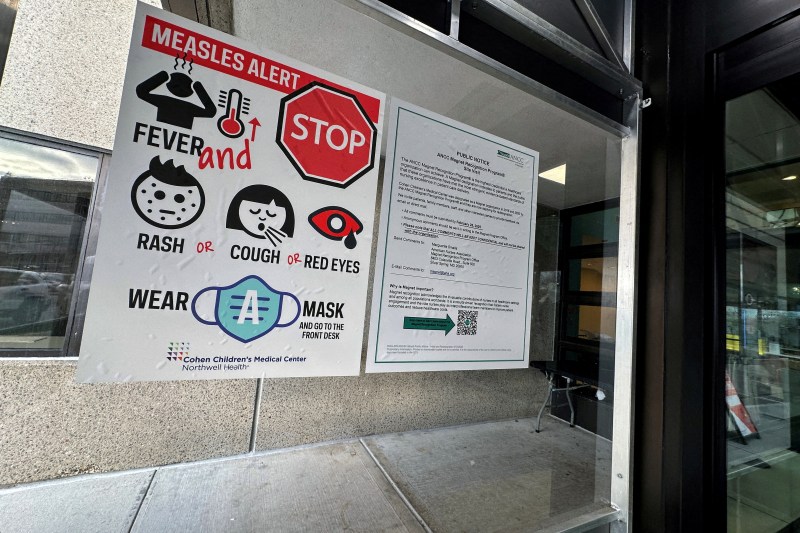
The measles virus can linger in the air for up to two hours and has an incubation period of up to 21 days, so it spreads easily. Many people often mistake it for a cold or flu in the first few days of illness.
Symptoms often start off with fever, a runny nose and congestion. The rash, which is the hallmark of the illness, often doesn’t show up until about four days after symptoms begin, according to health experts.
 Reuters/Shannon Stapleton
Round out your reading