
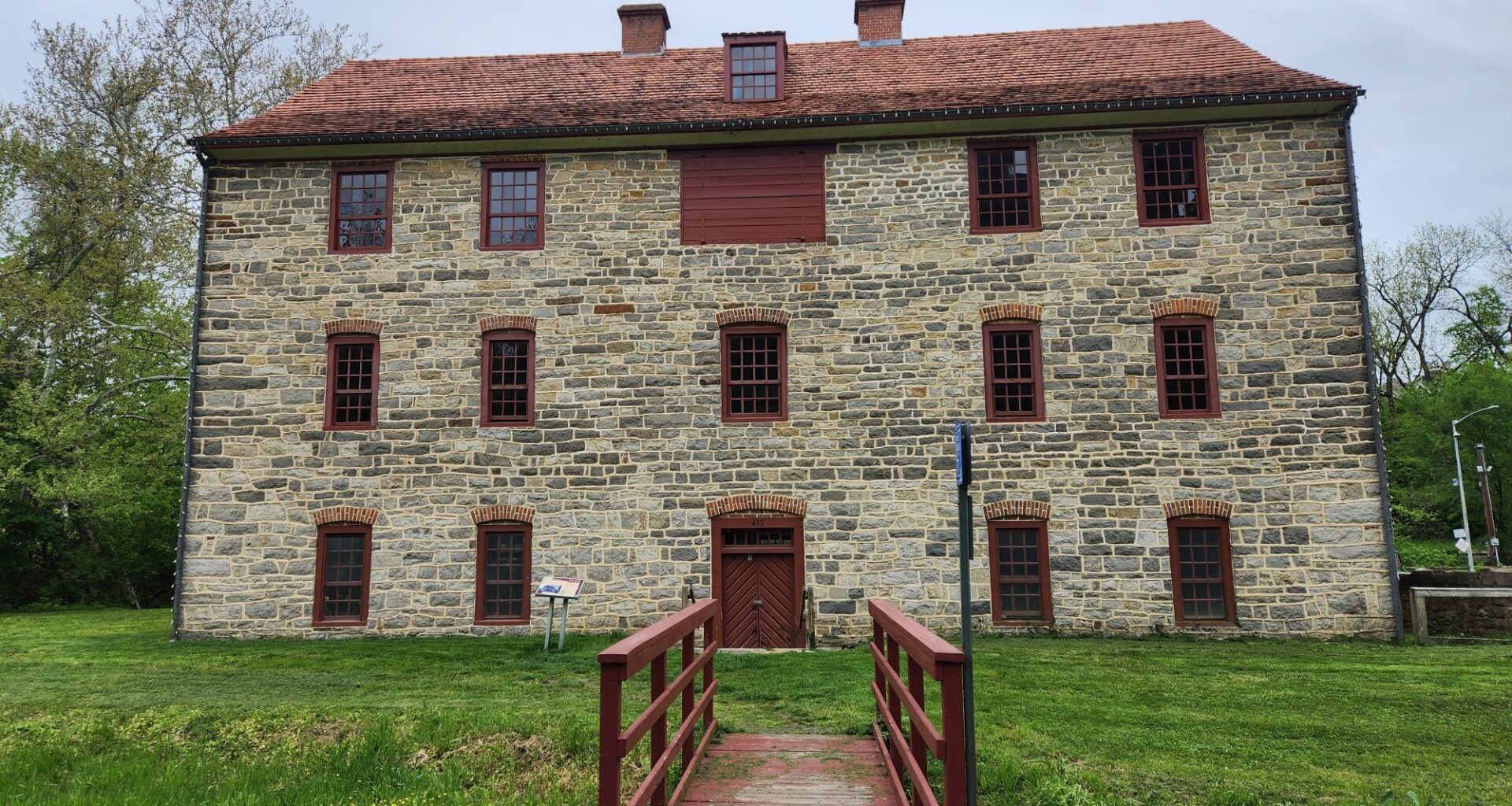
Bethlehem’s historic 1761 Tannery has received nearly $700,000 from the National Park Service for preservation work.
The Delaware & Lehigh National Heritage Corridor announced this week that the $699,300 will go toward a three-year project to address the Tannery and invasive vegetation threatening all of the city’s Colonial Industrial Quarter.
“The Colonial Industrial Quarter is such an important part of what makes this city unique and is central to the story of the heritage corridor,” said Tony Pierucci, executive director of of the heritage corridor. “We are excited to step alongside [Historic Bethlehem Museums & Sites] and other partners to help advance the preservation of this important resource.”
Historic Bethlehem Museums & Sites, which operates the Colonial Industrial Quarter, will play a key role on the project team, drawing upon its experience in the preservation and interpretation of the site. President and CEO LoriAnn Wukitsch said the 1761 Tannery is the only surviving 18th-century Moravian industrial building in the world.
“With preservation efforts and updated interpretation, we can invite students and the public back into the expansive historic space to learn about daily life in Bethlehem, including the many trades and crafts the Moravians practiced on the Monocacy Creek,” she said.
The 1761 Tannery has been closed to the public for 22 years because of water infiltration and resulting damage. Originally used to process hides essential to Bethlehem’s Colonial economy, the Tannery later produced leather goods during the American Revolution.
HBMS previously completed work to address water infiltration as part of a multiphase effort to preserve and eventually reopen the building. The new grant will fund Phase III, focused on preservation of the Tannery’s stone walls. A final phase will address heating, ventilation and air conditioning and electrical improvements.
The grant will also fund efforts to combat Japanese knotweed, an invasive plant that has spread throughout the Colonial Industrial Quarter and can threaten historic structures. Work will include developing and implementing a mitigation plan, removing knotweed, and establishing native vegetation to help prevent its return.
The historic corridor will serve as the project lead and federal grant administrator. Bethlehem owns the quarter, including the Tannery, and is responsible for its stewardship. The city will provide oversight for the project.
The Tannery and Colonial Industrial Quarter are also part of Moravian Church Settlements — Bethlehem, one of four historic Moravian settlements across the world that comprise a UNESCO World Heritage site.