
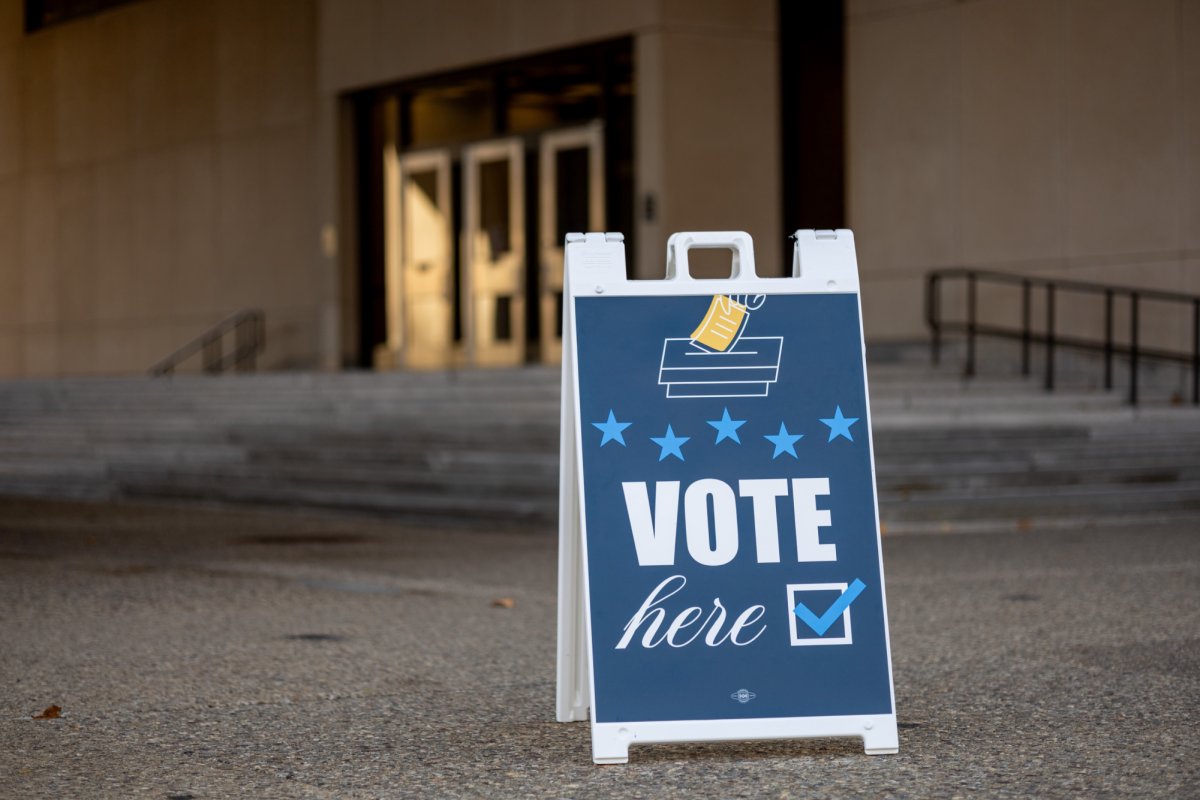
The midterm elections are now a month away after a wave of national confusion surrounding mail-in voting.
In recent months, the Trump administration has attempted to intervene in the voting process in multiple ways by attempting to restrict mail-in ballots and requiring proof of citizenship to register to vote. A Pitt professor and ACLU expert are still confident in the mail-in voting system, though advise voters to take more efforts to ensure their votes are counted.
President Trump issued an executive order in late March that would direct the U.S. Postal Services to refuse to relay ballots submitted by individuals not included on a “state citizenship list” created by the Department of Homeland Security ahead of federal elections, in an effort to “reduce the risk of fraud.”
In early September, the Supreme Court struck down Trump’s executive order on the court’s emergency docket, upholding a federal judge’s preliminary injunction on the order.
Jacob Schiller, a teaching assistant professor of political science, believes the order has successfully created discomfort among voters despite the highest court blocking it.
“One of the more harmful things that this regulation and other actions the executive branch have taken in the last few months has been to create uncertainty and confusion,” Schiller said.
According to Schiller, Trump’s executive order is not the first attempt to try restricting mail-in ballots, and likely won’t be the last. He advises people to turn in their ballots in-person when possible.
“There has been an active effort going on for quite a while now to try to undermine mail-in ballots, limit them, limit when they can be counted,” Schiller said. “In person, when possible, or returning your ballot in person are reliable ways so that you are sure your ballot actually is delivered on time.”
ACLU of Pennsylvania director of communications Cambriae Lee reaffirmed that rules regarding mail ballots have not changed.
“Mail voting is still a legal, safe, and accessible option for Pennsylvania voters as it has been in previous election cycles,” Lee said.
Lee advises those voting by mail to vote as early as possible to avoid uncertainty, though to still have confidence in the mail-in voting system.
“Double-check that your mail ballot has been received once you submit it,” Lee said.
Even though the Supreme Court upheld the lower court’s injunction, Schiller believes the “door was left open” on whether the order’s regulations would be permissible once a full hearing is held and the order is evaluated based on its merits.
Schiller also pointed to another Trump administration effort called the SAVE act, a bill that would require voters to show proof of citizenship to register to vote in federal elections, which he believes would ultimately restrict people with citizenship from being able to vote.
“To require proof of citizenship or ID often proves burdensome. Not everyone has those forms that may be required. The elderly and young voters, voters of color [are] disproportionately impacted by this,” Schiller said. “That will decrease turnout, that will prevent citizens who should be able to vote from casting their vote.”
The bill has passed the House and has yet to pass the Senate. Schiller said there is little evidence of voter fraud by non-citizens.
“When we look at data, we see very little evidence that there is rampant voting by non-citizens. There are some cases of this happening, and they get prosecuted,” Schiller said.
Schiller said people need to be cognizant as to whether the solutions targeting voter fraud solve more problems than they create.
“The truth is that it’s rarely about election security. It’s more often about suppression, and so we need to be mindful of what’s going on, and weighing how much of a problem is being solved versus how much of a problem is being created,” Schiller said.
Skyler Martin, a first-year philosophy major who is voting by mail in the upcoming midterm election, said she is not extremely concerned, but does have some fear for her vote.
“I’m not too scared,” Martin said. “I am scared for [mail-in ballots] only because there were allegations of the last election being miscounted and votes not being counted.”
Nina Rivera, a sophomore neuroscience major who plans to vote in Pittsburgh, said she is not concerned about the security of her vote but understands the concern about mail-in ballots.
“I feel okay because I’m going in person, and I’m physically casting my vote in person. But I do feel a little iffy about mail-in ballots,” Rivera said.
Rivera believes mail-in ballots are important to have to increase voting accessibility.
“A lot of people in government just want to get the mail-in ballots out, which is a big accessibility issue for elderly people or disabled people that can’t go in person,” Rivera said.
Andrew Gambino, a sophomore computational social science major, will vote in-person in Pittsburgh this upcoming election to feel confident about voting. He said he also took the time to ensure his information is accurate.
“[Voting security is] definitely something that people are concerned about,” Gambino said. “Personally, I’ve taken the time to make sure my voter information is up to date, [and] that I have a plan to vote. With what I’ve done to prepare for it, I feel confident in my voter security, at least.”
Gambino understands the concerns for voting security and still encourages everyone to vote.
“Go out and vote, get your voice heard,” Gambino said. “Regardless of who you endorse, it’s important to make sure your voice is heard and that you are fighting for the issues that are important to you.”