
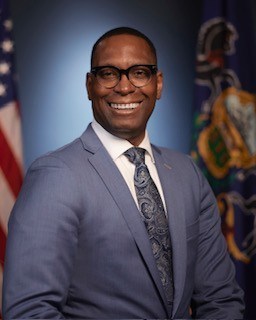
By Dr. Khalid Mumin
Reading School District
What if a student walks across the graduation stage, receives a diploma — and still has no idea what comes next? As educators, we should consider that occurrence unacceptable.
For too long, American education has treated graduation as the finish line. We count credits, administer assessments, calculate graduation rates, and celebrate diplomas. All those things matter. However, the real measure of a successful K–12 education is not simply whether students graduate. It is whether they leave our schools prepared to build productive, purposeful lives.
That is why the Portrait of a Learner matters. A Portrait of a Learner asks communities to define what every young person should know, demonstrate, and become by graduation.
Beyond academic knowledge, students need to communicate effectively, think critically, solve complex problems, collaborate, demonstrate resilience, adapt to change, and take ownership of their futures. These are not “soft skills.” They are future skills.
This is of paramount importance because our students are not all headed to the same destination.
In Berks County, for example, some of our students will attend Penn State Berks, Kutztown University, Alvernia University, Reading Area Community College or other colleges and universities throughout the country.Some will enter apprenticeships, technical careers, or the workforce. Some will proudly serve our country through the military. Others will become entrepreneurs, creating businesses and jobs rather than applying for them.Hence, none of these pathways should be treated as a consolation prize.
Our responsibility as educators is not to decide which path a student should take, but it is our responsibility to make sure students have the knowledge, skills, experiences, and confidence to choose their own path. That means the K–12 experience must become more connected to life beyond school.
Students should encounter career exploration before their senior year. They need exposure to employers, colleges, military opportunities, entrepreneurship, career and technical education, internships, and work-based learning.They should understand financial literacy, emerging technologies, and artificial intelligence. Most importantly, they should have adults helping them connect what they are learning today with who they might become tomorrow.
A young person should leave high school able to say: “I know who I am. I know what I can do. I know what opportunities exist. And I am prepared to chart my own course.”
This is especially important in communities in the city of Reading and elsewhere in the region, where education has the power to change the economic trajectory of not only a student, but an entire family.
Talent is everywhere. Opportunity is not. Our job and responsibility as educators is to close that gap.
The world our students are entering will continue to change. Jobs will evolve. Technology will advance. Some careers will disappear, while others we cannot yet imagine will emerge.
We cannot simply prepare students for only one job or one moment in time. We must prepare them to adapt, lead, learn, and reinvent themselves throughout their lives.
So perhaps Pennsylvania needs to ask a different question about public education. Instead of simply asking, “Are our students ready to graduate?”
We should ask: “Are our graduates ready for what comes next?”
A diploma should never be the end of the journey. It should be the passport that gives every young person the power, preparation, and confidence to chart their own course to success in this ever-changing society.
Dr. Khalid Mumin is superintendent of the Reading School District and former Pennsylvania Secretary of Education. He is a 2026 Penn State Alumni Fellow.