
The Parker administration is crafting a bill to authorize the new abatement in Philadelphia, but the proposal faces headwinds in City Council.
Councilmember Cindy Bass has described tax abatements as “hugely unpopular,” the Inquirer reported. Councilmember Nicolas O’Rourke responded by saying he was more focused on ensuring the city gets sufficient revenue.
Developers in the audience at the Center City District event yesterday said supporters of a new tax abatement and other housing stimulus measures have to do a better job of advertising their long-term benefits.
“That kind of conversation, holistically, isn’t happening right now,” developer Jeremy Blatstein said. “The conversation … is being overtaken by the professional protesters or advocates.”
Robert Zuritsky, president and CEO of Parkway Corp., said he can’t build on parking lots he owns in Center City because of high construction costs. He argued for an expanded tax abatement that includes new, ground-up construction on lots like his, not just conversions. Single-family homes could be excluded to reduce opposition to the measure, he said.
“The taxes on the land go up if the improvements are made. If the improvements are not made, nothing happens, and the taxes go down. This is a no-brainer, but the messaging has been perverted through the decades, because of, ‘My neighbor is paying less than I am for a house on my block,’” Zuritsky said.
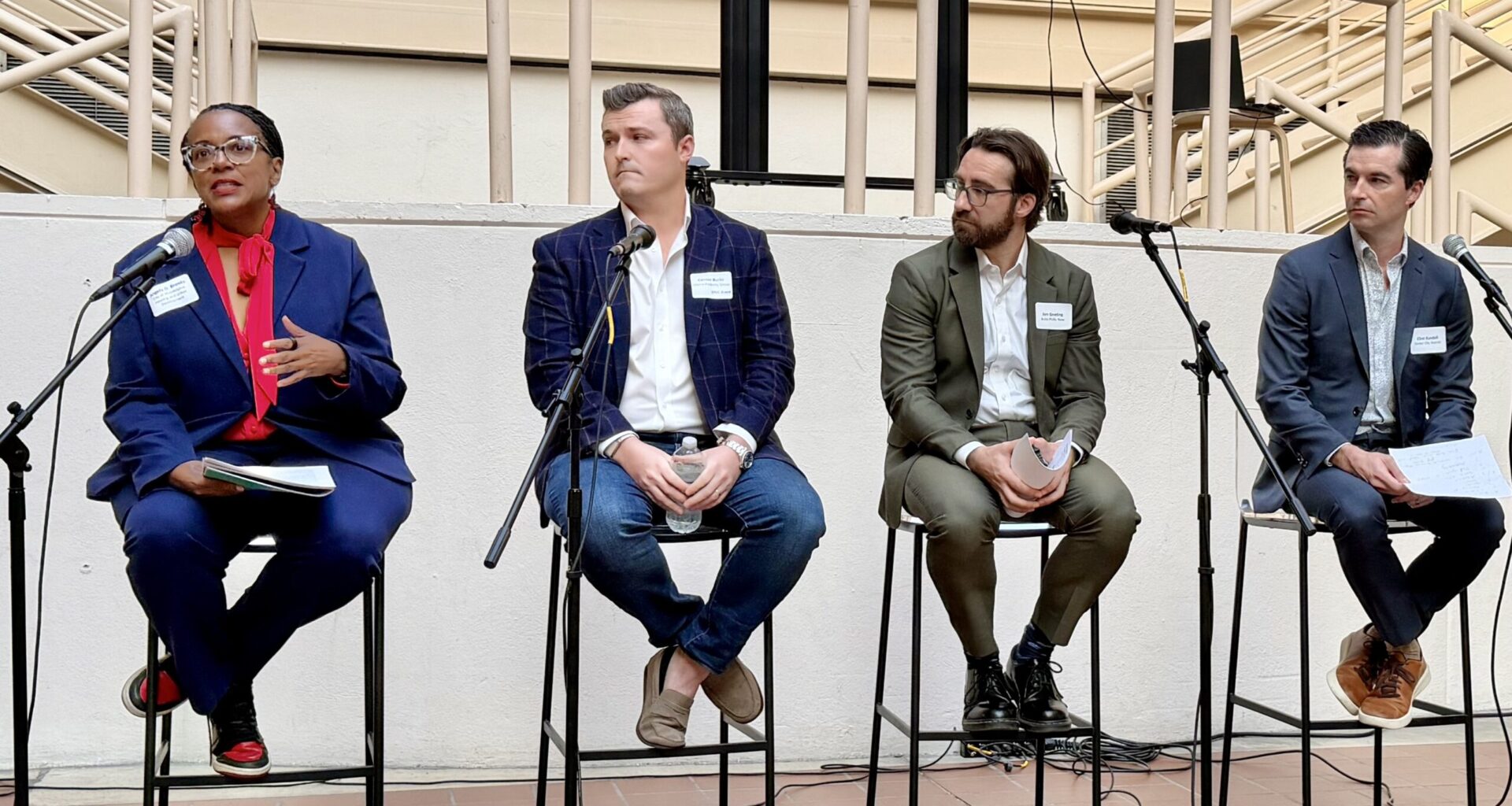
Panelist Angela Brooks, Parker’s chief housing and urban development officer, said it was important for the development community to advocate and provide information about desired policy changes.
“Data does help. Hearing the stories does help,” said Brooks, who noted that she previously worked as a developer herself. “It does help to hear those stories, and sometimes those aren’t the stories that are on the mic.”
Jon Geeting, director of policy and advocacy at the think tank Build Philly Now, said he has identified at least 19, and as many as 42, office buildings declining in value due to vacancies, and thus candidates for conversion to housing if a new 20-year tax abatement were available.
While the administration has yet to release details of its abatement proposal, Geeting said he has tried to calculate the potential tax impact if those projects advanced with abatements.
“If those [values] keep declining, converting to residential could end up bringing us more tax revenue during the abated period,” he said. “So the question might not be, ‘How much money are we losing?’ It might be, ‘How much could we stand to gain from doing this?’”