
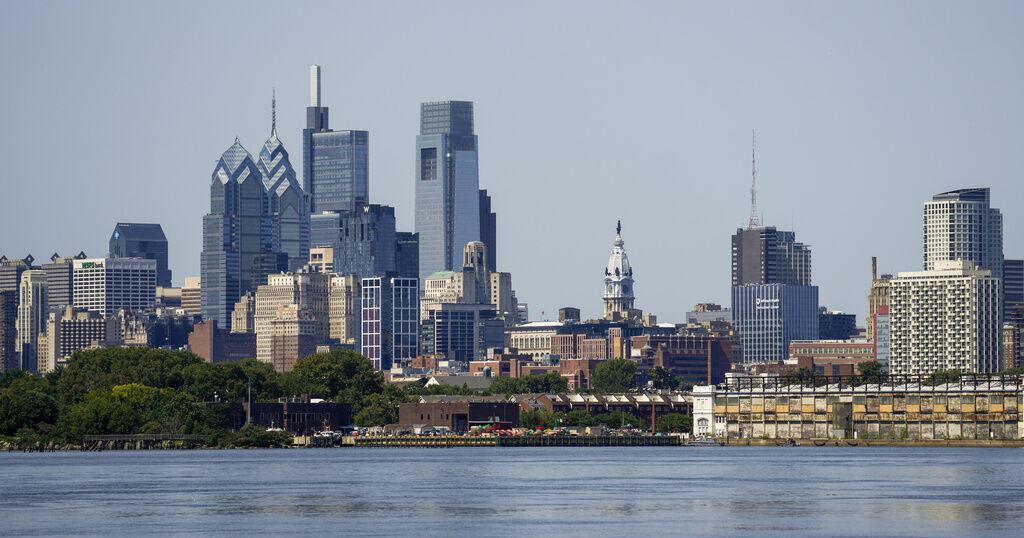
Over the course of 48 hours, the Tribune explored Philadelphia’s history from the footsteps of abolitionist Richard Allen at Mother Bethel AME Church to the Underground Railroad routes of Germantown, while discovering the restaurants, bookstores and businesses carrying that legacy forward today.
A two-day journey through Black Philadelphia’s history, culture, food, music and entrepreneurship includes visits to historic churches, Underground Railroad sites, museums, jazz clubs and Black-owned businesses. It is a celebration of the people, places and traditions that continue to shape the city.
Day One: The Foundations of Black Philadelphia
9 a.m. — Starting the morning in South Philadelphia
Breakfast at Comfort & Floyd

Comfort and Floyd restaurant. —TRIBUNE PHOTO/LEAH DUFFY
We began the weekend in South Philadelphia at Comfort & Floyd, a neighborhood luncheonette located near East Passyunk Avenue. The café combines classic breakfast favorites with a modern twist, offering a relaxed start before a day focused on Philadelphia’s Black history, culture and community.
The area surrounding South Philadelphia has long been home to generations of immigrant and Black communities, making it a fitting starting point for a journey through the city’s evolving cultural landscape.
Location: 1301 S. 11th St.
Hours: Monday, Thursday–Sunday from 8 a.m. to 3 p.m.
After breakfast, we headed toward Society Hill, the home of one of the most important landmarks in Black religious history.
10:30 a.m. — Visit Mother Bethel AME Church
Mother Bethel African Methodist Episcopal Church. —TRIBUNE PHOTO/LEAH DUFFY
Philadelphia’s historic Black community is the core of Mother Bethel African Methodist Episcopal Church.
Founded in 1794 by Richard Allen, a formerly enslaved man who became a minister and abolitionist, Mother Bethel became the birthplace of the African Methodist Episcopal (AME) Church, the first independent Black denomination in the United States.
The church sits on the oldest piece of property continuously owned by African Americans in the country. For more than two centuries, Mother Bethel has served as a center for faith, education, activism and social justice.
Visitors can explore the historic sanctuary, view artifacts connected to Richard Allen and learn how Philadelphia’s Black religious leaders helped shape movements for abolition and civil rights.
Location: 419 S. 6th St.
Hours: Museum tours are available the first Saturday of each month from 10 a.m. to 3 p.m. and Sundays from 11 a.m. to 1 p.m. Additional tours are available by appointment.
Before leaving, we took a walk through the surrounding neighborhood, where early Black Philadelphians built churches, businesses and community institutions.
Noon — Explore the African American Museum in Philadelphia
Old City / Center City
African American Museum of Philadelphia. —TRIBUNE PHOTO/LEAH DUFFY
We spent the afternoon at the African American Museum in Philadelphia, the first institution built by a major city in the country dedicated to preserving and interpreting African American history and culture.
Located near Independence Mall, the museum opened in 1976 as part of Philadelphia’s celebration of the nation’s bicentennial. Since then, it has become a major cultural institution showcasing the experiences, achievements and struggles of African Americans through art, historical objects and interactive exhibitions.
The museum’s collections explore topics including slavery, the Civil Rights Movement, Black migration, Philadelphia’s Black communities and contemporary African American artists.
Visitors should plan to spend at least two hours exploring the galleries.
Hours: Wednesday–Saturday, 10 a.m. to 5 p.m.; Sunday, noon to 5 p.m.
After exploring the museum, we walked to Reading Terminal Market for lunch.
2 p.m. — Lunch at Reading Terminal Market
Ma Lessie’s Chicken & Waffles
Ma Lessie’s restaurant inside Reading Terminal Market. —TRIBUNE PHOTO/LEAH DUFFY
We made a stop inside Philadelphia’s historic Reading Terminal Market at Ma Lessie’s Chicken & Waffles.
The market, which opened in 1893, has long been a gathering place for Philadelphia communities and remains one of the city’s busiest public markets. Today, it is home to dozens of food vendors, including Black-owned businesses serving traditional favorites.
At Ma Lessie’s, visitors can enjoy Southern comfort food staples such as fried chicken and waffles while experiencing one of Philadelphia’s most historic culinary destinations.
Ma Lessie’s kitchen. —TRIBUNE PHOTO/LEAH DUFFY
Location: Reading Terminal Market, 1136 Arch St.
Hours: Follow Reading Terminal Market’s current vendor schedule.
After lunch, we took some time to explore the market before heading west toward University City.
4 p.m. — Shop Black-Owned Businesses in University City
Blk Ivy Thrift and Common Ground
Black Ivy Thrift. — @blkivythrift Instagram.
We spent the afternoon supporting Philadelphia’s modern Black entrepreneurs through a shopping route highlighting local creativity like Blk Ivy Thrift, a curated vintage and thrift shop in University City.
The store blends fashion, history and culture by offering secondhand clothing, accessories and unique finds.
Location: 3605 Lancaster Ave.
Hours: Friday–Sunday, noon to 5 p.m.
Continue to Common Ground, a Black-owned retail space featuring clothing, gifts and products from independent creators.
Common Ground. —TRIBUNE PHOTO/LEAH DUFFY
Location: 134 S. 11th St.
Hours: Monday–Thursday, noon to 7 p.m.; Friday–Saturday, noon to 8 p.m.; Sunday, noon to 5 p.m.
These businesses represent a continuation of Philadelphia’s long history of Black entrepreneurship—from historic neighborhoods once filled with Black-owned shops to today’s generation of designers, artists and business owners.
7 p.m. — Dinner in Center City
Kitchen + Kocktails by Kevin Kelley
Kitchen and Kocktails restaurant. —TRIBUNE PHOTO/LEAH DUFFY
After a full day exploring Philadelphia’s historic landmarks and Black-owned businesses, we headed back toward Center City for dinner at Kitchen + Kocktails by Kevin Kelley, a restaurant known for its modern take on Southern cuisine.
Located along South Broad Street, the restaurant combines traditional comfort food with an upscale dining experience. The menu highlights dishes inspired by Southern cooking, including fried chicken, seafood, Cajun-inspired dishes and classic sides.
Kitchen + Kocktails represents a newer chapter in Philadelphia’s Black culinary scene, where Black chefs and entrepreneurs are creating spaces that celebrate food, culture and community while bringing Southern traditions to a wider audience.
Visitors should consider making reservations, especially on weekends, when the restaurant attracts large crowds.
Kitchen and Kocktails restaurant interior. —TRIBUNE PHOTO/LEAH DUFFY
Location: 225 S. Broad St.
Hours: Monday–Thursday: 11 a.m. to 10 p.m.
Friday: 11 a.m. to midnight
Saturday: 10 a.m. to midnight
Sunday: 10 a.m. to 10 p.m.
After dinner, we continued our evening with live music just a few blocks away.
9 p.m. — Experience Philadelphia’s Jazz Legacy
South Restaurant & Jazz Club
South Restaurant & Jazz Club. —TRIBUNE PHOTO/LEAH DUFFY
We ended the first night at South Restaurant & Jazz Club, a venue that celebrates Philadelphia’s deep connection to jazz and Black musical traditions.
Philadelphia has long been considered one of America’s major jazz cities. From legendary musicians who performed along South Street to the city’s role in shaping modern jazz, soul and rhythm and blues, music has always been central to Philadelphia’s Black cultural identity.
South combines Southern-inspired dining with live performances from local and visiting musicians. The restaurant’s atmosphere reflects the connection between food, storytelling and music that has defined Black cultural spaces for generations.
Check the performance schedule before visiting, as live music times vary.
Location: 600 N. Broad St.
Hours: Vary depending on performances and events.
Day Two: From Black Entrepreneurship to Freedom Movements
9 a.m. — Start the Morning at a Black Bookstore
Hakim’s Bookstore & Gift Shop
Hakim’s Bookstore and Gift Shop, Philadelphia’s oldest Black-owned bookstore, specializes in Black literature. —TRIBUNE PHOTO/KAYLA BROWN
Kayla Brown
TRIBUNE PHOTOGRAPHER
We began our second day in West Philadelphia at Hakim’s Bookstore & Gift Shop, one of the longest-running Black-owned bookstores in the United States.
Founded in 1959 by Dawud Hakim, the bookstore was created as a space dedicated to African American history, education and cultural awareness during a period when many mainstream bookstores lacked books by Black authors or about Black experiences.
For decades, Hakim’s has served as more than a bookstore—it has been a community institution where generations of Philadelphians have found literature about Black history, politics, religion and culture.
Spend time browsing the shelves, where visitors can find works from Black historians, writers, activists and educators.
Location: 210 S. 52nd St.
Hours: Monday, Wednesday, Friday: noon to 6:00 p.m., Saturday: 11 a.m. to 6:00 p.m.
After exploring the bookstore, we continued into Germantown, one of Philadelphia’s most important historic neighborhoods.
11 a.m. — Follow the Underground Railroad
Johnson House Historic Site
Johnson House historic site. —TRIBUNE PHOTO/LEAH DUFFY
Travelling north to Germantown, we visited the Johnson House Historic Site, one of Philadelphia’s best-preserved Underground Railroad landmarks.
Built in the late 18th century, the Johnson House became a safe location for freedom seekers escaping slavery. The Johnson family, who were active abolitionists, opened their home to people seeking freedom and worked alongside a network of activists throughout the region.
The site offers visitors a closer look at Philadelphia’s role in the abolition movement and the risks taken by both freedom seekers and those who helped them.
Guided tours explore the history of the Johnson family, the Underground Railroad and the larger fight against slavery in Pennsylvania.
Reservations are recommended, as tours are offered hourly.
Location: 6306 Germantown Ave.
Hours: Thursday–Saturday, noon to 4 p.m.
After the tour, we continued west for lunch and a look at Philadelphia’s modern Black business community.
1 p.m. — Lunch at Out West
A Modern Gathering Place in West Philadelphia
Barista Swags Cappuccino working at Out West restaurant. — @outwest_philly Instagram.
After exploring Philadelphia’s abolitionist history, we headed back toward West Philadelphia for lunch at Out West, a café and community gathering space located on Walnut Street.
Opened by Muhammad Abdul-Hadi, founder of Down North Pizza, Out West represents a new generation of Black entrepreneurship in Philadelphia. The café was created as a welcoming neighborhood space centered around food, creativity and community.
The menu includes coffee, breakfast and lunch options, including sandwiches, cheesesteaks and other comfort-food favorites. More than just a restaurant, Out West reflects how Black-owned businesses continue to shape Philadelphia neighborhoods today.
We took some time to enjoy the space, artwork and community atmosphere before continuing the afternoon’s historic sites.
Location: 5127 Walnut St.
Hours: Monday–Friday: 8:00 a.m. to 4:00 p.m.; Saturday–Sunday: 9:00 a.m. to 4:00 p.m.
2:30 p.m. — Learn the History of Slavery
Lest We Forget Slavery Museum
Lest We Forget Slavery Museum. —TRIBUNE PHOTO/LEAH DUFFY
The next stop on our odyssey was the Lest We Forget Slavery Museum, a privately operated museum dedicated to preserving artifacts and educating visitors about slavery and the experiences of enslaved people.
The museum’s collection includes historical objects related to the transatlantic slave trade, plantation life and the lasting impact of slavery on American society.
Unlike traditional museums, Lest We Forget was created from a private collection and focuses on creating a direct connection between visitors and the physical evidence of slavery’s history.
Because visits are scheduled by appointment, travelers should arrange their visit ahead of time.
Location: 5501 Germantown Ave.
Hours: By appointment with 24 hour notice.
4 p.m. — Reflect on Philadelphia’s Complicated Past
Cliveden of the National Trust
Cliveden, one of the historical sites you can visit with the Historic Germantown OnePass. — Historic Germantown
End the historical portion of the trip at Cliveden, a National Trust Historic Site in Germantown that explores Philadelphia’s colonial history, the Revolutionary War and the lives of the enslaved people who lived and worked on the property.
Built in the 1760s for the Chew family, Cliveden is often remembered for its role in the Battle of Germantown during the American Revolution. However, the site also examines the experiences of enslaved Africans and African Americans connected to the estate.
Today, Cliveden’s tours encourage visitors to consider the complicated relationship between freedom, wealth and slavery in early Philadelphia.
The visit provides a meaningful conclusion to the weekend by showing that Black history is not separate from Philadelphia’s story—it is central to understanding it.
Location: 6401 Germantown Ave.
Hours: Vary seasonally; check the current tour calendar before visiting.
6 p.m. — Finish With Something Sweet
Banana Mousse restaurant. —TRIBUNE PHOTO/LEAH DUFFY
Before ending your weekend, make one final stop at Banana Mousse in West Philadelphia.
The dessert shop offers homemade treats, including banana pudding, cakes and other sweet creations. The stop provides a final opportunity to support a Black-owned neighborhood business while reflecting on the many ways Philadelphia’s Black community continues to shape the city’s food, culture and economy.
Location: 5602 Spruce St.
Hours: Monday, Wednesday–Sunday, 2:00 p.m. to 8:00 p.m.
Black Philadelphia is more than a moment in history
Black Philadelphia is not preserved only behind museum walls or historic markers. It lives in the music playing inside jazz clubs, the conversations happening in neighborhood bookstores, the meals served in family-owned restaurants and the entrepreneurs creating new spaces across the city.
A weekend may only offer a glimpse into Philadelphia’s Black history, but each stop tells part of a much larger story — one of resilience, creativity and community. From the fight for freedom centuries ago to the businesses and cultural institutions thriving today, Black Philadelphia remains a vital force in shaping the city’s past, present and future.
Stay informed and connected — subscribe to The Philadelphia Tribune NOW! Click Here