
PLAINS, LUZERNE CO. (WOLF) — Pennsylvania heating-oil customers are heading into the winter with prices near their highest level on record, creating new pressure for households already struggling with groceries, rent, insurance and other essential bills.
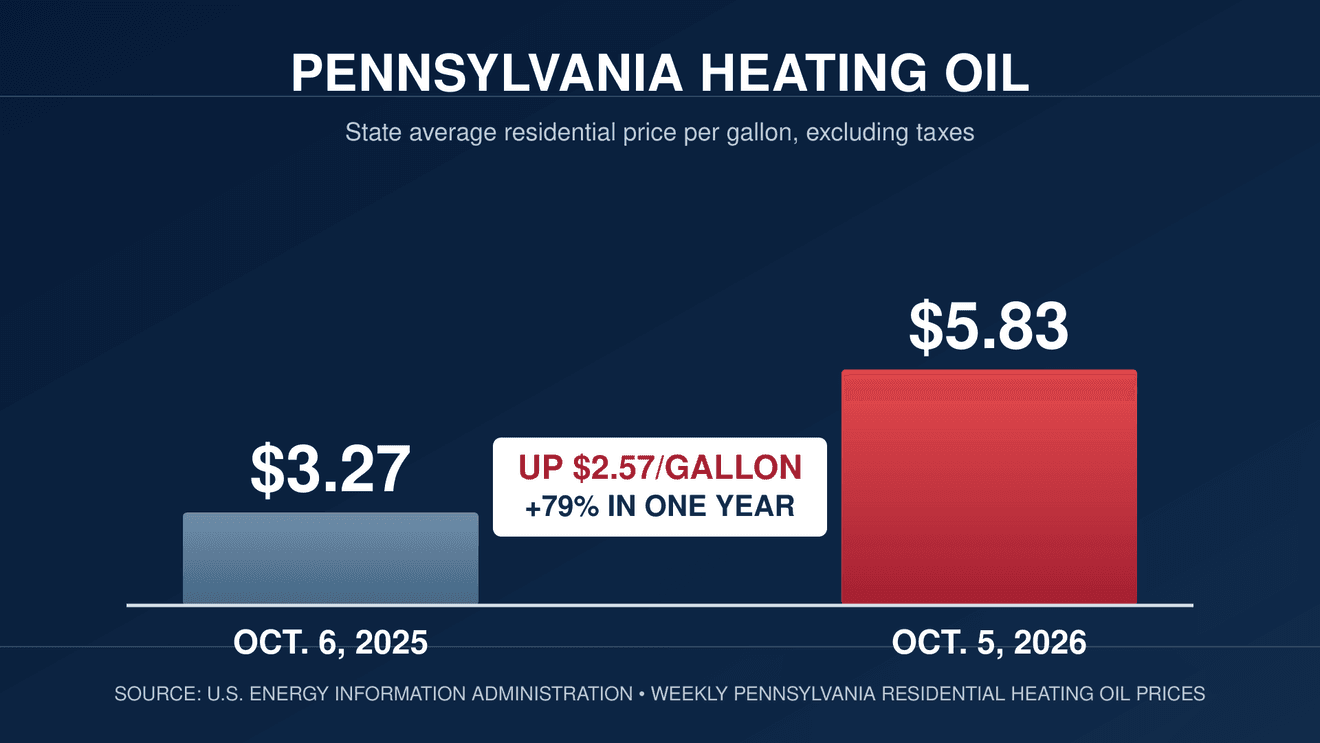
The statewide average residential heating-oil price was $5.833 a gallon as of Oct. 5, according to the U.S. Energy Information Administration. That is just three cents below Pennsylvania’s record of $5.863 a gallon, set in November 2022.
For a household needing a 100-gallon delivery, that statewide average works out to about $583 before taxes and delivery-related charges. At the same point last October, the average was about $327 — a difference of more than $250 on the same 100-gallon fill.
The escalation comes after several relatively less expensive heating seasons. Pennsylvania’s early-October average was $2.07 a gallon in 2016, $3.15 in 2024 and $3.27 last year, according to EIA data.
Heating oil prices normally increase as colder weather drives up demand, especially in January and February. But this year’s increase is not simply seasonal.
EIA says global distillate fuel supplies are tight because of reduced refining activity, while U.S. demand for exports and the cost of imports have increased. Distillate fuel includes heating oil and diesel. East Coast distillate inventories were 32% below their five-year seasonal average in September and are expected to remain well below average through the winter.
That leaves customers exposed to both higher base prices and the possibility of sharper swings if a sustained cold stretch increases demand.
The EIA’s current winter outlook projects that households relying primarily on heating oil will see the largest increase in heating expenses among the major home-heating fuels — about 21% more than last winter. The agency projects a national average heating-oil price of $5.26 a gallon for the November-through-March season, though local prices can vary significantly by dealer, delivery area, taxes and contract terms. www.eia.gov
The forecast assumes a warmer-than-last-year winter in the Northeast, which could lower the number of gallons households burn. But families who cannot afford to fill their tanks before a cold snap may be especially vulnerable, as heating oil prices can react quickly to wholesale market changes.
Unlike regulated utility bills, heating-oil customers often pay the prevailing price when they order fuel. EIA estimates wholesale increases can pass through to retail customers in four to six weeks.