
In Erie County, New York, just south of Buffalo, health officials are reporting a travel associated diphtheria case, according to local media.
The Erie County Health Department has identified schools within the West Seneca School District as sites for potential exposure.
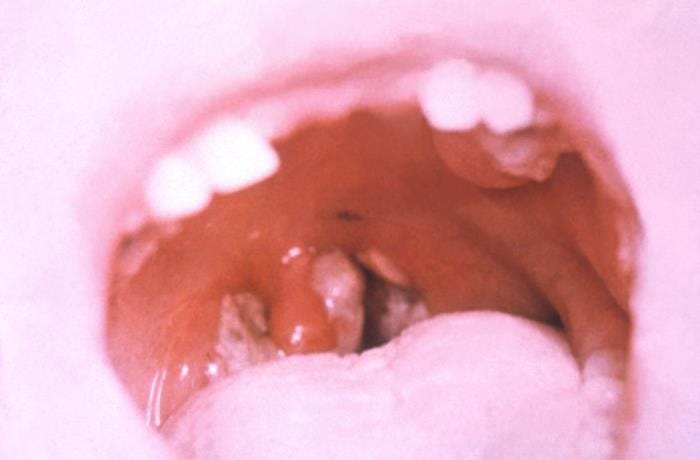
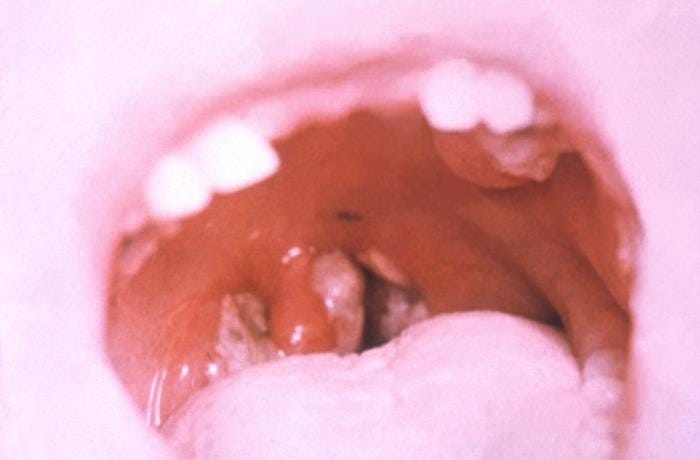 This image shows an intraoral view revealing pharyngeal inflammation in a patient with diphtheria caused by Corynebacterium diphtheriae. An adherent gray pseudomembrane is visible over the right tonsil and adjacent pharyngeal mucosa, a characteristic finding that can obstruct the airway and interfere with swallowing. Image/CDC/ Carl Flint
According to the district, notifications have been sent to families at Clinton Primary, Northwood Elementary, Winchester-Potters Elementary & East Middle School.
“Based on an abundance of caution, we are working with district leadership to inform students, staff and families about this potential exposure,” the Health Department said in a statement included in the report. “Notifications included instructions to watch for diphtheria symptoms through Oct. 18, 2026; and, to ensure that students, staff and their households are up to date on diphtheria vaccines (DTaP, Tdap/Td).”
Diphtheria is very rare in the US with only 10 cases being reported in the United States over the past 20 years, and the last reported respiratory case, according to federal health officials, was in 1997.
Diphtheria is an infectious disease caused by the bacteria Corynebacerium diphtheria.
It is spread person to person by inhaling respiratory droplets and less commonly by direct skin contact of lesions of infected people.
Subscribe to Outbreak News TV on YouTube
The most serious infections are caused by a toxin produced by some types of the bacteria.
Respiratory diphtheria can include a sore throat and fever, and an adherent grey pseudomembrane that can cover the tonsils and mucosa of the pharynx, larynx, and nose. Enlarged anterior cervical lymph nodes and oedema of the surrounding soft tissue can cause a characteristic ‘bull-neck’ appearance. Untreated, respiratory diphtheria can be life-threatening.
Cutaneous diphtheria presents as chronic, nonhealing sores or shallow ulcers which may have a grey membrane.
Health officials did not specify whether the diphtheria case was respiratory or cutaneus.
Diphtheria vaccination protects against the disease and is very effective. It gives protection against disease by production of antibodies to the diphtheria toxin.