
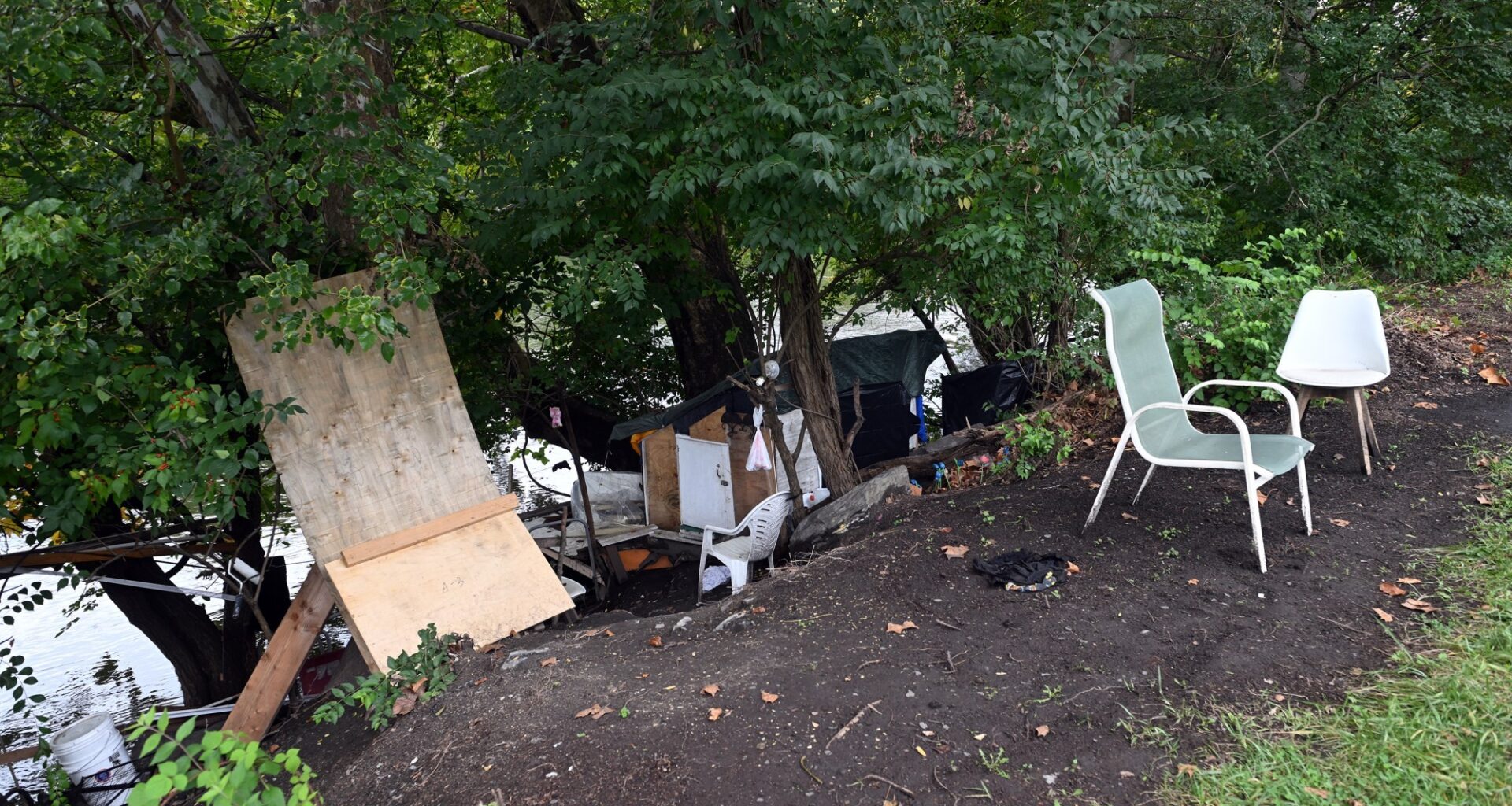
A coalition of Berks County organizations is seeking additional funding to expand emergency shelter services for people experiencing homelessness, following a winter in which four unsheltered individuals reportedly died of exposure to the cold.
Representatives of the Berks Coalition to End Homelessness and Opportunity House outlined a coordinated severe weather response plan during City Council’s committee of the whole meeting Monday.
The initiative would expand street outreach, daytime warming centers, overnight shelter accommodations and temporary hotel stays for families while establishing a unified system for funding and coordinating services.
Elise McCauley, executive director of the Berks Coalition to End Homelessness, said the organizations are requesting $350,000 from the city for 2027. They have also requested $350,000 from the county.
The city has already committed $100,000 to help launch this winter’s program, with an additional $50,000 pledged by United Way and $100,000 from the Wyomissing Foundation.
Alyssa Bushkie, CEO of Opportunity House, emphasized the urgency of the effort.
 Alyssa Bushkie (Courtesy Opportunity House)
“Our main goal with this initiative and with this policy is to protect unhoused community members from these outcomes, to keep them safe, and candidly, to keep them alive,” Bushkie said.
Bushkie noted at least four weather-related deaths occurred in 2026, though an exact final count of unsheltered individuals who died of cold exposure this past winter has not been officially published or finalized.
The January point-in-time count identified 213 unsheltered individuals and another 420 people living in emergency shelters or transitional housing across Reading and Berks, an 8% increase over the previous year, she said.
Bushkie cautioned that the figures likely underestimate homelessness by hundreds of people because some individuals living in vehicles, abandoned buildings and other locations were not counted. Some shelters also do not report their figures to the coalition.
Officials said the proposed policy would establish a Code Blue season from Dec. 1 through March 31 and a Code Red season, addressing dangerous summer heat from June 1 through Sept. 30.
The winter program would focus on five areas: street outreach, expanded daytime facilities, overnight shelter for individuals, hotel accommodations for families, and case management and supportive services.
McCauley said the initiative is designed to eliminate gaps in services while reducing duplication among participating organizations.
A central feature would be lowering barriers that sometimes prevent homeless individuals from seeking shelter, including requirements related to substance use.
“If you want to utilize Code Blue services solely on the basis of this is a life-saving service, and so if that means that you’re coming to us and you’re using substances, you’re still going to be allowed in the program,” Bushkie said.
Participation in treatment and other supportive services would remain voluntary.
McCauley said organizers are also exploring partnerships with hotels that accommodate pets or accept guests without identification, addressing obstacles that sometimes keep people outdoors.
The program could provide bus passes for families staying in hotels, depending on available funding. Discussions are also underway with the Animal Rescue League of Berks County and Humane Pennsylvania about temporary accommodations for pets.
Council President Donna Reed questioned whether surrounding municipalities should contribute more toward addressing homelessness.
McCauley said available data suggest approximately half of those experiencing homelessness in Berks live outside Reading.
Reed said the city has taken a leading role in providing services, but homelessness is not confined to its boundaries.
Bushkie agreed that expanding outreach beyond Reading is increasingly important.
The coalition released a request for proposals Oct. 1, with applications due Oct. 18. Funding decisions are expected by the end of October, ahead of the Dec. 1 start of Code Blue.
McCauley said participating organizations have been meeting regularly for more than a year to develop the coordinated response.
The coalition will monitor services and provide seasonal public reports documenting how funding is used and the results achieved, she said.