

Philadelphia’s durability was on display again last quarter, but high numbers don’t necessarily mean local startups are raking in cash.
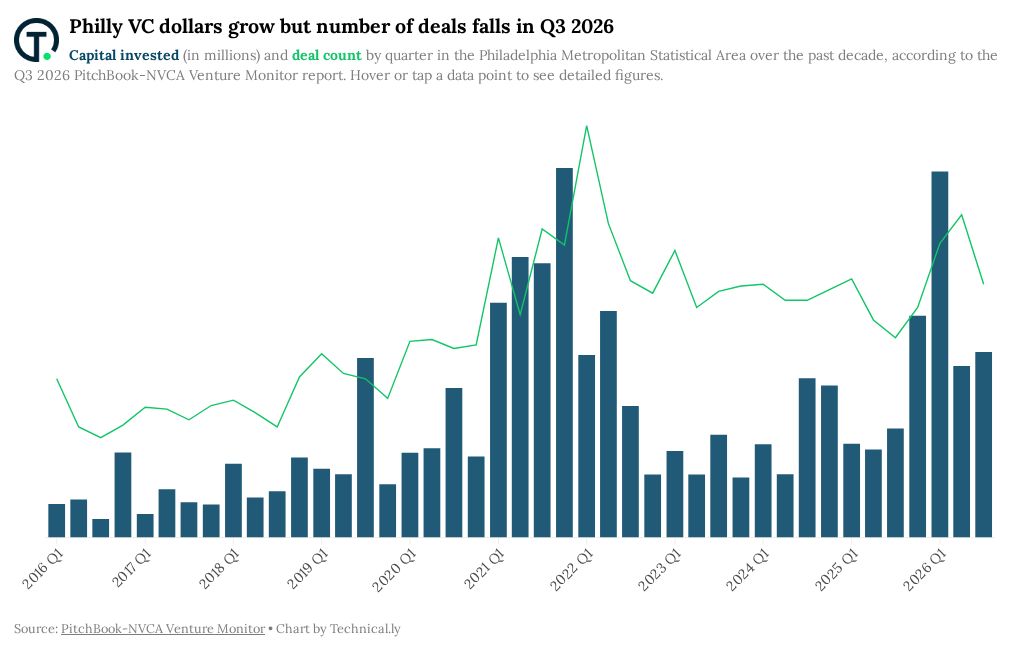
Startups in the region brought in $1.51 billion across 142 deals in Q3 2026, according to PitchBook and the National Venture Capital Association’s quarterly Venture Monitor report.
Philly companies raised about $100 million more in Q3 than the one before, though deal count dropped from 181 to 142. The Greater Philadelphia metro’s deal flow is also significantly higher than Pennsylvania as a whole. Startups in the commonwealth raised $807 million across 80 deals.
Q3 was the fourth consecutive quarter the region raised over $1 billion. It’s worth noting, though, that some of the biggest deals came from companies incorporated in Delaware with little to no physical footprint there.
“Philadelphia is a durable market, even when a few large deals make the quarterly totals look volatile,” Antonia Dean, partner at Black Operator Ventures, told Technical.ly, “but deal count fell… so I wouldn’t interpret the higher dollar figure as more founders getting funded.”
This also suggests that investors are willing to write checks but are being selective about their investments, Howard Lubert, area president of angel investor network Keiretsu Forum Mid-Atlantic, said. This aligns with national concentration trends, Lubert told Technical.ly.
A few companies bring in large investments, while other startups with strong technology lack funding.
“While topline numbers may appear resilient, capital is increasingly concentrated, and emerging and midsize firms are finding it harder to raise their next funds,” Bobby Franklin, president and CEO at NVCA, said. “That matters because these investors are often among the first to identify new entrepreneurs, technologies, and markets.”
To Dean, this represents a disconnect between investment totals and how accessible funding actually feels to founders.
“Philly’s increase in dollars alongside fewer deals is consistent with capital becoming more concentrated, although these figures alone don’t tell us which stages are feeling the most pressure,” she said.
These figures may vary slightly after publication, as some deals aren’t accounted for until weeks after quarterly VC reports are published, or PitchBook may find errors in its data.
DE incorporated companies cause inflated data
Of the top deals, at least five were headquartered in Delaware but not present here, which, like past quarters, puts the total capital at least $545 million lower.
For example, energy company I-Pulse’s $250 million raise was the region’s largest deal in Q3. PitchBook lists the company as being based in Wilmington, but it actually has offices in New York and London, according to the company’s LinkedIn.
Incorporating in Delaware is a common tactic companies use to benefit from a business-friendly tax structure, even if most of their operations happen elsewhere.
Transactions like this can distort our understanding of what’s actually happening in the region, Lubert said.
Since Q1 2026, Philly’s reported top deal has come from a company incorporated in the region that appears to be headquartered elsewhere, including a $500 million raise from World Liberty Financial during the first quarter of this year.
Being incorporated here and securing a large financing round boosts the region’s numbers, but doesn’t create local jobs, research partnerships or train leaders who will go on to start the next generation of companies, Dean said.
IT company Cornelis Networks and biotech startup Fore Biotherapeutics were the second and third largest deals, raising $205 million and $182.6 million, respectively. Both companies actually have a presence in the region, making them good examples of local momentum, Dean said.
“Locally we need to understand where those dollars are actually supporting operations,” she said.
Uneven capital through the end of the year
Heading into the end of 2026, Lubert and Dean both expect the investment numbers to remain strong, but not a perfect reflection of founders’ experiences, they said.
Current data puts Philly’s total amount raised so far this year at about $5.9 billion, already above the 2025 total shown in the chart. Fewer deals this quarter suggests that access to capital remains uneven, Dean said.
Lubert expects more pressure on companies that have raised capital to deliver on their promises to investors, he said.
Over the summer, Dean predicted that exits from large AI companies would return money to limited partners and “loosen the fundraising market,” she said. With those deals delayed, she’s unsure whether the anticipated return of capital to limited partners will happen before year-end.
In the meantime, there are steps founders can take to continue growing.
“My advice to founders is to build around the customers and revenue they can secure now,” Dean said. “Stay realistic about valuations and begin investor conversations well before they need the money.”