
There were few if any kind words from Northampton County residents at Thursday’s Northampton County Council meeting regarding a proposed 43.5% property tax hike.
Of the 18 people who addressed council, most said the 2027 budget and tax hike ignores rising costs, places financial stress on businesses, senior citizens and the young, and was given little thought.
“Maybe I’m here to call for a revolution. Mercy and justice might be disappearing,’’ said Beverly Hernandez of Bethlehem Township.
She said she is aware County Executive Tara Zrinski inherited a problematic financial situation but it shouldn’t mean everyone has to pay.
If such an increase is approved by council, “People are going to flee (the county) and go where there are lower taxes. You have to think of what’s coming … and you’ll be seeing a lot of skinny people because they can’t afford food.’’
Charles Perity of Danielsville likened the budget to “throwing wet paper towels on the wall and see what sticks.’’
“I see bright and shiny faces out there [referring to council members] and this is the best you can do?’’ he said.
Lorraine Story rents several properties in the county and said she keeps rents reasonable in the interest of providing affordable living.
With a tax hike, she said rents will rise and could put some tenants out of a place to live. “This (budget) is so big. It’s a joke,’’ Story said.
“Everybody in this room are in the same boat together,’’ said Mark Ozimek of Lower Saucon Township. “My issue is you want money from people already struggling and now you’re asking we take a double hit to lessen your burden … America has to change its outlook.’
“I voted for Tara and this was a kick in the teeth to everyone who voted for her,” he added.
Others argued county employee pensions should be stopped and changed to 401K plans, Gracedale, the county nursing home, should be sold to a private entity and little should be done to improve conditions at the county jail, all of which are included in Zrinski’s budget introduced earlier this month.
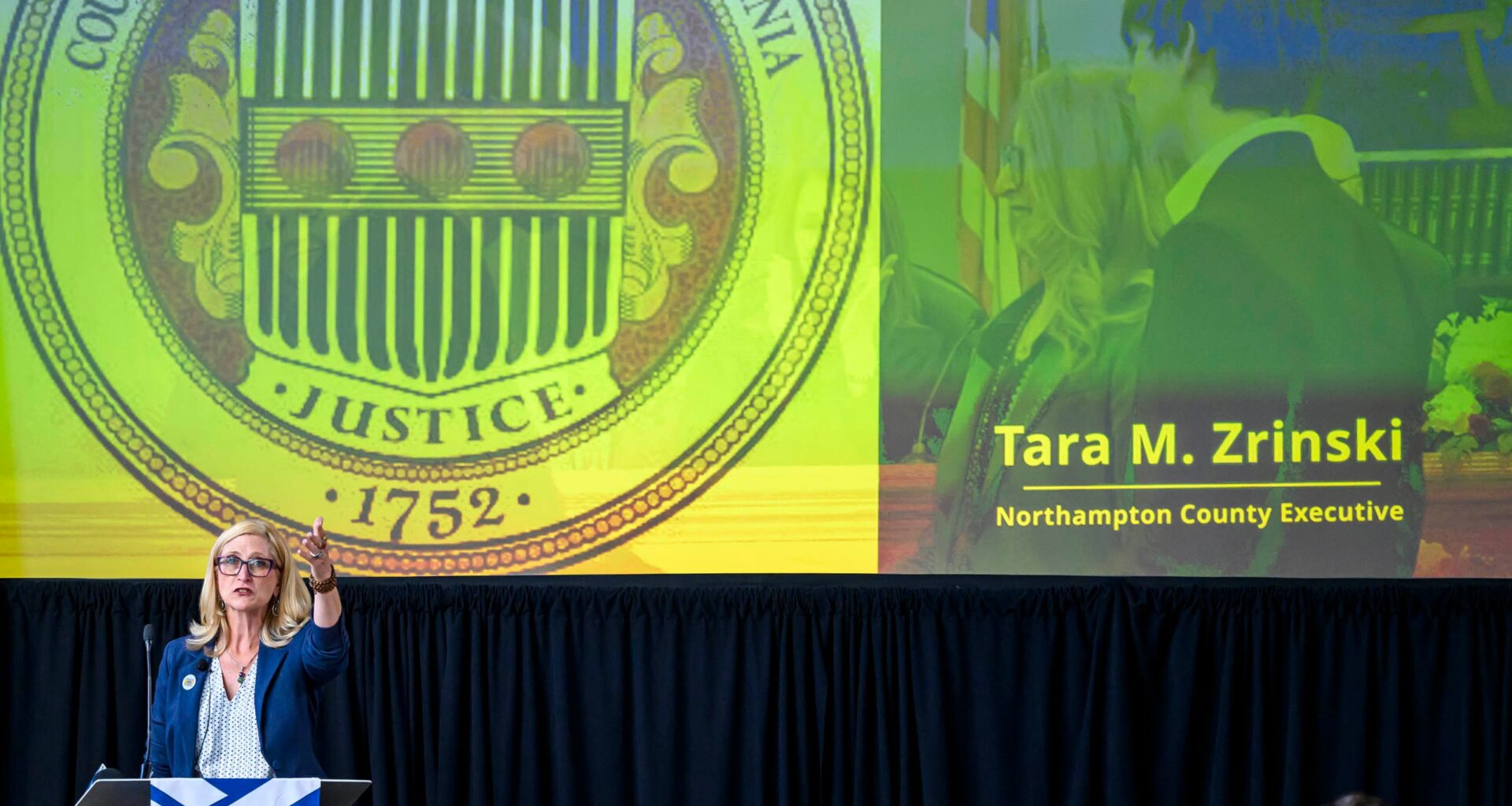
Addressing the crowd, Zrinski said she understood a tax hike is unwelcome and burdensome but at the same time, county government has obligations which have been overlooked.
“This budget represents a public commitment,’’ she said, referring to the county court system, parks, structures, human services and Gracedale.
She said there has not been a tax increase for 8 years and within that time, costs have significantly increased and residents’ needs are becoming more complex. She asked the crowd to look hard at the budget and “tell me what employee doesn’t get a raise, what services should be cut, should I burn down the prison.’’
During her budget address, Zrinski said the 43.5 % tax increase would raise the millage rate from 10.8 mills to 15.5 mills. Under the higher millage rate, the tax bill for the average residential property assessed at $62,000 would go from $669 per year to $961, or about $292 more per year.
The proposed budget is up from 2026, which was $546 million. This new budget allows for spending on previously underfunded areas such as money for maintenance at the courthouse, prison, public places, employee pensions, pay raises and Gracedale, Zrinski said.
Mark Aurand, director of county administration, also spoke to the audience and said, “The budget is disturbing and comes at a bad time … rising costs for groceries, health care — it’sdifficult for many people.’’
However, he said the county is confronted with significantly higher costs during the past decade. One example is Gracedale, which had no increase in its budget last year.
He went on to say the county’s primary source of income is property taxes, and “unfortunately to raise new revenue it’s all we have.’’
Council President Ken Kraft said after the meeting he is not surprised by the public’s reaction to the increase.
“We all have been inundated with emails,’’ he said of messages sent to County Council expressing anger over the proposed hike.
He also said the condition of the county’s money issues are not the result of the current board since most are relatively new to the position.
The budget is not final, and still must go before a series of council sessions to evaluate and examine what could be and shouldn’t be cut or added in the form of an amendment. The first vote on the spending plan is Dec. 3, with a final vote scheduled for Dec. 15..