
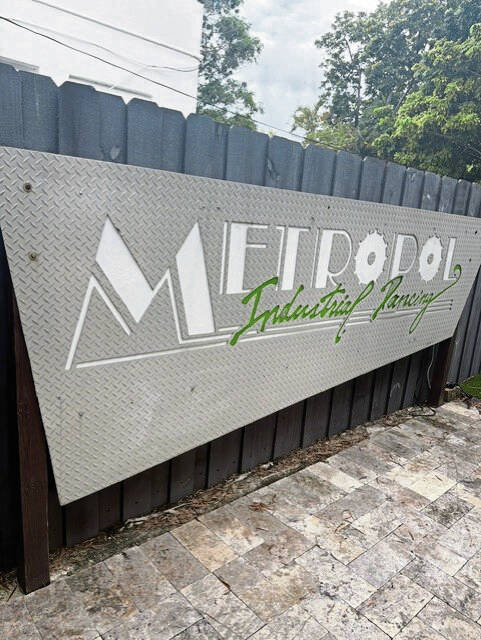
It may be hard to believe now, but Pittsburgh’s Strip District was once an industrial area full of warehouses and blue-collar workers, hardly a bustling, neon-lit business district on weekend nights.
Then came clubs like Metropol.
“It was a warehouse district in a post-industrial city that didn’t know what it was doing,” said David Rullo, host of the Gen X Pgh podcast, who is writing a book on Metropol that will be released this time next year.
On Aug. 11, 1988, Robin Fernandez and his brother, Eric, opened Metropol at 1600 Smallman St. Three years later, they opened the adjoining club Rosebud next door. Metropol remained there until it was sold at the end of 2002 and closed its doors, heralding a new era for Pittsburgh nightlife at its opening and a slow decline with its shuttering.
The club wasn’t like anything that existed at the time. “Metropol was more Gothic, more industrial,” said Vincent Cipolla, a longtime bartender at Metropol and Rosebud.
“Robin Fernandez should have all the credit for revitalizing the Strip District, because he did,” said Stuart Sherman, who worked as a bartender at Metropol for several years starting in 1994.
The club was completely different from the other nightlife spots that existed at the time, creating a new definition of what was cool.
“We were so far ahead of the time,” Cipolla said.
That also was reflected in the clientele. From college students at the Art Institute of Pittsburgh and Point Park University to punk kids and members of the LGBTQ community, Metropol was a safe space for everyone. And it didn’t just host concerts — from drag shows to fashion shows to fundraisers, the club was the cultural center of many people’s universes.
“It was LGBTQ-friendly at a time when that wasn’t necessarily the best move. I mean, we were still at the very beginning of figuring out what AIDS was, right? And he was opening up to the LGBTQ community, the Black community was there, goths were there, he was open to everybody and he just wanted to provide a service that everyone in the city would enjoy,” Rullo said.
The club, complete with exposed metal, often black lights and cigarette smoke, held weekly ’80s nights and had a great dance floor. Its private VIP area hosted many famous faces, including Flea from the Red Hot Chili Peppers, actor Mark-Paul Gosselaar and Pittsburgh Penguins players.
“Mario Lemieux was the nicest guy ever,” said Michele Halloran, who worked at Metropol as a waitress for several years in the mid-1990s. “He just kind of talked to everybody. … He was just so nice and asked questions.”
Many memories were made, relationships started and ended, and unforgettable nights enjoyed at Metropol.
“What happened at Metropol should stay at Metropol,” Sherman said.
But this series is about live music venues, and live music was a huge part of Metropol. Consequently, Metropol was a huge part of making live music in Pittsburgh and beyond.
Rullo recalled a memorable night when he saw The Replacements singer Paul Westerberg invite the whole crowd back to his hotel because his show got shut down for noise ordinances at 11 p.m.; Halloran reminisced about great shows from bands including Rancid, Hole and Garbage; Cipolla laughed about his confusion when Jewel was once the opener for Nine Inch Nails.
The trajectory of bands and genres can be tracked through the years. When the club first opened, bills included acts such as A Flock of Seagulls, The Fixx and Debbie Harry. As the ’80s turned to the ’90s, names like Soundgarden and Alice in Chains began to pop up; as alt-rock took over the charts, Spin Doctors, The Mighty Mighty Bosstones, Toad the Wet Sprocket and Crash Test Dummies made stops on the stage. Everyone from Jeff Buckley to Beck to Bo Diddley to Dream Theater came through.
The music was so high quality and so varied that many folks have stories of seeing their favorite artist there.
“In 2002, I was 16, and along with my best friend and her older brother, we attended the John Mayer concert in April. For a private school kid who didn’t even have a driver’s license yet, this was as cool as it got,” said Rachel Stadelmeier.
“First time I went to Metropol was in July 1995 when I was 13 to see my favorite band, Collective Soul. During one of the last songs, I screamed ‘I love you’ to the lead singer and he pulled me up on stage. Then the drummer gave me the drumsticks at the end of the show. Greatest day ever,” said Tiffany Benkovich.
“In 1996, during a Mighty Mighty Bosstones show, I broke my face while stage diving during their encore. Not the ideal way to get backstage,” said Kyle Crabtree.
Rullo recalled seeing Public Image Ltd. at Metropol.
“I was there when Johnny Rotten got off the bus. There were some kids waiting outside with PIL merchandise they wanted signed, and you could watch John Lydon transform from John Lydon, who was on the bus, to Johnny Rotten,” he said.
Fernandez sold Metropol and Rosebud in 2002, when the Strip District was starting to get dangerous and the clubs had run their course. He continued to operate the Downtown club Bossa Nova after the sale. In a Facebook post in August of this year, Fernandez wrote, “To me, Metropol was a nightclub. It was my business, my livelihood, my headache, my joy — and for many years, a huge part of my life. But as the years have passed, I’ve come to understand that to many of you, Metropol was something much more. It was where you grew up. It was a place where you could walk through the doors and simply be who you were.”
“There was so much love with the staff,” Cipolla said. “People made friendships and it was more like you were making family members.”