
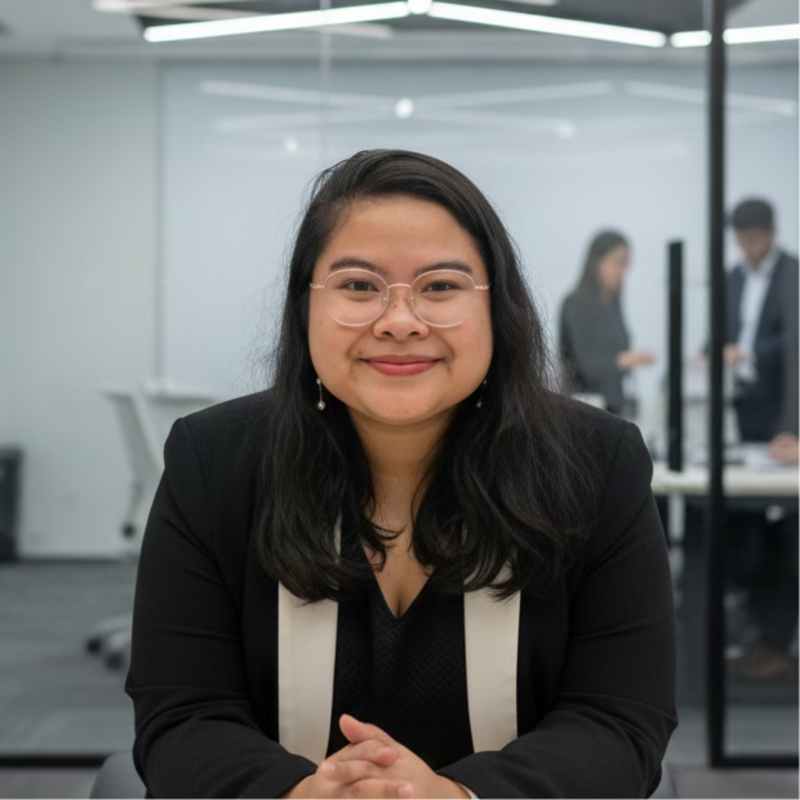
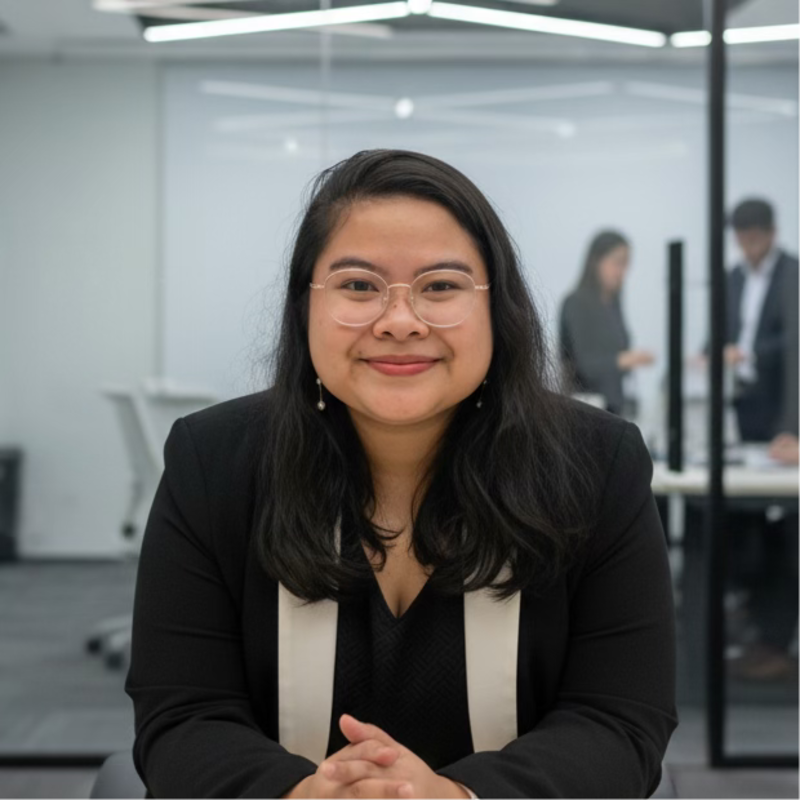
 Andini Daulay knows what it feels like to be in a room where everyone shares the same goal but can’t agree on how to reach it. Through her work with local government, nonprofits, and community groups in Pittsburgh and in Indonesia, she’s learned firsthand that tackling policy problems is often as much about communication and collaboration as it is about the data.
Daulay is a second-year Master of International Development (MID) student at the University of Pittsburgh School of Public and International Affairs (SPIA). Her coursework focuses on governance and international public management, sharpening the analytical and policy skills she will need to contribute to evidence-based public policy and public sector work in Indonesia and across Southeast Asia. This year, she is strengthening her ability to facilitate the kinds of conversations that data alone can’t resolve as part of the first cohort of the BRIDGE Fellows Program. The BRIDGE Fellows Program, short for Building Resilient, Inclusive Dialogue for Governance and Engagement, is a collaborative project between SPIA and the Heinz College of Information Systems and Public Policy at Carnegie Mellon University (CMU). The year-long program grows out of the Discourse, Dialogue, and Policy Series, which the schools developed together and cohosted from 2024 to 2026. Where the series brought people into the conversation, the fellowship trains them to lead it, preparing students to engage productively across differences through practical skills in civil discourse, dialogue facilitation, mediation, conflict management, and civic leadership.
The inaugural BRIDGE cohort draws students from programs and schools across both universities. Eight students from Pitt, including five undergraduates and three graduate students, represent SPIA’s MID and Master of Public Administration (MPA) programs, the School of Law, the School of Education, the Dietrich School of Arts and Sciences, the School of Public Health, and the School of Computing and Information. Their fields range from exercise science and health care analytics to computer science, history, philosophy, and English. Five graduate students from CMU’s Heinz College round out the 13-person group.
 That range is part of the design. Fellows learn alongside peers whose training, assumptions, and career plans differ from their own, which is exactly where dialogue skills get tested. And because Pitt and CMU are just a short distance apart, the program gives students a chance to build working relationships across campus lines with people they might not otherwise meet.
“By providing participants with the skills and tools for being active stewards of the discursive spaces in which they engage, the BRIDGE Fellows Program allows students from a wide range of experiences to develop core competencies that they will utilize across every academic discipline and professional field,” said Max Reiver, DEI coordinator at SPIA.
Daulay, who came to SPIA as a Fulbright Scholar, is still getting to know a place where people’s experiences and perspectives can differ sharply from her own.
“These differences made me curious about how we can work through public challenges together. BRIDGE stood out as a chance to explore that question through real conversations, especially those that happen when we don’t necessarily agree,” she said. “In policy and community work, it’s easy to focus on finding an answer, but I also want to understand how people arrived at their views. I’d love to leave BRIDGE with practical skills for asking thoughtful questions, making room for different voices, and helping a group find a way forward.”
The program began with a kickoff event in late August, followed by the first skill-building workshop, “Foundations of Civil Discourse,” September 30th at CMU. Led by Dr. Dareen Basma, associate dean of strategic initiatives and student success at Heinz College, the session introduced fellows to five principles of constructive dialogue: letting go of winning, asking questions, sharing stories, responding rather than reacting, and finding what is shared. Through guided practice, they also explored the difference between debating and having a dialogue.
A second session in November will use case studies and a simulation to explore how power, culture, and leadership shape conflict. Fellows will also take part in facilitator training through Davidson College’s Deliberative Citizenship Network, then apply what they learn by planning and facilitating a public dialogue event in the spring. Students will receive a certificate of completion and a $500 stipend recognizing their participation and leadership.
Daulay said she’s already found value in the cohort.
“I’m especially excited about the joint workshops between Pitt SPIA and CMU, where I’ve enjoyed making new friends and learning from different perspectives,” she said. “The speakers always give me something to think about, including how my own experiences shape the way I see things. I think understanding myself better helps me understand others, and I’m excited to keep learning alongside this group.”
Learn more about the BRIDGE Fellows Program and how to get involved in future cohorts on the SPIA website.