
A reduced-credit bachelor’s degree can improve issues of access and affordability, supporters say, while maintaining educational quality.
But, as shown at a Tuesday public hearing in Harrisburg, not all are convinced. And some question if such a move would actually have those intended benefits.
The state’s Senate Education Committee held a hearing Tuesday on the potential of a reduced-credit baccalaureate degree. A nationally growing trend, it reduces the 120-credit hour requirement for a college bachelor’s degree, which traditionally takes four years to complete.
State law requires 120 credit hours to complete a bachelor’s degree in Pennsylvania. State Sen. Lynda Schlegel Culver, R-Northumberland and chair of the state Education Committee, has introduced legislation that would give institutions the option to offer a reduced-credit bachelor degree program.
The proposal wouldn’t require all institutions to offer reduced-credit degrees, and Culver understands that not all programs would be suited for a reduced-credit degree. But she said that, as more states — like neighboring Ohio —add similar regulations, Pennsylvania’s schools and students will lose out.
“My proposal, as it stands, is not a mandate,” Culver said. “I want it to be a tool in the toolbox of educational facilities. I truly believe, though, if we don’t do this soon, we’re going to fall behind the other states that are offering these three-year baccalaureate degrees and we’re going to be asking for it … years down the road when we already fell behind, and we’re going to start exporting more students than we already are to this.”
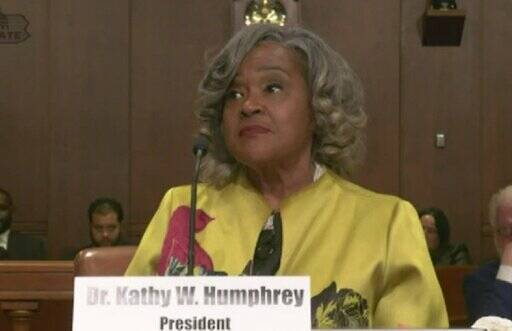
Carlow University President Kathy Humphrey is a proponent of the idea. She testified that such a degree would modernize higher education and make things more affordable to students. A 90-credit degree would, in theory, take three years to complete rather than four years with a 120-credit degree.
Additionally, Humphrey said, reduced-credit programs would be attractive to first-generation, low-income or nontraditional, adult students because, in theory, it would reduce time to graduation. More than 1 million Pennsylvanians have completed some college credit, but have no degree.
The Middle States Commission on Higher Education, an accrediting agency, does not require special prior approval for three-year or reduced-credit bachelor’s degree programs, said Heather Perfetti, the commission’s president.
“If we’re truly committed to reducing the cost of a college degree, then we must be equally committed to examining the structures, practices and longstanding requirements that contribute to that cost,” Humphrey said. “Protecting the quality of higher education, and preserving every tradition of higher education, are not the same. We must have the courage to distinguish between what is essential to student learning and what we have simply become accustomed to requiring.”
But education union leaders testified that a reduced-credit degree is not the answer to making college more affordable.
“Not only is the 90-credit degree the wrong answer, it is seeking to address the wrong question,” said Kara Laskowski, vice president for the Association of Pennsylvania State College and University Faculties. “Changing the finish line does not improve the starting point, and there is no more reason to believe that a 90-credit degree can be completed in three years than there is to believe that 120 is automatically a product of four years.”
Wendy Coleman, president of the American Federation of Teachers’ Pennsylvania chapter, also urged the board to reject the proposal.
“Instead of reducing academic requirements, Pennsylvania should increase funding for public universities, and community colleges, strengthen (the State System of Higher Education,) and expand (state) grants and need-based financial aid and improved transfer agreements so students do not lose credits when changing institutions,” Coleman said. “We cannot give Pennsylvania students less education and call it affordability. We should be investing in our institutions, our students and reducing the cost, not the education.”
A reduced-credit baccalaureate degree also would negatively impact community colleges, Coleman said.
“A 90-credit bachelor’s degree could undermine that model, weaken transfer agreements and place community colleges in direct competition with four-year institutions for students,” she said.
But the chancellor of the State System of Higher Education, Christopher Fiorentino, noted that similar concerns of educational quality were raised when community colleges were becoming more popular in the 1960s. Now, the community college system has evolved, and Fiorentino’s universities see the reduced-credit model as an idea to collaborate with community colleges.
A reduced-credit model, he said, puts college within reach for many students.
“We don’t have enough traditional-age students graduating from college right now to fill the needs of the employers of the commonwealth of Pennsylvania,” he said. “We need to find more students to fill that pipeline.”
Others said that, if the proposal moves forward, a reduced-credit bachelor’s degree program ought to be transparent for students, families, schools and future employers — even down to how such a degree should be named.
Lance Kennedy-Phillips, vice provost in Penn State’s Office of Planning, Assessment and Institutional Research, said Penn State supports the flexibility for innovative degree pathways. But, he continued, proposals must take into account academic quality, costs, experiential learning and workforce preparation.
“We believe reduced-credit degrees should be part of the broader conversation. But innovation should not be limited to a single degree structure,” he said. “Ultimately, the question is not simply how many credits a bachelor’s degree requires, it is whether the graduates possess the knowledge, skills and experiences necessary to succeed in today’s workforce and tomorrow’s economy.”
Joseph McCarthy, provost and senior vice chancellor at the University of Pittsburgh, also emphasized how bachelor’s degrees prepare students for future careers.
“The open question for the shorter degree is not whether it prepares a graduate for the first job, it’s whether it can be designed to adapt to the fourth one,” he said. “This is worth considering before widespread implementation and it should be explicitly assessed if we adopt this.”
Tradeoffs of a reduced-credit degree, McCarthy said, must be communicated clearly.
“A student weighing a reduced credit program should understand the total cost, the time to completion, how the credits might transfer, how graduate schools will treat it, and any affect on licensure, and understand all of that before they enroll,” he said.