
Editor’s note: We are publishing a series of fact-checks of advertisements in the Pennsylvania 8th Congressional District race between incumbent Republican Congressman Rob Bresnahan of Dallas Twp. and Democratic challenger, Scranton Mayor Paige Cognetti. The election is key for both major parties’ hopes of holding a House majority the next two years.
This 30-second ad was paid for by The Safety & Affordability PAC, a super PAC formed in September that is affiliated with President Donald Trump’s MAGA Inc. PAC. It receives its funding largely through multimillion-dollar transfers from MAGA Inc. The ad was not authorized by any candidate or candidate’s committee.
The ad kicks off with footage of a ribbon-cutting ceremony in which Cognetti, wielding a pair of oversized scissors, cuts triumphantly through a string of yellow caution tape.
The ad’s narrator doesn’t wait for the tape to fall to the ground before criticizing Scranton’s mayor for helping “big bank executives” obtain $5 million in taxpayer funds to renovate a new headquarters in the city. The narrator went on to say those executives “touted swanky new offices Cognetti helped fund.”
Those same “bigwigs,” the narrator explained, later “bankrolled” Cognetti’s campaign, and a graphic indicating she received $14,600 in campaign contributions from board members appeared on the screen.
“The rich got richer, Cognetti got paid and taxpayers got screwed,” the narrator said, asking whether this was all coincidence, or better described as “corruption.” Cognetti, the narrator concluded, is “another dirty politician.”
Key claim
“Paige Cognetti helped send your money to the big bank, and their bigwigs returned the favor.”
Is it factual?
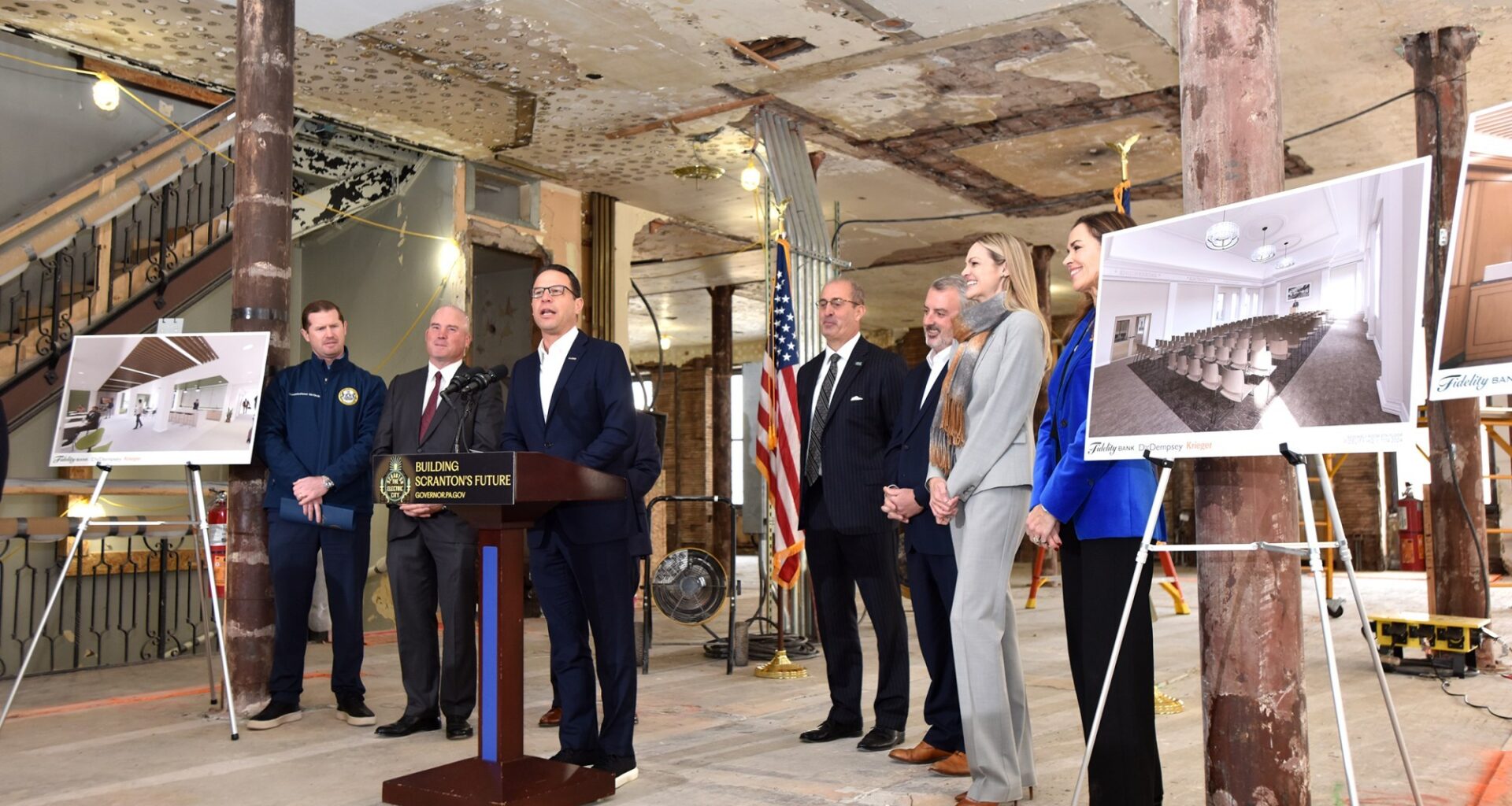
In April 2022, Dunmore-based Fidelity Bank announced its $2.6 million purchase of the Scranton Electric Building, with plans to use the building as its future corporate headquarters. It is a fact that, in 2024, Cognetti helped Fidelity Bank secure a $5 million state grant to help Fidelity restore and renovate the historic building on Linden Street.
“We’re getting things done — lots of things done — and that’s because of our Governor, our delegation, and our county commissioners. We’re especially grateful to Fidelity for sticking with this project,” Cognetti said in a statement released by Gov. Josh Shapiro’s office announcing the grant. “We started working on these (Redevelopment Assistance Capital Program) grants within my first two weeks in office, and today’s commitment ensures this project will happen. The Scranton Electric Building is truly the linchpin. We see incredible investment and ribbon-cuttings with our small businesses, but culturally and emotionally, Scranton isn’t quite where it could be without this building’s revitalization. With this project, we are truly on the right track.”
In total, Fidelity received $9 million in matching grants from the state to complete the project. There is no evidence that bank executives specifically touted “swanky new offices,” but when the bank officially opened the Electric Building as its headquarters for 170 employees in September, it was praised as a solid investment in the city.
“This money is going into a building that is worth millions of dollars more than it was before,” state Sen. Marty Flynn, D-22, Dunmore, said during the ribbon-cutting. “This is a good investment for taxpayers.”
The ad’s claim that bank “bigwigs” “bankrolled” Cognetti’s campaign after that 2022 purchase of the Scranton Electric Building is open for scrutiny and it’s certainly true members of Fidelity’s board of directors made private contributions to her efforts to seek a seat in Congress.
A February report from Politico said Cognetti received $14,600 in campaign contributions from the bank’s board members, just a few months before she encouraged the city to buy a Fidelity Bank building next door to City Hall on North Washington Avenue in 2025 for a municipal annex. That number represents less than 1% of the total money Cognetti’s campaign brought in since 2025.
Cognetti insisted campaign contributions were not a factor in purchasing the Fidelity building, calling it a cheaper alternative to making the 138-year-old City Hall compliant with the Americans with Disabilities Act.