
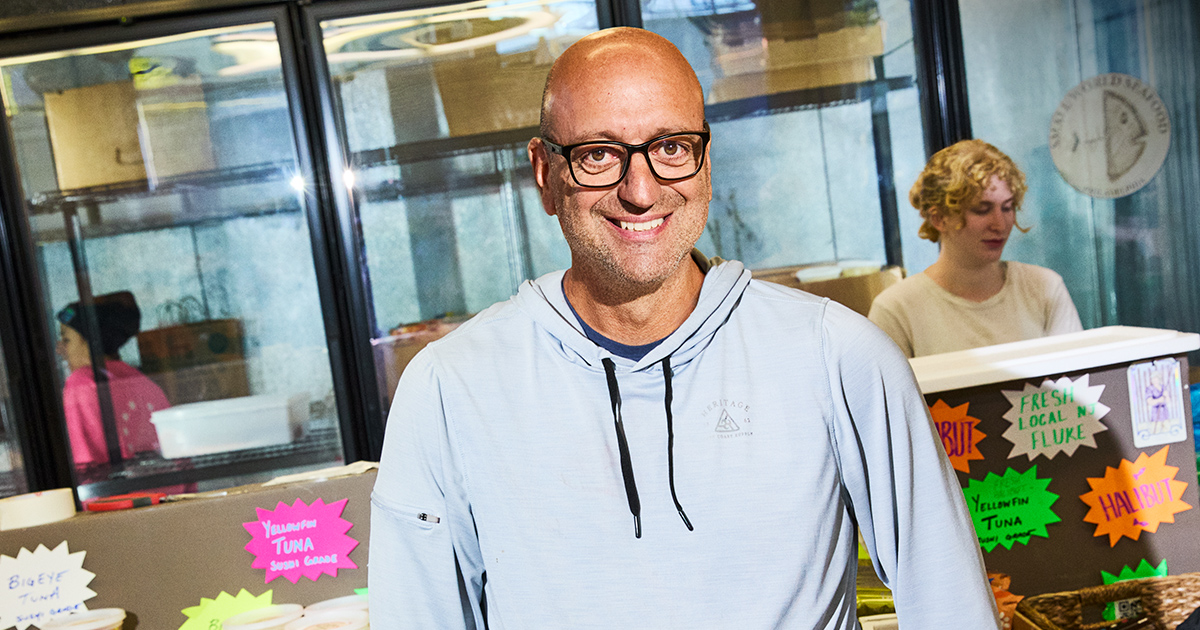
Robert Amar’s traveling fishmonger business, Small World Seafood, supplies over 1,200 weekly customers with top-tier options from sushi-grade salmon to skate wing.
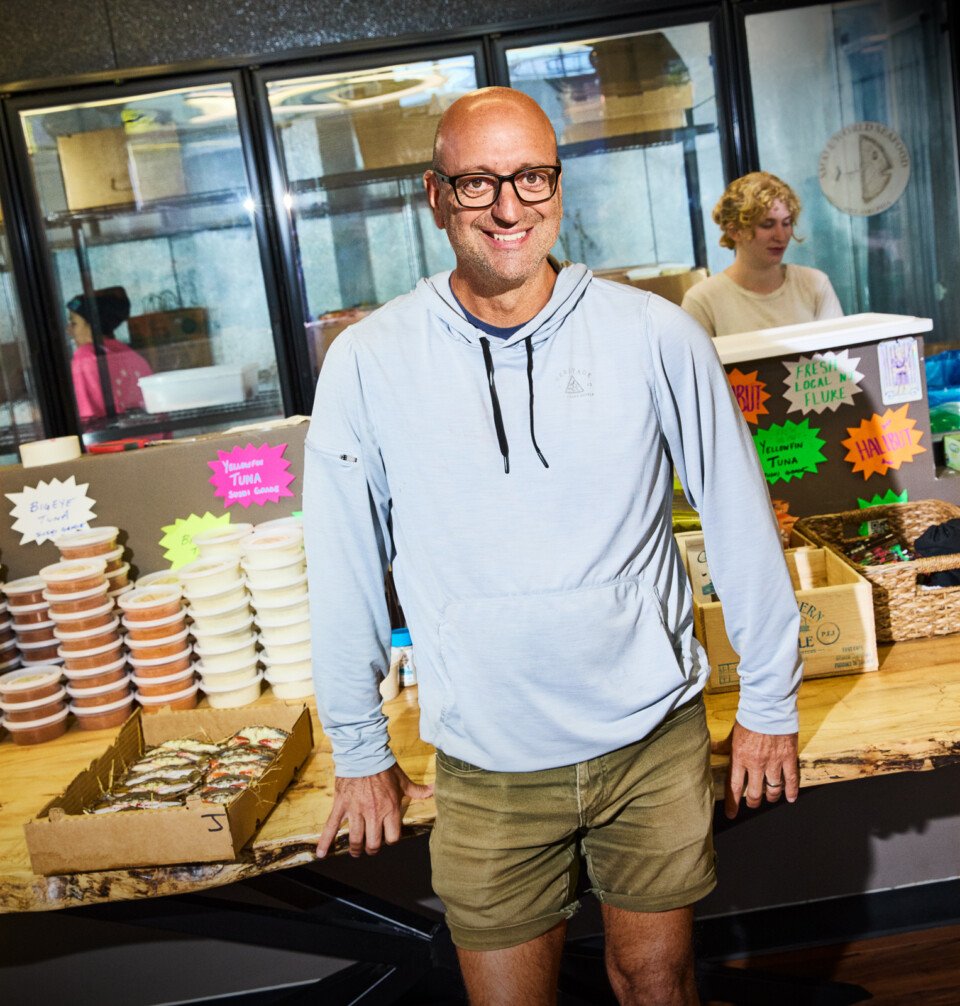
Robert Amar at the Small World Seafood facility / Photograph by Aaron Richter
When COVID shut down the city, seafood wholesaler Robert Amar found himself with a problem: The restaurants he was used to supplying with sushi-grade products like Hiddenfjord salmon, Hokkaido scallops, and hamachi loin were shuttered. But then a new distribution market opened up: Since everyone was at home, everyone could be a chef. So he turned his company, Small World Seafood, into a direct-to-consumer model that today has more than 1,200 devoted weekly customers.
How my company took off: It all just started with me helping people on my block, in my neighborhood, during COVID. It was very personal. But then, it expanded because the people on my block were telling other people — a friend of a friend of a friend becomes a customer. It was completely word of mouth. And it just kept going and never stopped. Now everybody is my neighbor.
How it works: You join the Small World Seafood email list — we have about 14,000 people on that list — and each week, you get a message from us telling you what we have. You place an order, and then we have pickup spots on the Main Line, in Fairmount, in Center City, in Chestnut Hill, in Queen Village, in South Jersey. You show up and pick up your order, and we will share recipes and other ideas with you. We are very responsive to our customers.
Where I buy the seafood that gets to your kitchen: Mostly in deep South Philly. Basically, all seafood that gets distributed in this area comes on a truck from Boston, New York, Miami, or the Carolinas to a small area in South Philly down near the Linc. Like, you don’t get salmon delivered to Cape May. Cape May comes to Philly to pick up their salmon. The truck that shows up is just a delivery company. They are one part of a logistical process that involves lots of different sources. Some companies specialize in branzino; some specialize in tuna.
How I know I’m getting the best stuff: The fish tends to get graded by the fisherman, and the supplier buys it from the fisherman. It’s in their interest not to have returns and lose money. It’s like anything else. There are tiers. There are certain people who are just shopping by price; quality is not the most important thing they’re looking for. But the suppliers know that I go for the quality. I have a relationship with the quality guys. Because so many are choosing things based on price, sometimes the quality stuff doesn’t get sold, and these suppliers know to call me, and I don’t beat them up on the price. I pay right away. They’re not waiting for my checks. I’ve been very loyal to my suppliers and they to me. We’ve built relationships. There’s a high level of trust.
How to be successful in this business: You have to be attentive and diligent and absolutely cater to the customer. The customer is always right. (Well, usually.) You might have a diner go into a restaurant and order a medium-rare steak that comes out medium, so they send it back. The restaurant might pooh-pooh them. But you know what? If somebody wants quality, if somebody knows quality, that’s a blessing that you want.
How to Up Your Fish Game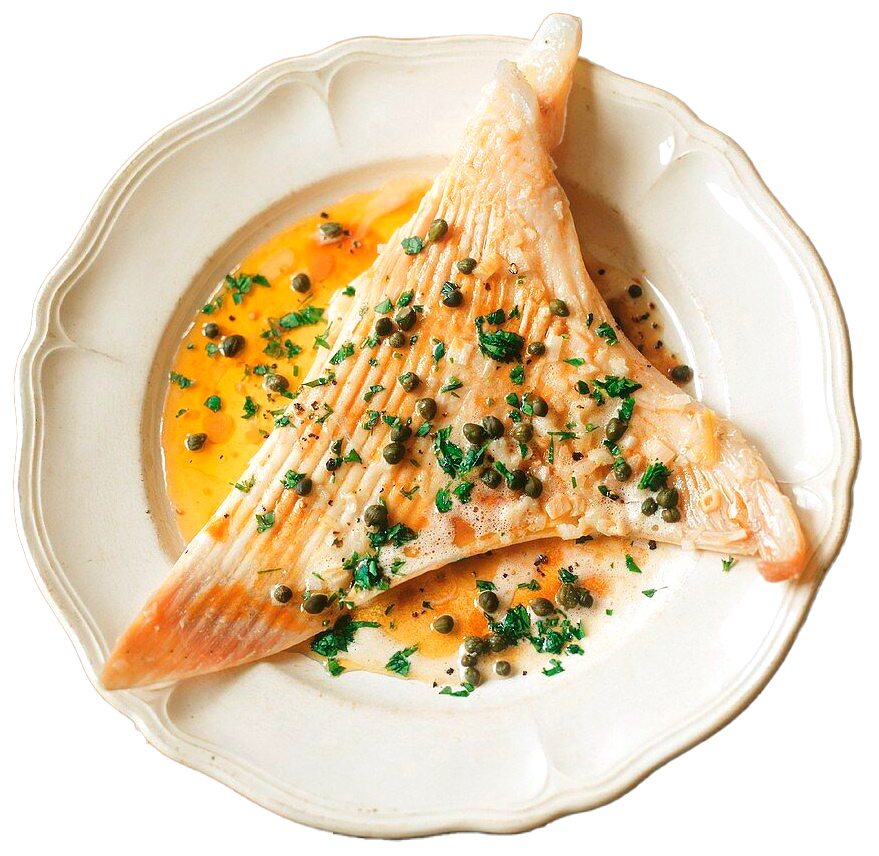
Photograph by StockFood/Richard Jung Photography
Robert Amar’s three catches you shouldn’t overlook
Hamachi Loin
“Some people look at my hamachi loin and say that $30 per pound seems like a lot. It’s not. You’ll go to a restaurant and spend at least $22 on five tiny slices of hamachi crudo. Get the loin from me, take it home, slice it up, have fun with it. You can get 30 slices out of it instead of five. You’re actually saving a ton of money doing it yourself at home.”
Cod Cheeks
“Nobody sells cod cheeks, but our customers love them when we get them. At first I thought, who is gonna want to eat this? Now we consistently sell 100 pounds a week. You just dredge and pan-fry. It’s got the flavor of cod but the texture of scallops. Just amazing.”
Skate Wing
“If you go to France, particularly to the bistros in Normandy and Brittany, skate wing (pictured above) is hugely popular. Here, people catch them all the time at the Jersey Shore and throw them back, which is a shame, because they are so good, with a texture like crabmeat and one of the more beautiful fish presentations. We get them three or four times a year, and our customers know, so they just sell out immediately, and it’s only $12 per pound. You just pan-sear the wing and serve with a meunière sauce.”
Published as “Scaling Up” in the October 2026 issue of Philadelphia magazine.