
What is a good neighbor?
After he was cross-examined by the attorneys, the community members granted party status questioned Santora — and challenged his repeated assertion that he was a good neighbor.
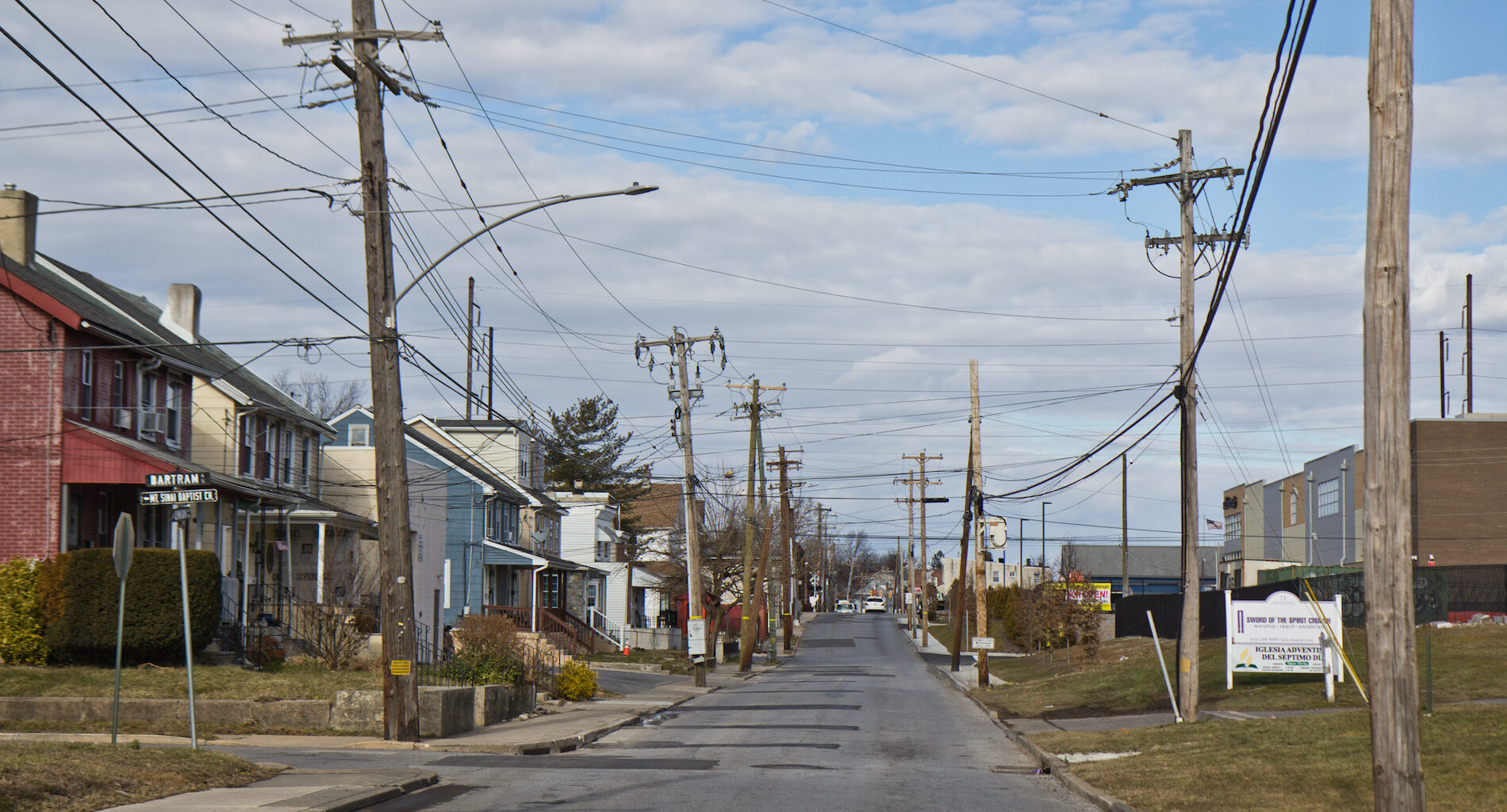
T.L. and Crystal Lucky are professors at Villanova University and pastors at Sword of the Spirit Church, which has been located on Union Avenue since 2003. The church is next door to Santora’s property.
Though they commended Santora for the improvements he has made to the property, they warned him about the optics of his proposal.
“Typically, communities of color bear the brunt of these types of facilities,” T.L. Lucky said.
Crystal Lucky confronted Santora about his intentions.
“I know you don’t know who we are because, as you were talking earlier, you don’t even know our names,” she said.
Though Santora was apologetic, their next exchange, when she asked if he would want a facility like this in his neighborhood, made him defensive.
“I didn’t buy a house in an industrial center. No, I would not want it. And I wouldn’t buy a house in an industrial center,” Santora said.
Paul James, a senior pastor at the CareView Community Church across the street from both the property and the Luckys’ church, echoed the sentiment of the other pastors.
James said something like this would not happen in Upper Darby’s whiter neighborhoods, like Drexel Hill.
“There are just some places that white folks know that they can’t do certain things,” James said.
As the meeting reached its conclusion, state Rep. Margo Davidson, who represents the area, spoke out against the application, saying that Santora has been using Upper Darby as a dump site. She urged the zoning board to deny the application.
After the hearing, WHYY News reached out to several of the parties involved. Robinson, Santora’s attorney, declined to comment.
Gibbs, who is representing Yeadon, talked about his client’s environmental justice concerns.
“Yeadon is a predominantly African American community. Historically, what has happened is that these types of industrial polluters are situated incredibly close to predominantly African American communities,” he said. “And I think that science will bear out that there’s some correlation between the proximity of industrial sites and some of the comorbidities that exist in the African American community.”
The legacy of environmental racism
Environmental racism is not rare across the United States, research shows. A 2018 study shows that toxic waste sites, for example, are not evenly distributed throughout communities and that Black communities are usually the ones faced with hosting them.
Lansdowne was designated a Superfund site by the EPA from 1985 to 1991 because of toxic waste that resulted from a scientist’s at-home work with radium between 1924 and 1944.
Gibbs said he was proud to see people stand up for a cause at Thursday’s zoning hearing.
“I was the proudest I’ve been as a lawyer in my entire career — to speak for people who are fighting for their communities, fighting for generations that are yet unborn,” Gibbs said.
The racial elephant in the room is what stuck out to the pastors representing their churches — especially after the confrontation over whether Santora would feel the same way about a facility in his community.
“The history of racism, environmental racism, the history of redlining, and … racist real estate practices have forced many people into communities where lots of people would not have wanted to live,” Crystal Lucky said. “It’s a chicken or the egg situation. So, what’s there first: the chemical plant or the houses?”
In a 2015 study titled Which came first, people or pollution?, researchers found that communities of color and low-income communities settled first — and that industrial facilities soon followed.
She said that she felt disrespected by Santora’s testimony.
“He never put a note in the mailbox, he never reached out. And then he tries to say something about us last night about being a good neighbor,” she said.
T.L Lucky said he is concerned about the racial makeup of the decision-makers.
“The voting members of that board had nobody that looked like me, nobody that looked like any of these people that were in opposition to this particular application — but they all look like the applicant. That to me is problematic,” he said.
James, the pastor, said he believes people in positions of power feel like they have agency in communities of color, especially when they think no one is watching.
“There’s constant mention of Flint, Michigan, that municipalities are capable of horrific things, when the electorate and the community is not astute to what is going on,” James said.
Lansdowne resident, Eric Aubrey, who attended the zoning board meeting, said people in his town are used to challenging these things.
“This is not our first run with environmentally damaging issues,” Aubrey said. “The issues … are very near and dear to all the hearts and minds of people who have been here.”
Many of the people who attended Thursday night’s meeting credited Smith and the Change.org petition for calling attention to the zoning application.
Smith hopes the hearing’s second round, set for Feb. 9 at 7 p.m. will put the issue to rest.
“We have them on the ropes. The next round is going to be a TKO. Be there,” Smith said.