
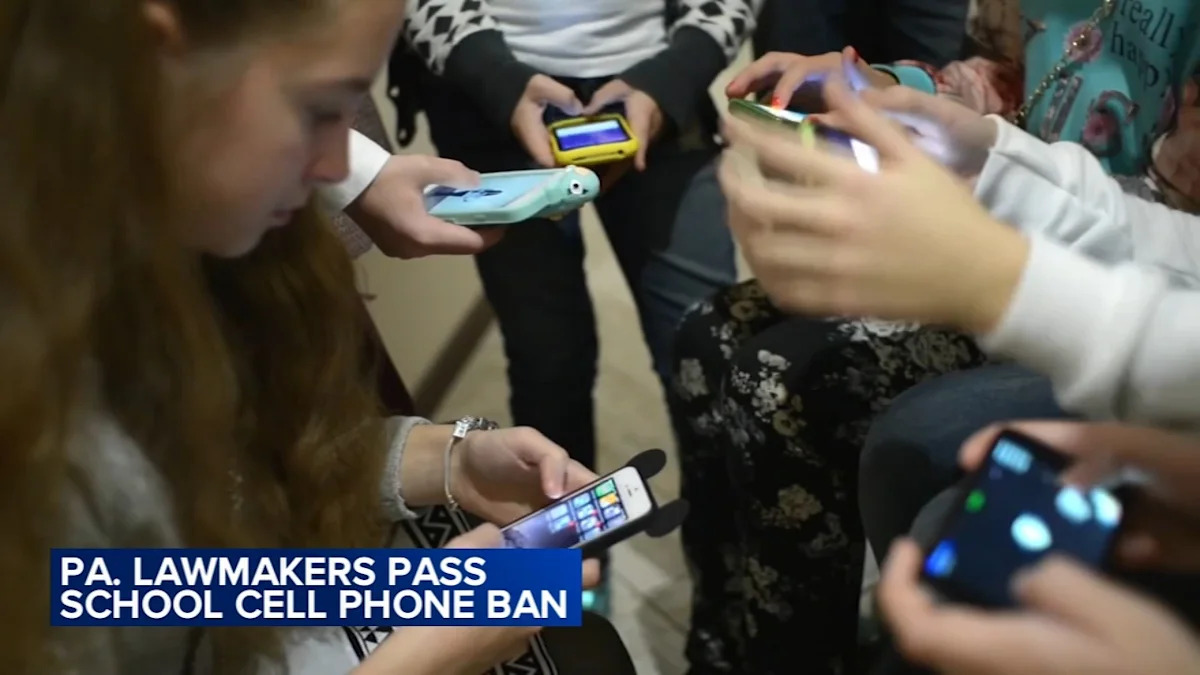
A bell-to-bell cellphone ban will soon be enforced in schools across Pennsylvania under legislation requiring school districts to develop plans prohibiting students from using the devices during the school day, with certain exceptions.
“I think it will make a really impactful difference,” Senator Vincent Hughes said.
Hughes, who co-sponsored the bill, said cellphones in the classroom are one of the top problems facing high school teachers.
“We just believe that it will be extremely beneficial for the academic side, which is necessary as we become more and more competitive in that space, but it will also be helpful from the mental health side, the behavioral health side,” Hughes said.
Exceptions would be made for students or immediate family members with certain medical conditions, students learning English as a second language who need translation, single-day special occasions, students with individualized education plans that require communication and teachers who want to use the devices as instructional tools.
Chris Lilienthal, communications manager for the Pennsylvania State Education Association, said the legislation could help teachers keep students engaged in the classroom.
“This bill is taking an essential step toward reducing those distractions, keeping students focused in the classroom, present in the classroom and allowing our members to do what they do best, and that is to teach students,” Lilienthal said.
Some parents and students, however, are concerned about safety.
Bensalem High School junior Kamiya Alexander said the school’s current policy allows students to use cellphones in hallways and cafeterias.
“During the class part, I understand. I don’t really use it in class anyways, but I feel like at some point we do need our phones in schools because sometimes there are emergencies,” Alexander said.
Parent Michael Bayer said he wants access to his children.
“I could understand both points of view. But just as a parent, my concern is where I can always reach my children; I’d rather they have a cell phone in school,” Bayer said.
Hughes said districts should take those concerns into account when putting their policies in place.
“We want to make sure districts adopt concepts and programs in their implementation that are sensitive to those realities,” Hughes said.
Educators believe there are better alternatives for communicating during emergencies.
“What we have found is phones in an emergency situation can actually create many of the same problems that we see phones creating on a day-to-day basis, and that is distracting students from what they should be paying attention to,” Lilienthal said.
Lilienthal said students also have school-issued laptops they can use to communicate, and parents can call the school office.
Alexander, however, said those options are not always effective.
Once the governor signs the bill into law, it will take effect in the 2027-28 school year.