
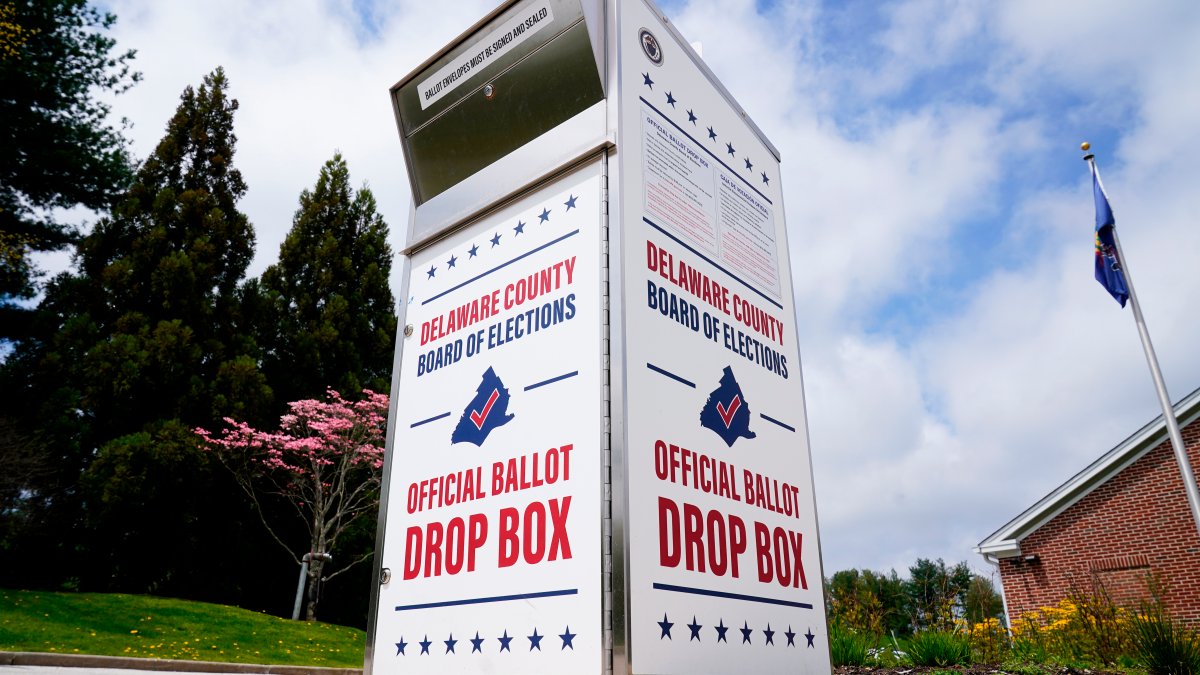
The wait is almost over. On Nov. 3, 2026, candidates from across the aisle will face off in the general election that will determine which party controls Congress and in Pennsylvania, who will be the governor next year.
Here’s our complete voter guide to the upcoming Pennsylvania election.
How to vote in Pennsylvania
Before you can participate in the general elections, you need to make sure you’re registered to vote.
In Pennsylvania, check your voter registration status on the department of state’s website.
However, if you’re a Pennsylvania resident and are not registered yet, you will not be able to vote on Election Day as the last day to register in the state was Oct. 19, 2026.
When is Election Day?
The general election will be Tuesday, Nov. 3, 2026.
Polling places will be open from 7 a.m. to 8 p.m.
Pennsylvania residents can find their polling place for Election Day using the state’s look-up tool.
How to vote by mail
Anyone can vote-by-mail in Pennsylvania as long as they complete an application in order to do so.
If you have registered to vote and need a mail-in ballot, voters in Pa. have until Oct. 27, 2026, to request a mail-in ballot.
Who and what is on the ballot
Once you’re registered, who and what can you vote for?
Here’s a look at some of the most impactful races for Pennsylvania.
Pennsylvania governor race
Democratic incumbent Josh Shapiro takes on Republican Pennsylvania treasurer Stacy Garrity. The pair will be joined in this race by Independent Party candidate Ken Krawchuk.
Democratic incumbent Shapiro has been campaigning on a platform of “getting sh*t done,” a quote he popularized while speaking at the site of a collapse on I-95 in Philadelphia after working with PennDOT to have the area repaired.
Shapiro claims that he invested “more in public education than ever before, hired hundreds of new law enforcement officers, created thousands of new jobs, and put money back in people’s pockets.”
Garrity, meanwhile, has been campaigning on her history of service to the community. She served in the military for two decades and has been the state treasurer since 2020. Her goal is to be a “Governor more interested in raising hope, than raising our taxes.”
Her campaign site claims she saved taxpayers “almost two hundred million dollars by eliminating fraud and inefficiency.” She also claims to be a “strong ally” of Republican President Donald Trump.
Libertarian candidate Ken Krawchuk is also running for Pennsylvania governor.
Krawchuk describes himself as a computer programmer and founder of a technology firm, as well as a freelance writer and author. He says he hopes to privatize the state’s public school system and eliminate school property taxes. He is also calling for voting reforms, a plan for abortions he calls “pro-option,” and an end to gun control.
In the legislature, all Pa. House seats and half of the Pa. Senate are up for election this year.
7th Congressional District
One hotly contested race is in the state’s 7th Congressional District, where Democratic challenger Bob Brooks is vying to unseat Republican incumbent Ryan Mackenzie.
Formerly a Representative in the Pa. State House, Mackenzie stepped into the role of Congressman after defeating incumbent Democratic lawmaker Susan Wild for control of the 7th district in 2024.
In his re-election bid, Mackenzie touts his work to “provide further tax relief to working families, reduce the cost of healthcare and prescriptions, unleash American energy to reduce utility rates, and better control government spending.”
He also says he refused to support any budget that reduced Social Security benefits and wants to “crack down on congressional stock trading.”
Brooks, who spent 20 years as a firefighter in Bethlehem, is pushing for governmental reforms as, he claims, “Washington’s a dumpster fire, and working people are the ones getting burned.”
Among his campaign goals, Brooks said he would like to end stock trading for members of Congress. He’s also calling for the Commonwealth to increase its minimum wage — which has sat at $7.25 an hour since 2009 — ban corporate PAC funds from politics and ensure the ultra rich pay their fair share of taxes.
Also, the race for Bucks County’s 1st Congressional District could have impact nationwide as the typically purple county typically plays a significant role in how the state leans at election time.
1st Congressional District
In the 1st Congressional District, incumbent Republican Congressman Brian Fitzpatrick is attempting to hold off a challenge from Democratic Bucks County Commissioner Bob Harvie.
Fitzpatrick, a former FBI agent and attorney, rose to the top of the 1st district after running for the open seat that his brother, Mike Fitzpatrick, vacated when he retired and did not run for re-election in 2016.
Fitzpatrick touts that he has served the office with a focus on bipartisanship. He also noted that he “introduced the bipartisan Never Again International Outbreak Prevention Act to provide accountability with respect to international reporting and monitoring of outbreaks of novel viruses and diseases, sanction bad actors, and review the actions of the World Health Organization.”
He also calls for a simpler, fairer tax code as well as support for American workers and argues that during his time in office he has taken on “a broken and dysfunctional Washington.”
Harvie, a former high school social studies teacher, has served as a Bucks County Commissioner since 2020. On his campaign website, he states he’s hoping to create a “new deal for working families.”
He also calls for bipartisan leadership, saying he’s critical of his own party “for leaving behind the people we are supposed to be fighting for.”
Harvie says, if elected, he would push to combat corruption in Washington. He also said he would “hold greedy corporations accountable to the working class of this country” by pushing for a tax cut for the middle class and “ensuring large corporations and the ultra-wealthy pay their fair share.” He also wants to overturn Citizens United and remove corporate PAC money from politics.