
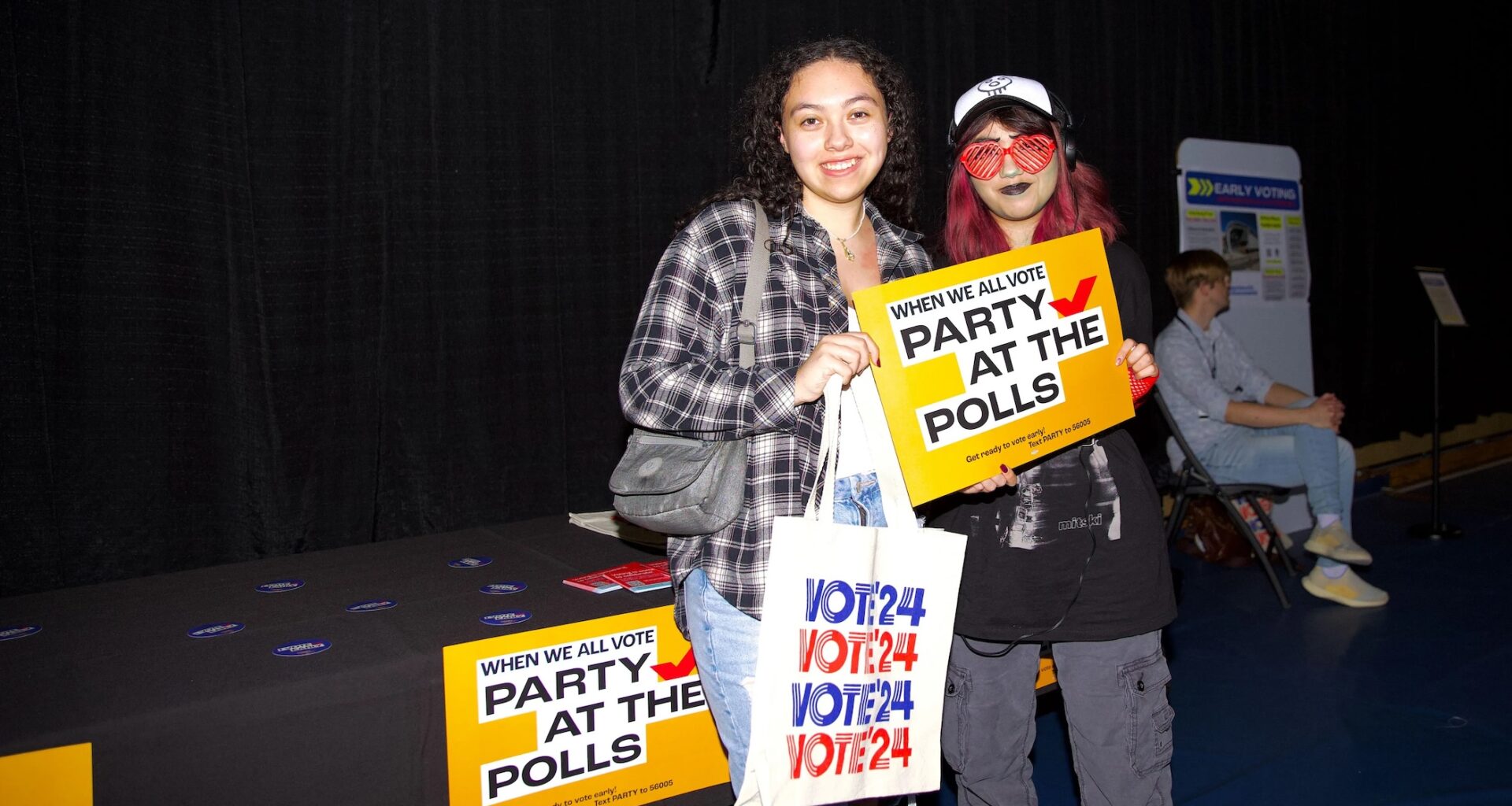
For Elliot Scott-Straight, a student at the Community College of Philadelphia, having a wide range of opinions on elections and voting is “what makes our community as strong as it is.” They are involved with the ALL IN challenge on their campus and have come across students who “just don’t trust that voting can make an impact.”
“While I disagree, I really understand the fears that people have and I understand how it’s very deep-rooted,” they said.
Scott-Straight said disengaging with the electoral process has “become the only way out for a lot of people,” due to economic hardship, educational inequalities and political strife.
Despite this, they said young people care deeply about their political futures.
“Some adults have an error of thinking that young people don’t know anything or aren’t connected enough to what’s going on in the world when a lot of times there are movements going on that older people might just not be seeing,” they said.
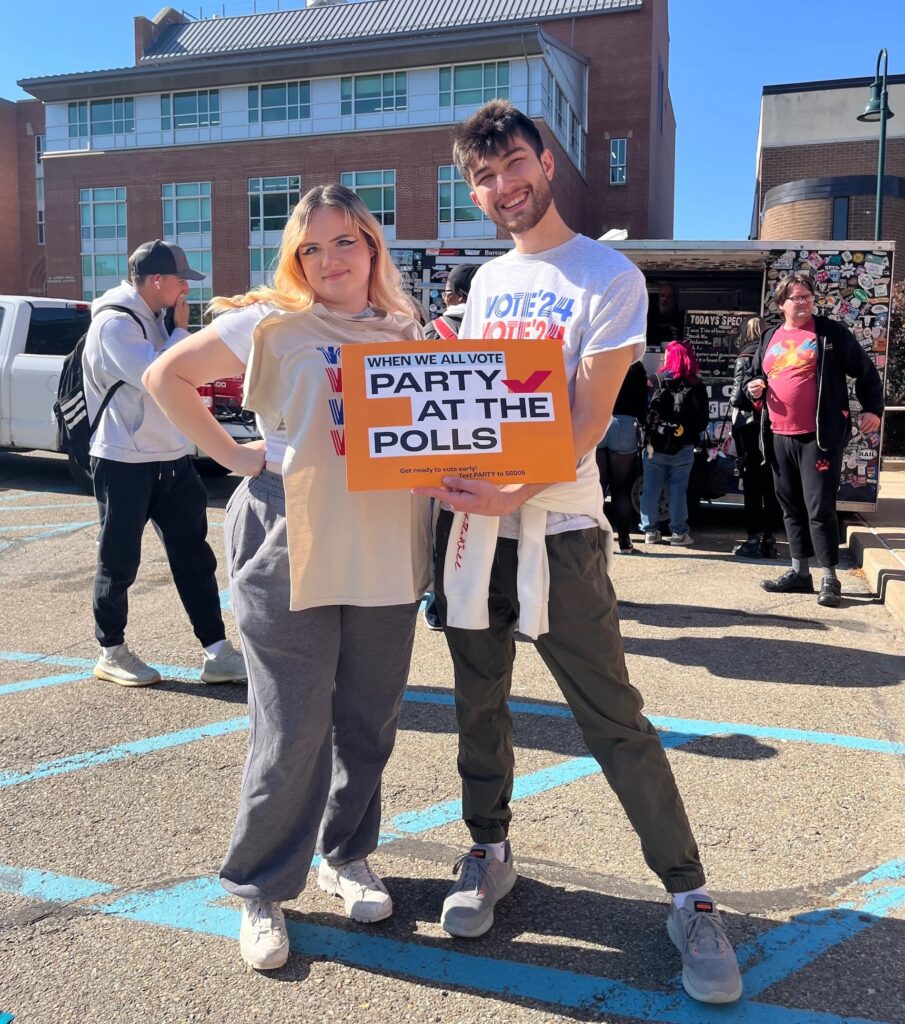 Students celebrate at Community College of Philadelphia’s Party at the Polls event. (Courtesy of Civic Nation ALL IN initiative)
At Swarthmore, however, Hankin said most students are already registered to vote. “I think we just have a very tuned-in campus in general. We have students who are generally tuned into the news, who know a decent amount, maybe, about what’s happening in our local community and in Philadelphia,” she said.
In her role as a student leader at SwatVotes, Hankin uses the ALL IN challenge to make sure students are “finding a time to vote, making a plan, and all of the small things that, with so much else going on, can fall to the backside, especially if someone doesn’t perceive it as an ‘important’ election.”
On-campus activities include tabling at campus-wide events such as Garnet Days, hosting debate watch parties and hosting office hours. She said the aim is to make voting as “seamless as possible.”
“When students come [to college], they’re 18 and most of them have never voted before so it’s a new process. It might not be something you’re thinking about. So I think to some extent there’s just some discomfort and uncertainty about what the whole process entails,” she said.
A central focus of the challenge is to make voting and civic engagement a sustained campus habit. Domagal-Goldman said returning to the polls is much easier once a constituent has already navigated the first time successfully.
She said that students often process a large influx of information in their first year of college and struggle to maintain civic engagement.
“If my mom hadn’t been sending me messages about asking for my absentee ballot, I likely would have missed the election for president. Even though I knew who I wanted to vote for and I cared a great deal … I was busy. I was trying to figure out how to get along with my roommate. I was trying to pass the calculus class as someone who eventually majored in English,” she said.
Hankin said she hopes she and her fellow student leaders can help get students over the first hurdle by casting a ballot in their first elections.
“Voting [is] meant to take a little bit of effort and I think that’s what signals that it’s an important process, but there are ways to make it so that it’s not a very overwhelming process. I hope that’s what we’re able to support students to feel,” Hankin said.
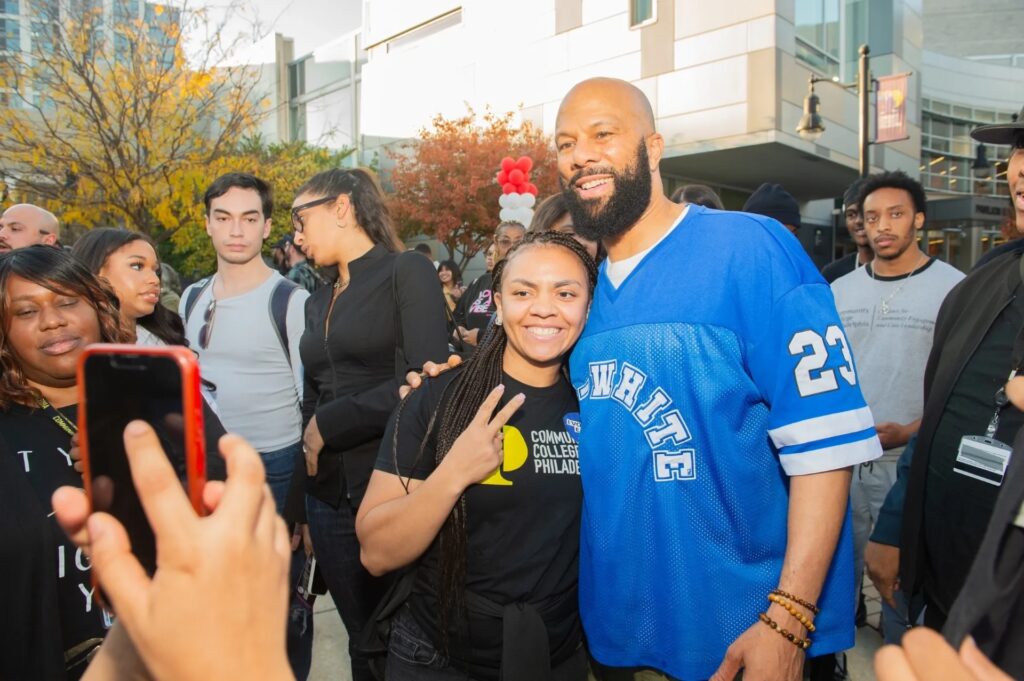 The ALL IN Campus Democracy Challenge was founded in 2016 to combat low youth voter turnout. (Courtesy of Civic Nation ALL IN initiative)
With the midterm elections approaching, campus voting initiatives like the ALL IN Campus Democracy Challenge seek to connect students with registration resources and information about the process. For campuses that take part in the organization, that could look like a roundtable discussion about the candidates or voting for M&M’s as your favorite candy.