
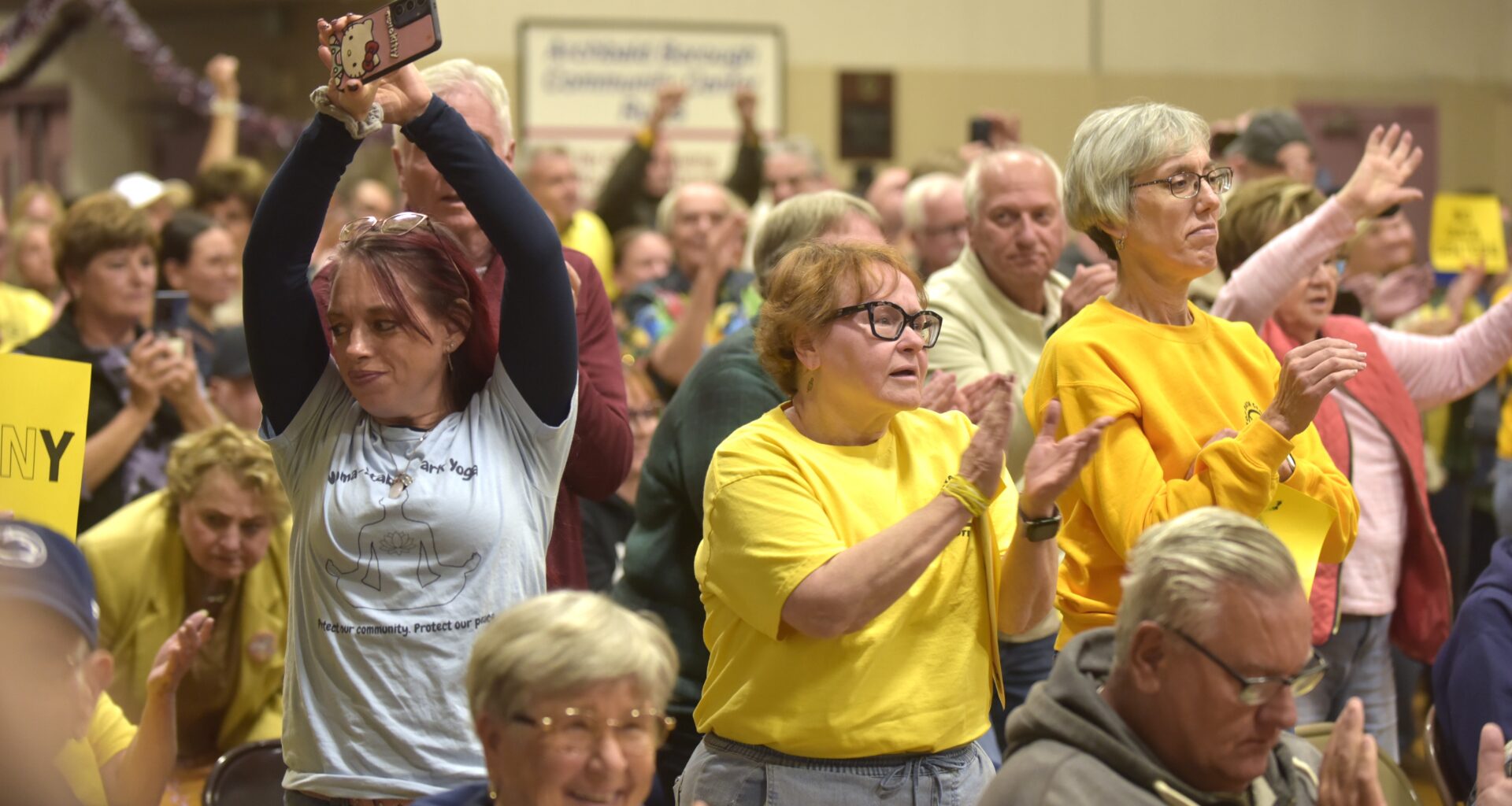
They fought back tears when they made their pleas for understanding.
They cheered wildly when those pleas were heard. They offered polite “thank yous” to public officials who ultimately understood not just their fears, but their hopes. Not just their concerns, but their hard work to protect their quality of life.
It was a raucous, well-earned celebration that likely won’t be confined inside the walls of a gymnasium-turned-meeting hall in a small Lackawanna County borough, but one that should resonate not just in communities throughout our region, but anywhere in Pennsylvania where data center developers seek opportunities to set up shop.
When Archbald’s Borough Council voted unanimously Wednesday to deny the Wildcat Ridge Data Center Campus, we couldn’t help but help but feel as if this was somehow a bigger deal than just a potential death blow to the largest proposed data center in the county. This was so much more than just that.
This was an entire community, investing themselves in the democratic process, and showing so many others like it what it takes to fight for what is theirs.
This was a group of people doing everything it could — everything it needed to, frankly — without the resources of a giant corporation to set a clear, positive example of how to successfully navigate that often-arduous process.
This was an effort to show that grassroots activism no longer has to be limited to protest signs and online grousing. This was a very complex dispute involving two entities, industry and technology, that are difficult to overcome, and average people banded together to resist them. They established a case with scientific evidence and legal literacy that not only led to the denial, but should be a formidable basis of evidence to overcome a future court appeal.
Theirs is an example of activism that should live for generations throughout Northeast Pennsylvania, a region burned by this type of industry before.
We are inspired by the efforts of Archbald residents, specifically those who comprise the Stop Archbald Data Centers movement. Given how big a part of the news cycles they’ve been the last nine months, it is difficult to process that, just a year ago, this group didn’t exist. But through the persistence of founders Tamara Misewicz-Healey and her husband, Justin Healey, this group became synonymous with the local anti-data center movement.
They didn’t do it just with yellow T-shirts and clever signs and a willingness to be vocal at public hearings.
They showed up en masse for nine public hearings since January, never wavering in their resolve over 26 often-contentious hours of meeting time. Instead of catching up on television, or relaxing at home, or gathering with friends in a much more recreational manner, they opted to spend those hours listening to testimony, taking notes on cross-examinations.
They raised funds to employ their own lawyer. They filed public records requests and familiarized themselves with local zoning law at their kitchen tables. They cross-examined witnesses because they had the foresight to seek official party status. When developers failed to provide adequate proof of how the massive campus spanning 574.2 acres hovering over their homes would would impact air quality and emissions, residents paid for an independent health expert to do the job for them.
Their consistency of effort, their relentless devotion to their cause, got them the denial they wanted. It is a reminder that democracy demands hard work, but also that democracy can work for those whose best resource is the knowledge that protecting their way of life is worth the effort.
More than likely, their battle is just beginning. But, they’ve built a record that has a shot to stand on its own should the denial be appealed to the Lackawanna County Court of Common Pleas. Since the burden of proof lies with the applicant, the residents’ work was likely the lone reason council was able to deny the application.
This type of citizen engagement can provide municipal governing bodies the support to make difficult, but legally sound decisions in the face of corporate pressure and the potentially expensive and frustrating threat of litigation. Other smaller communities like Archbald will continue to face interest from data center developers, but the people there will have the benefit of what the residents of Archbald proved.
Organized, sustained and inspired grassroots efforts are the best defense average citizens have against development they believe endangers their quality of life.