
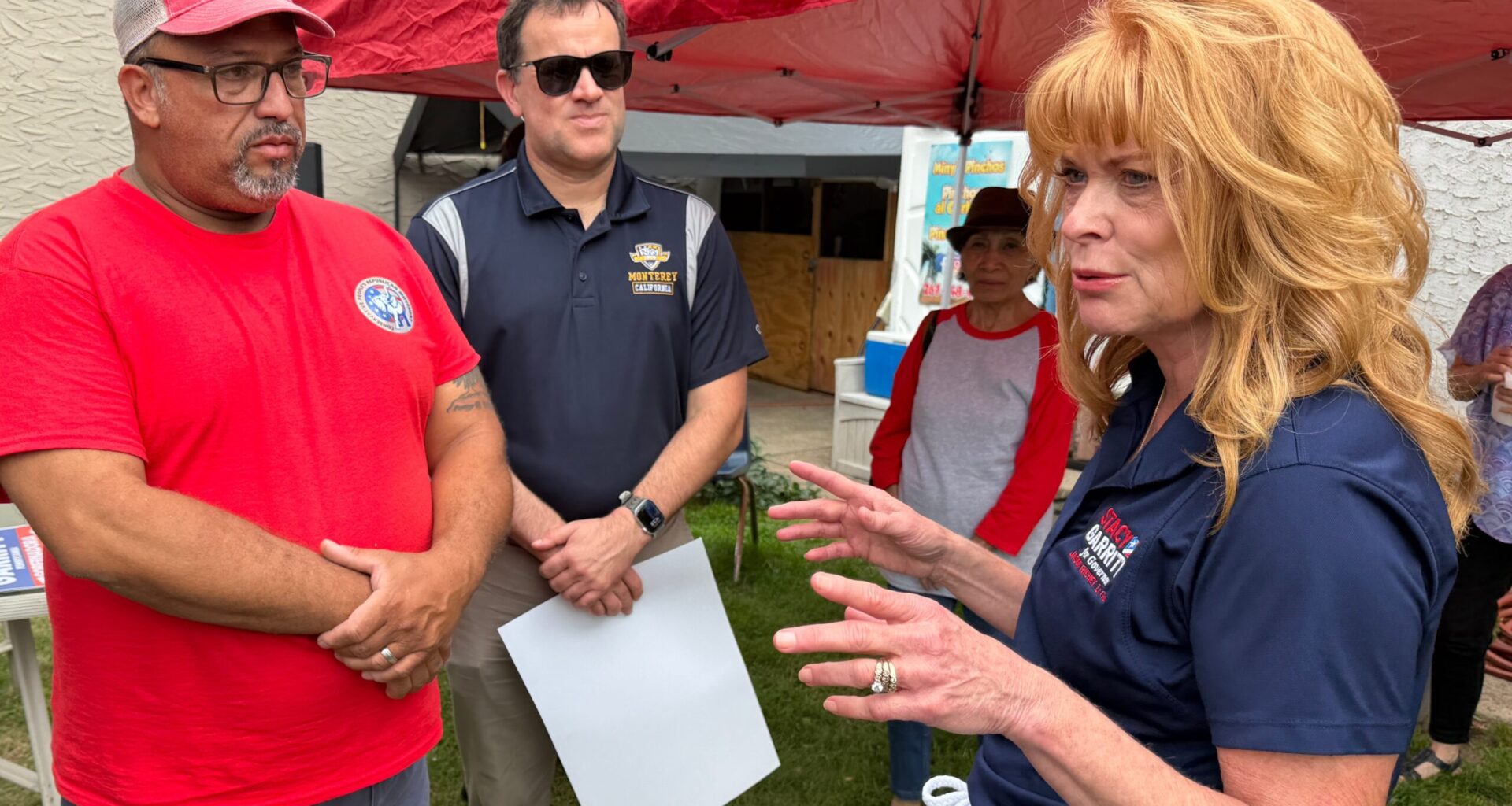
Saving the downballot
Sam Chen, a Republican political strategist, said that Republicans believed that she was probably “the best candidate that they could field,” but that “in closed doors among Republicans … the general consensus early on has been she’s not going to win.”
“I think they felt that she could protect their downballot way more than, say, Doug Mastriano could,” he said. “It’s one of those things where you put your best candidate in, you do the work and you put yourself in the position that if something breaks in your favor, you can win [but] they thought someone like a Doug Mastriano would have put them out of that contention altogether.”
The down-ballot races may be key this year as Democrats believe they are within striking distance of winning an electoral majority in the state Senate for the first time since 1978. Such a shift in power in Harrisburg could give them the power to implement a laundry list of policies including raising the minimum wage, legalizing recreational marijuana and codifying access to reproductive health care.
However, Garrity is now trailing where Mastriano ended the race. While he lost by 15 percentage points in 2022, she is now behind by more than 20, according to every recent poll, with gaps as high as 27 points.
If the goal was ultimately to help prop up downballot races, Borick said that hope has now “dissipated.” Borick attributes the Garrity campaign’s gradual decline to a perfect storm of factors.
“This is a really, really challenging environment for any Republican to run in … and she matched up with a well-funded, disciplined incumbent with a history of electoral success in Pennsylvania that is in the party that’s riding the wave and not fighting the wave,” he said.
Borick added that recent shifting priorities in terms of campaign contributions drew needed financial assistance from Republicans away from the race for governor.
“I don’t think there’s been a recognition that the Garrity race is salvageable, and thus, if you’re looking to direct funds in the home stretch, you’re probably looking to congressional races or other state legislative races,” he said.
Recent campaign finance reports appear to bear that out. While Shapiro has raised roughly $55 million as of the latest reporting period ending Sept. 14, Garrity raised only $5.3 million. That includes $1.8 million Garrity raised over the summer. By comparison, Mastriano raised $3.1 million during the same period four years ago.
Borick said that fundraising disadvantage has hindered Garrity from getting her message to voters while the Shapiro campaign has been able to blanket the airwaves with ads. That may be why in a Franklin & Marshall poll released this week, 44% of voters said they didn’t know enough about her to form an opinion, including 44% of Republicans.