
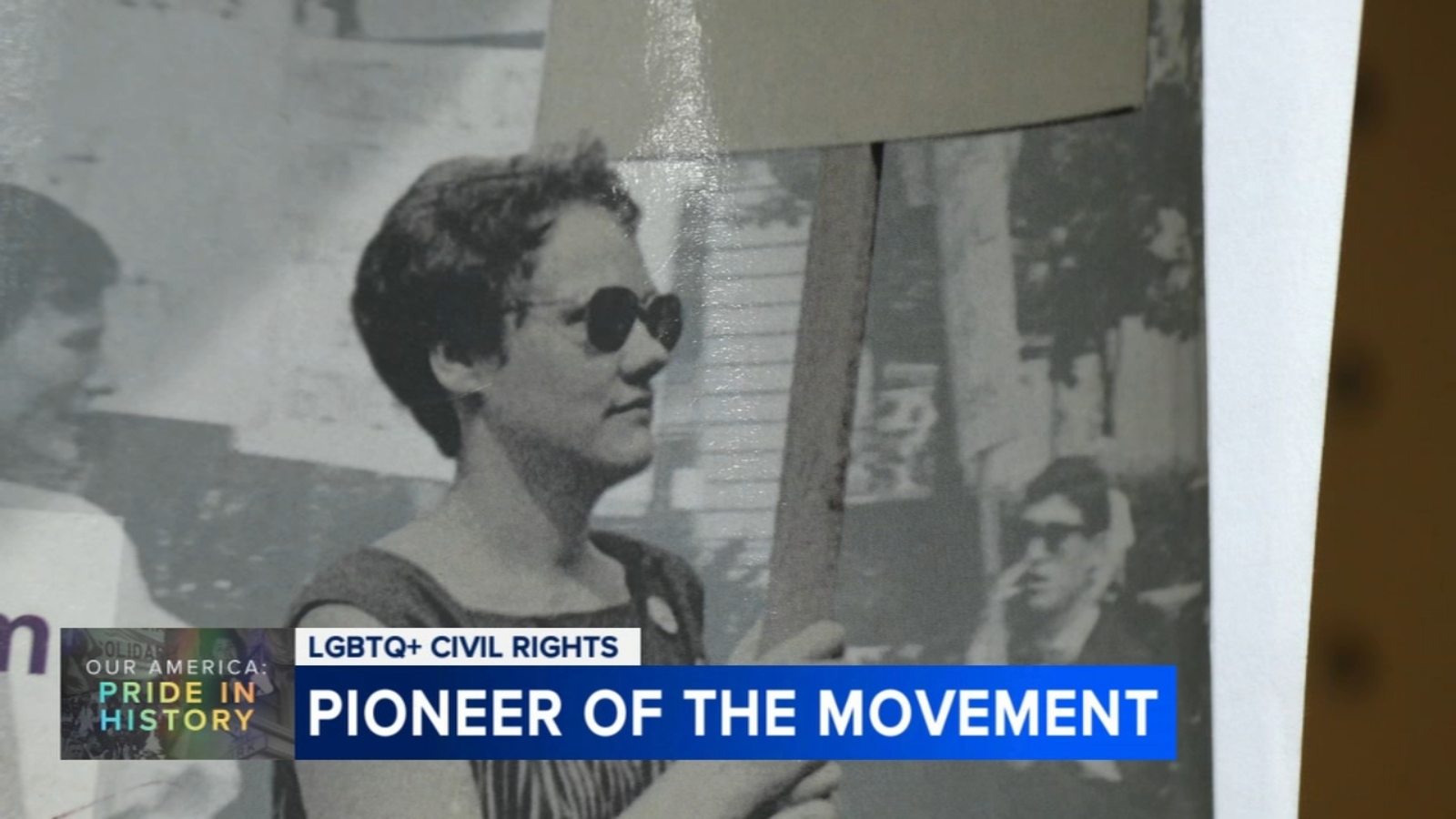
PHILADELPHIA (WPVI) — As LGBTQ History Month is observed across the nation, Philadelphia’s role in LGBTQ history is drawing renewed attention to Barbara Gittings, a pioneering activist whose work helped shape the LGBTQ civil rights movement.
Philadelphia is home to 12 historic markers dedicated to LGBTQ history, according to Malcolm Lazin, executive director of Equality Forum.
“Yes, we are the birthplace of America, but we’re also the birthplace of the LGBTQ civil rights movement,” Lazin said.
“Philadelphia has more LGBTQ historic markers than any other city in the world,” he said.
Two of those markers honor Gittings, who is often regarded as the mother of the LGBTQ civil rights movement. Gittings began her activism in the 1950s and, in 1965, helped organize what is described as the first protest for LGBTQ rights at Independence Hall.
“They literally circled Independence Hall with different picketing signs,” Lazin said.
“Those 40 people literally were the largest gathering for gay equality in the history of the world up until that moment,” he said.
Lazin said he knew Gittings not only as an activist but also as a person of strong character.
“Barbara was remarkable!” he said. “She was a person of remarkable character, but she was also very bright.”
The Delaware native also played a role in efforts to persuade the American Psychiatric Association to stop classifying homosexuality as a mental disorder. Her advocacy extended to libraries, where she pushed for the inclusion of positive materials about the LGBTQ community.
“I can’t say we’d be where we are without Barbara Gittings,” said Udi Adar, manager of the Independence Branch Library in Center City, Philadelphia.
The library now houses one of the country’s largest LGBTQ-related collections with approximately 1,500 items.
Top Stories
“It’s the largest collection of LGBTQ+ materials outside of San Francisco,” Adar said.
The collection, which bears Gittings’ name, spans an entire wall of the library.
“So what I’m gonna show you now is the Barbara Gittings collection … it spans the entire wall of our library,” Adar said as he gave a tour of the area.
Adar added that “her impact on the gay liberation movement is immeasurable.”
Gittings’ life and work are also documented in Gay Pioneers, a documentary executive produced by Lazin.
“You think about all that they accomplished and how we all stand on their shoulders,” Lazin said.
Although Gittings died in 2007, her influence continues to be recognized through historic
markers, library collections and the ongoing work of LGBTQ advocacy organizations.
In archival footage featured in the documentary, Gittings said, “I’m going to live my life the way I want to, openly and proudly as a gay person.”
Equality Forum plans to install its next historic marker in June 2027 at the site of the nation’s first Pride parade in New York City. According to the organization, Gittings also helped organize that event.
Copyright © 2026 WPVI-TV. All Rights Reserved.