
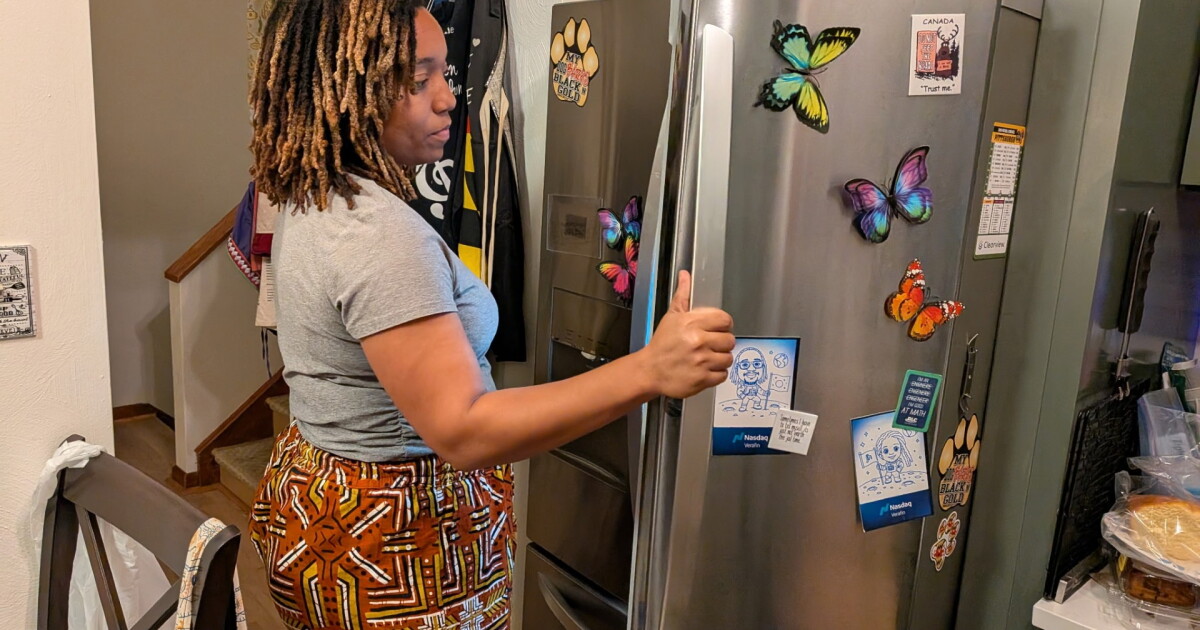
The lights were out. Destenie Nock stepped outside her house and heard a rumble down her street.
“Then as you’re outside looking at the neighborhood, you just hear all these generators going and you’re like wait a second they’re good and I’m not good and there is in theory another option,” Nock said. “You’re just like maybe I should invest in one of those.”
Nock is among a growing number of Pittsburgh residents contemplating purchasing a generator, a machine that provides a back-up power supply. After a September outage, Nock spent hundreds of dollars to replace spoiled groceries and her fridge, which was damaged by a power surge when the lights came back on.
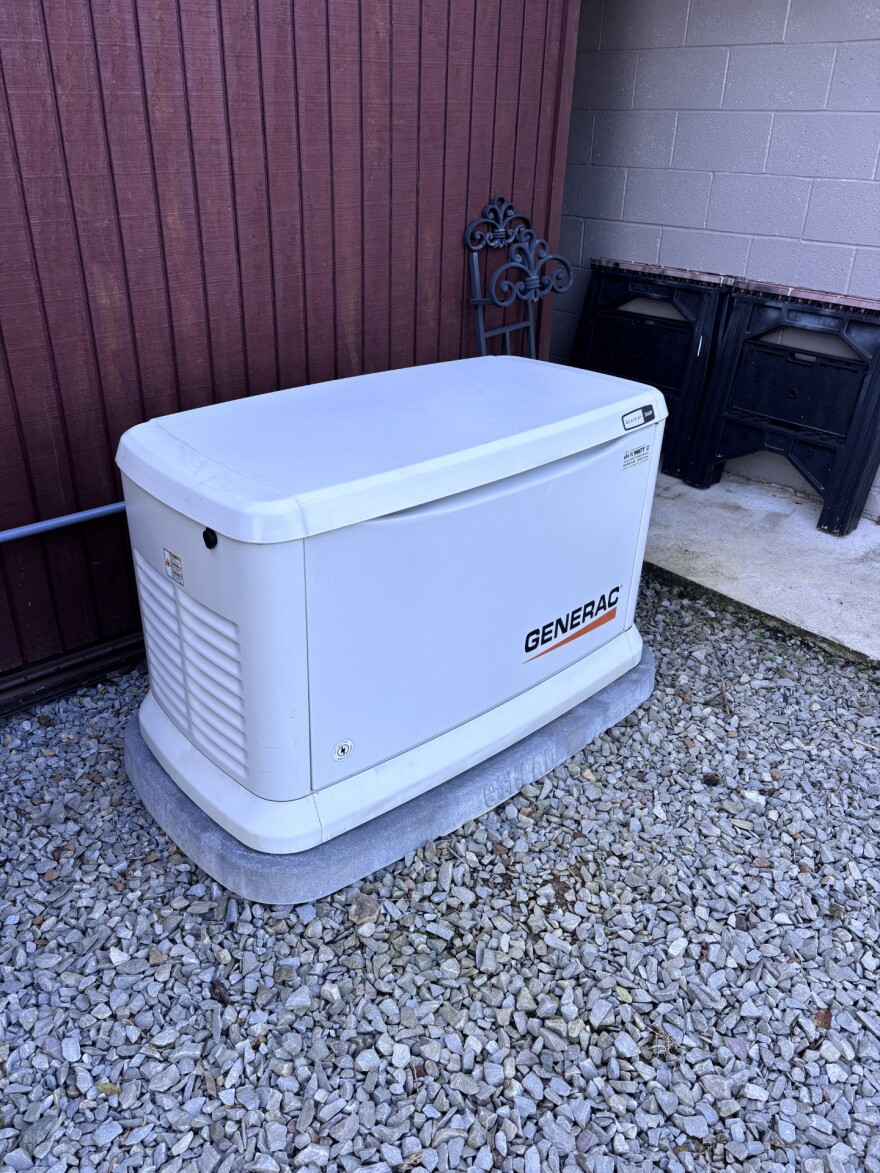
A permanent standby generator, which typically requires professional installation.
Extreme weather is increasingly testing power reliability in Pittsburgh. According to the Pennsylvania Public Utility Commission, the number of reportable outages in the commonwealth in 2025 decreased, but 52 of 55 outages that year were weather-related – showing the increasing threat a changing climate poses to reliable power. And about 1.7 million customers were affected by what is considered a major event – up from approximately 696,000 in 2024.
Outages are lasting longer, too. The Duquesne Light SAIDI Index found a decade ago utility customers in the Pittsburgh region were seeing an average interruption of about an hour (70 minutes) per year. In 2024, those power outages jumped to about 3 hours per year.
For some, like Nock, she lost power for hours and couldn’t go to a relative’s nearby, which was also in the dark. She weighed whether investing in an on-site power supply could have prevented costly consequences.
On individuals or utilities to find a solution?
The September outage, Nock’s second of the year, hit home: Nock is the Alex Hills Career Development Associate Professor of Engineering and Public Policy, and Civil and Environmental Engineering at Carnegie Mellon University. She thinks a lot about the concept of resilience: Whether it’s on people or utilities to adapt when conditions change energy demand.
The answer may be a bit of both, according to University of Pittsburgh associate professor and Director of the Electric Power Technologies Laboratory Brandon Grainger.
He says Pittsburgh’s utilities are pretty quick to get the lights back on, but work is ongoing to replace aging infrastructure and improve predictions for grid load. And Pittsburgh’s topography is uniquely suited to outages, he said, with power lines above ground and heavy tree cover.
“We can’t predict when trees are gonna fall or when ice builds on transmission lines and things, those are going to detriment the electric system and so that’s why you have to have back up resources in place,” Grainger said. “It makes some sense to buy a back up generator because people want to have their electricity on 100% of the time.”
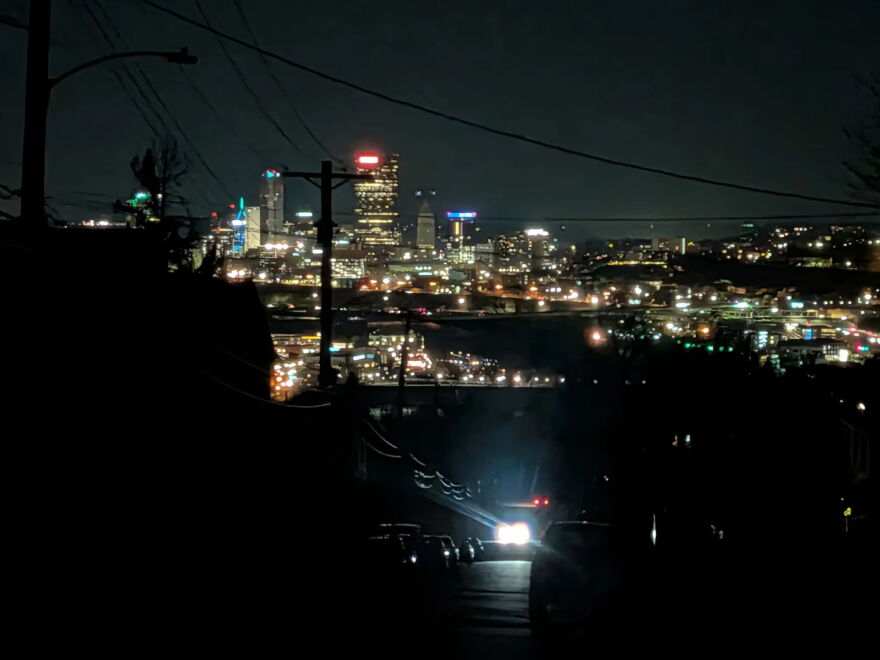
A power outage on Destenie Nock’s Greenfield street in March 2026.
Generator demand is booming
Generators aren’t one-size-fits-all. Some are portable machines you can buy for a few hundred dollars and run on gas or solar.
Others, like the one you heard at the start of this story, can cost up to $15,000 and require installation by professionals like RC Watt, whose company sets up generators around the Pittsburgh region. He says demand is booming.
“We’re trying to staff up and add more people,” Watt said. “But if someone calls me in November and says ‘I want a generator before Christmas,’ that’s not going to happen … The industry is seeing double-digit growth.”
Meanwhile, Grainger says utilities will have to take what they’ve learned from previous winters to prepare for energy demand in the future – regardless of generators increasing role.
“We try to have forecasting methods to say hey this is how much load is gonna be in Pittsburgh at this given time,” he said. “We’re trying to come up with better predictive routines to forecast these issues so we don’t have these disturbances you’ve seen over the last couple years.”
For people weighing the investment, Grainger says it’s up to how you essentially use power.
“It’s human nature to always want electricity available, 100% of the time, but no engineered system is perfect,” he said.
Nock still might buy a generator. She remembers the pain she felt when she lost her daughter’s milk and couldn’t play a sound machine to help her child sleep.
“How resilient do I have to be until I can just use my fridge? That’s the question,” she said. I think we need to start considering reliability to be, ‘I can use all the energy I need in my home to meet my basic needs without inducing financial stress.’”