
By Alexander Pietraru
A patient’s medical story can be like a photograph passed from hand to hand in the rain. By the time it reaches the emergency department, the outline is still there, but some of the details may already have blurred.
Maybe a daughter says her father was completely normal an hour ago. Maybe there are half-empty prescription bottles scattered across a kitchen counter. Maybe the patient is speaking clearly when the ambulance arrives but becomes confused during transport. Maybe a neighbor explains that she has not seen him leave his house in days.
Those details may never appear on a blood test or CT scan. But they can shape what happens next. And somewhere between the living room and the emergency department, pieces of that story can disappear.
For the Lehigh Valley, this is not an occasional problem. The Eastern Pennsylvania EMS Council reported 59,542 EMS responses in Lehigh County and 50,076 in Northampton County during its 2023-24 reporting year. Combined, that is nearly 110,000 EMS responses across the two counties.
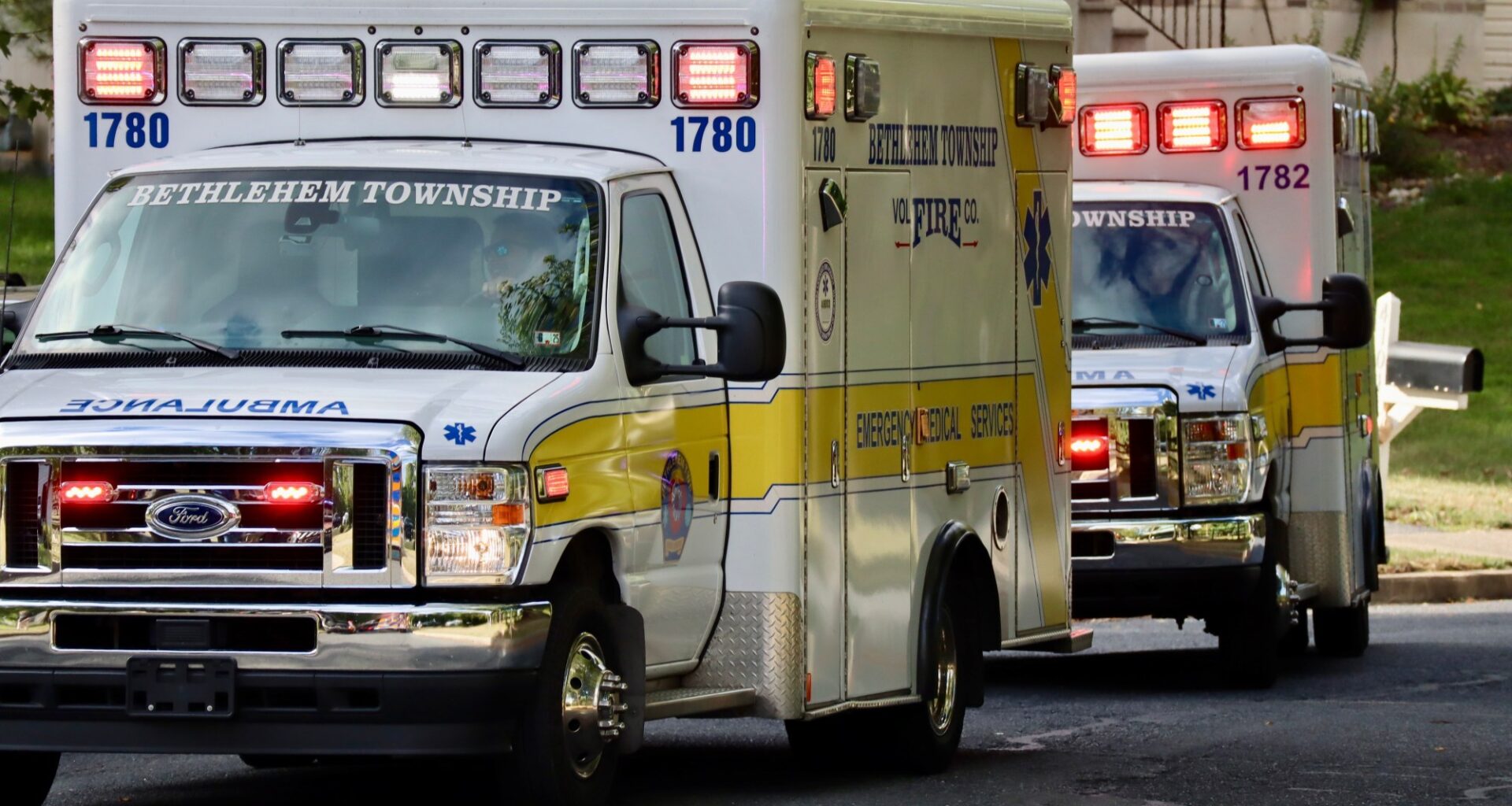
As an EMT in upstate New York, I have learned that some of the most useful information about a patient exists outside the hospital. EMS crews see the room where someone fell. We hear from the spouse who noticed that something was wrong. We find medication bottles that a patient cannot remember by name. We know whether someone walked to the ambulance or had to be carried.
The hospital has to absorb all of that information quickly. That is difficult for everyone involved. Emergency departments are noisy and fast-moving. Nurses may be receiving several patients at once. Physicians may be responding to another emergency nearby. EMS crews need to transfer their patients and get back into service. The handoff might last only seconds. Yet those seconds can contain information that cannot easily be reconstructed later.
Pennsylvania already recognizes how important that transition is. State regulations require an EMS crew transporting a patient to communicate information essential to the patient’s immediate care to the person assuming responsibility at the receiving facility before the crew leaves.
Pennsylvania’s statewide EMS protocols go further. They recommend a structured handoff that includes the patient’s demographics, mechanism of injury or medical complaint, illness or injuries, vital signs and treatments. For stable patients, the protocol recommends something remarkably simple: approximately 30 seconds of uninterrupted attention.
The hospital team leader calls for an “EMS time out,” and the room is supposed to stop long enough for the crew to deliver its report. Thirty seconds. In an emergency department, that can feel like a long time. But it may also be the difference between preserving a detail and losing it.
Imagine a patient arriving after a fall. The CT scan can show the injury. It cannot show the loose rug at the bottom of the staircase. It cannot explain that the patient’s family says she normally walks independently. It cannot reveal that she seemed confused before hitting her head rather than afterward.
The trajectory matters. Was the patient getting worse? Were symptoms improving? Did a treatment work? Was the patient able to speak earlier but unable to speak now? The emergency department sees the patient at one moment in time. EMS may have watched that patient change. That distinction matters in a region managing a substantial burden of emergency illness and injury.
Pennsylvania Department of Health data shows that Lehigh County had an age-adjusted injury hospitalization rate of 981.6 per 100,000 residents in 2024, compared with a statewide rate of 813.7. Northampton County’s rate was even higher, at 1,151.6 per 100,000.
Fall-related hospitalization rates were also above the state average in both counties. Lehigh County’s rate was 634.2 per 100,000 and Northampton County’s was 777.9, compared with 503.4 statewide.
Those numbers are not abstract when you work in emergency care. Behind each hospitalization is a moment when someone had to understand what happened, what changed and what had already been done. The answer is not to make every EMS report longer. A five-minute monologue in the middle of a crowded emergency department would defeat the purpose. The answer is to make the first seconds more reliable.
Hospitals and EMS agencies can consistently use the same structured handoff format. Receiving teams can protect a brief period in which one person listens without interruption. EMS documentation can be easier for hospital clinicians to locate in the medical record. Agencies can review handoff failures as part of quality improvement, just as they would review other patient-safety concerns. None of these solutions requires a new machine. They require attention.
Modern medicine increasingly depends on imaging, laboratory testing, electronic records and sophisticated technology. Those tools are invaluable. But none of them can perfectly recreate what happened before a patient reached the hospital. Sometimes the most important piece of information is still a sentence spoken beside a stretcher.
“His wife says this is not his normal mental status.” “She became confused during transport.” “He was able to walk when we arrived.” “That medication bottle was empty.” “Her symptoms started at 2:15.” Each observation may seem small on its own. Together, they form the first page of a medical story.
Across Lehigh and Northampton counties, EMS crews respond to nearly 110,000 calls in a year. Every one of those encounters begins before the emergency department. When the ambulance reaches the hospital, the patient should not be the only thing that makes it through the doors intact. The story should arrive, too.
This is a contributed opinion column. Alexander Pietraru is a Cornell University undergraduate and emergency medical technician in upstate New York. The views expressed in this piece are those of its individual author(s), and should not be interpreted as reflecting the views of this publication. For more details on commentaries, read our guide to guest opinions at mcall.com/opinion.