
SOUTH ABINGTON TWP. — Lackawanna County commissioners are striving to close a preliminary 2027 budget deficit without raising property taxes, but Commissioner Thom Welby said Tuesday he’s aware there is “a reality that we have to deal with.”
The reality, a difficult fiscal position marked by escalating expenditure growth and more modest growth in revenues, was a theme of county Chief Financial Officer David Bulzoni’s presentation earlier this month when county officials unveiled a roughly $190 million draft budget for 2027. It was clear again Tuesday, when Bulzoni, Welby, Commissioner Chris Chermak and county Chief of Staff Brian Jeffers participated in the first of four public hearings on the preliminary spending plan that remains a work in progress pending final passage later this year.
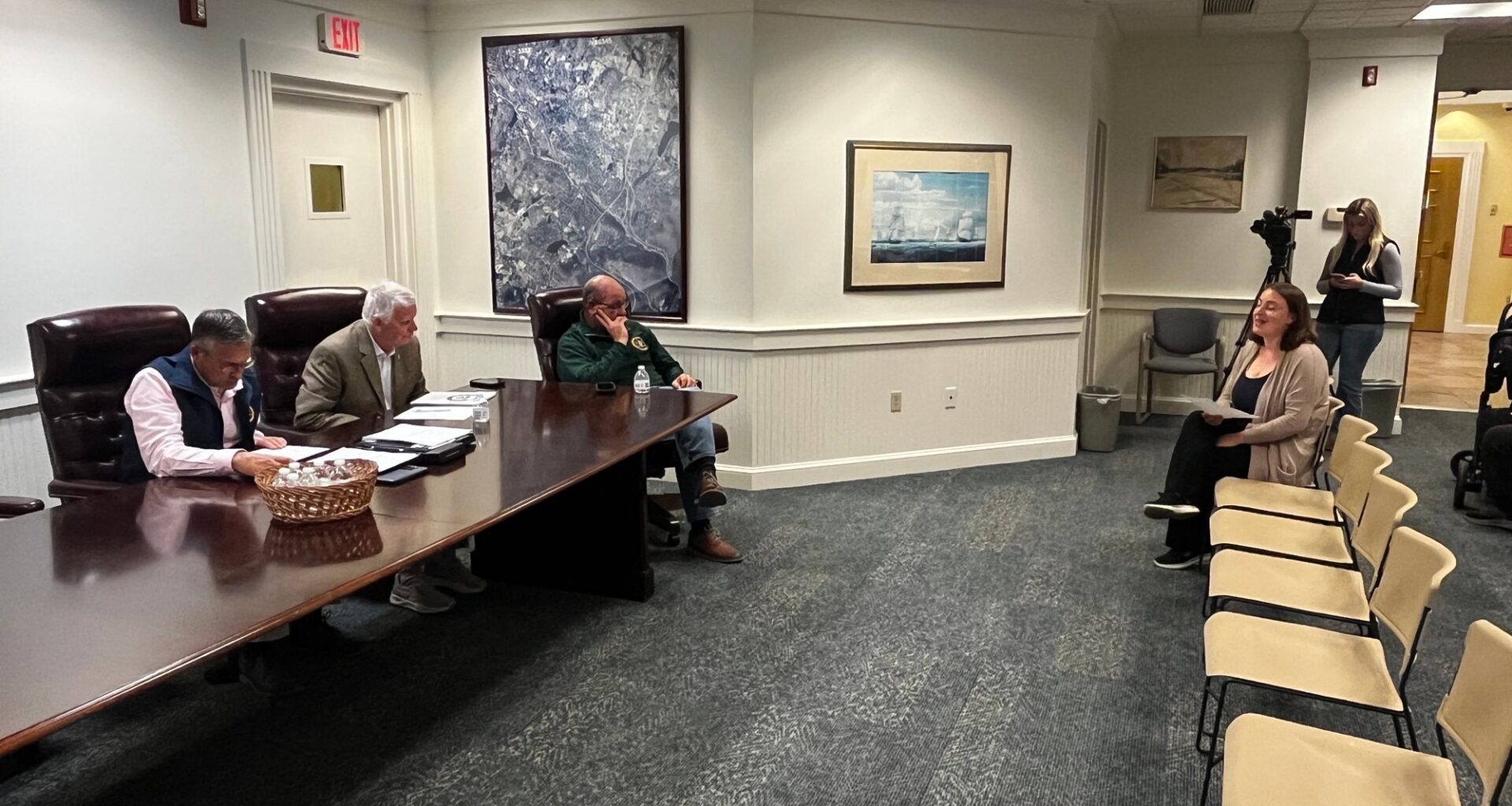
Commissioner Bill Gaughan, who was recovering from an unplanned oral surgery, was absent from Tuesday’s sparsely-attended hearing at the South Abington Twp. Municipal Building, where officials solicited feedback on the budget proposal that could inform future changes and adjustments.
The preliminary budget introduced Oct. 15 does not include a tax hike that would generate new revenue and carries a roughly $4 million general fund deficit, the gap between budgeted revenues and expenditures. Officials were able to curtail what was originally a roughly $9 million budget shortfall through a combination of cuts and the inclusion of several one-time revenue sources, and are working to further close and ultimately eliminate the deficit without raising taxes.
That would be welcome news for taxpayers hit with a nearly 33% hike in 2025, at least in the short term, but the county’s potential failure to bolster revenues through a tax increase or other means could compound its future fiscal challenges.
A relatively recent financial crisis that effectively made the precipitous 2025 tax hike inevitable was itself years in the making, marked by a massive structural deficit that had ballooned as annual expenditure growth outpaced that of revenues. The tendency of prior county administrations to forgo tax increases and balance budgets by drawing down the county’s accumulated surplus, and by relying on one-time revenue sources, caused the structural imbalance to worsen over time, all but forcing last year’s massive tax increase to bridge the gulf between revenues and expenditures.
The 2025 hike was the county’s fifth and most significant tax increase since 2012, following increases of roughly 37.5% that year, 4.4% in 2013, 11.3% in 2020 and 5.9% in 2024.
Commissioners did not increase taxes in 2026, though many property owners’ bills fluctuated as a result of the county’s first comprehensive reassessment in nearly 60 years. They are tentatively poised to leave rates unchanged this year despite expenditures in the preliminary 2027 budget growing by about 5.1% compared to the 2026 spending plan. Expenditure growth driven by inflation, increasing healthcare costs and other factors far exceeds the roughly 0.26% organic growth in property tax revenues officials project for 2027, property taxes being the county’s largest recurring revenue source.
PFM Group Consulting LLC, the firm behind the county’s multiyear financial management plan, has recommended commissioners consider regular but incremental tax increases to keep pace with expenditure growth and mitigate the potential need for another massive tax hike down the road. Bulzoni has echoed that recommendation.
Welby and Chermak both said earlier this month, just before the preliminary budget’s unveiling, that they wouldn’t vote for a tax increase next year. Gaughan said he hopes to avoid one too as long as doing so won’t undermine the county’s recent financial progress or lead to an untenable future fiscal position.
And while Welby said Tuesday he’s confident officials can close the budget shortfall, and reiterated he doesn’t want to vote for a tax hike, his acknowledgement of “a reality that we have to deal with” suggests he may be willing to at least entertain a modest increase next year. That remains to be seen, as does the success of county efforts to curtail the deficit over the coming weeks.
Hoping to help in that respect, public administration professional Amanda Sagona, a Taylor resident with a master’s degree in public policy from Harvard University’s John F. Kennedy School of Government, encouraged officials Tuesday to better align budgeted expense line items with actual spending in a number of specific areas and to reconsider certain county funded grants to mitigate expenses.
One of only two members of the public to provide feedback during the session, Sagona also expressed concern that the county’s 90% projected property tax collection rate may be too ambitious. Failure to achieve that 90% assumed rate next year would exacerbate the county’s revenue problems and could result in an even larger deficit than officials currently project.
Commissioners will take that and other of Sagona’s suggestions under advisement as work on the budget continues, and welcome additional input from other members of the public.
The county will hold its next public budget hearing Thursday at the Dickson City Municipal Building, 901 Enterprise St., beginning at 10 a.m.
Subsequent hearings will take place Nov. 5 and 9 at the Spring Brook Twp. Municipal Building and the Lackawanna County Government Center in downtown Scranton, respectively. Those sessions also begin at 10 a.m.