

Spurred by the ongoing conflicts in Iran and Ukraine — which have throttled oil shipping lanes in the Strait of Hormuz and impacted Russian refining infrastructure — diesel prices have spiked to record highs.
According to an Oct. 19 report from the U.S. Energy Information Administration, the nation’s average price for diesel was $6.27 per gallon. That’s far beyond levels ever seen in this country.
The national average had never surpassed $5.81 before September and was only $3.62 a year ago. AAA reported on Wednesday that the average price for diesel in Reading was $6.63, up from $3.97 a year ago.
The skyrocketing cost of diesel has impacted all sorts of industries, including agriculture, construction and shipping.
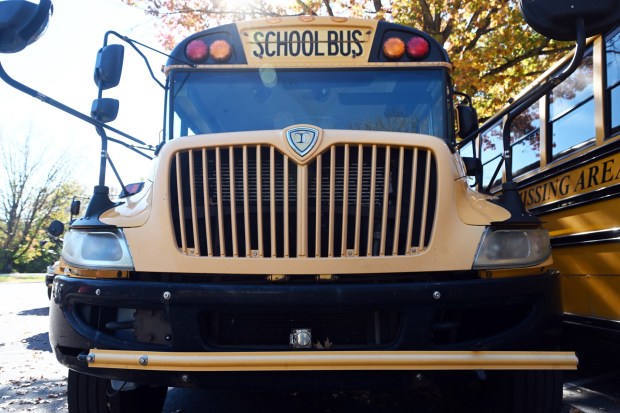 The impact of soaring diesel prices has been varied in Berks County. (BILL UHRICH/READINGEAGLE)
Elevated diesel prices also have boosted costs for school districts across the U.S. that rely on the fuel to power buses toting students to and from school.
In Berks County, the impact has been varied.
Several districts reported a minimal impact, having locked in prices before the global market went haywire.
Randy Williams, director of transportation for the Wilson School District, said Wilson is fortunate to be a part of the Berks County Joint Purchasing Board.
Run by the Berks County Intermediate Unit, the consortium combines the purchasing power of districts across the county to leverage lower prices.
“For this year, back in July we locked in 100% of our quantities,” Williams said of diesel fuel. “A lot of districts across the country don’t have that, and they’re seeing their costs go way up. Districts are scrambling trying to figure out how to pay for it.”
Williams said the consortium was able to lock in diesel in the mid-$3 range, about half of the current national average.
“If not for the consortium, we could be looking at doubling fuel costs,” he said.
Hamburg School District is also a member of the consortium. Superintendent Dr. Christopher Beissel said the district is paying more for diesel this year than it did last year but that things could be much worse.
He said the locked-in price is 91 cents per gallon higher than before but significantly below current diesel prices.
“By ‘fixing’ the price, the district greatly reduces the impact of market price swings on our budget,” he said.
The Reading School District has also managed to avoid price shock from diesel costs.
Ken Chase, director of transportation, said the district’s contracts with its four main transportation providers are not impacted by fluctuations in fuel prices.
He said those contracts — which represent 96% of the district’s bus routes carrying 99% of its students — do not include any price adjustments due to the price of fuel.
Only one contract includes such adjustments, Chase said, but the district only relies on that company for about 4% of bus routes carrying less than 1% of the district’s students.
One Berks district that is feeling the pressures of inflated diesel costs is Brandywine Heights.
Superintendent Andrew Potteiger said his district pays directly for the fuel used by its transportation provider.
“So increases in diesel prices are reflected directly in our expenses,” he said.
Brandywine Heights participates in a bulk fuel purchasing program run by the Lancaster-Lebanon Intermediate Unit, but due to market volatility the district could not lock in a price for the entire school year.
Potteiger said the district’s first diesel invoice for the school year was $12,458 higher than the first invoice the previous school year for the same 7,500 gallons, representing a 67% increase.
“While this is only an early indication of the impact, it highlights the additional financial pressure rising fuel prices can place on the district’s budget,” he said. “We will continue to monitor costs as the school year progresses.”