
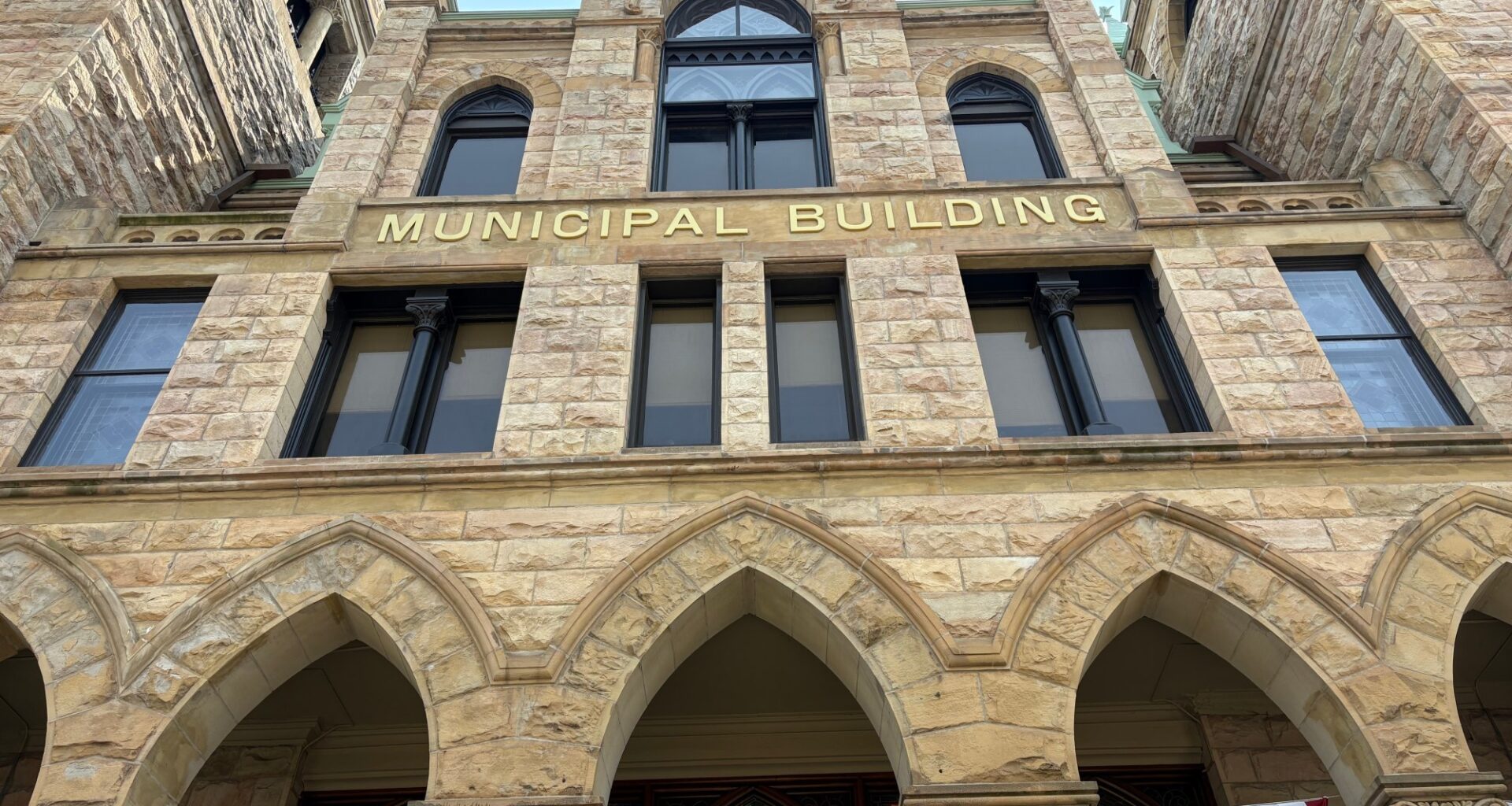
Scranton’s mayor announced Wednesday she will propose a city budget for 2027 that will not increase taxes or the annual trash-collection fee.
“We have worked year after year to bring our city out of distressed status and efficiently and effectively manage our city’s finances, and provide a stable financial future,” Mayor Paige Cognetti said in a statement. “I am proud of the work our team has done to continue to provide critical services to the people of Scranton while enacting measures that put our city on sound fiscal footing and respects taxpayers’ hard-earned dollars.”
It will be the fifth of seven annual budgets proposed by Cognetti that has not included a city property tax increase. Cognetti took office in January 2020. Under her tenure, there were no tax increases in 2021 and 2022, a 2% hike in each of 2023 and 2024, and no tax hikes in 2025 and 2026. She proposed a 3% property tax hike in 2023 and a 3.5% increase in 2024, both of which were reduced by Scranton City Council to 2% hikes in each of those years.
The operating budget for 2027, which has not yet been presented to Scranton City Council, will outline expected municipal revenues and expenditures. The timeline process for enacting a budget includes:
• A city budget must be proposed annually by the mayor to Scranton City Council by Nov. 15.
• Public hearings on the proposed budget must take place by Dec. 1.
• Council then may adopt or amend the budget by Dec. 15.
The city’s $115.5 million city budget for 2026 ended the city’s split property tax rates of one rate for land and the other for improvements that dated to 1913. Instead, the city now has only one property tax rate, as do nearly all other municipalities in the state.
The city’s 2026 single millage tax rate of 6.3509 mills would remain the same in 2027 under a no-tax-increase budget. A mill is a $1 tax on every $1,000 of assessed property value.
The proposed 2027 budget also would keep other taxes and the garbage-collection fee the same:
• Trash fee, $300.
• Earned-income (wage) tax, 2.4%.
• Real estate transfer tax, 2.2%.
Cognetti cited Scranton’s recently released financial audit for 2025 that showed a $3.6 million surplus in the city’s general fund and no negative findings.
“The surplus and the Cognetti administration’s ability to offer proposed budgets without a tax increase are the result of continued strong revenue growth and expenditure controls across all city departments,” the mayor said.
She also recounted some other recent positive steps achieved in the city government’s improved fiscal health:
• In 2022, the city successfully exited the state Act 47 municipal financial distress oversight program, and has since had continued positive economic growth.
• The Standard & Poor’s credit-rating organization upgraded Scranton’s credit rating five times since exiting Act 47, with the rating currently at an A- grade.
• In 2025, Scranton received the Secretary’s Award for Municipal Excellence from Pennsylvania’s Department of Community and Economic Development, which recognized the city as a place where local leaders are committed to dynamic change for the betterment of residents, businesses and neighborhoods.
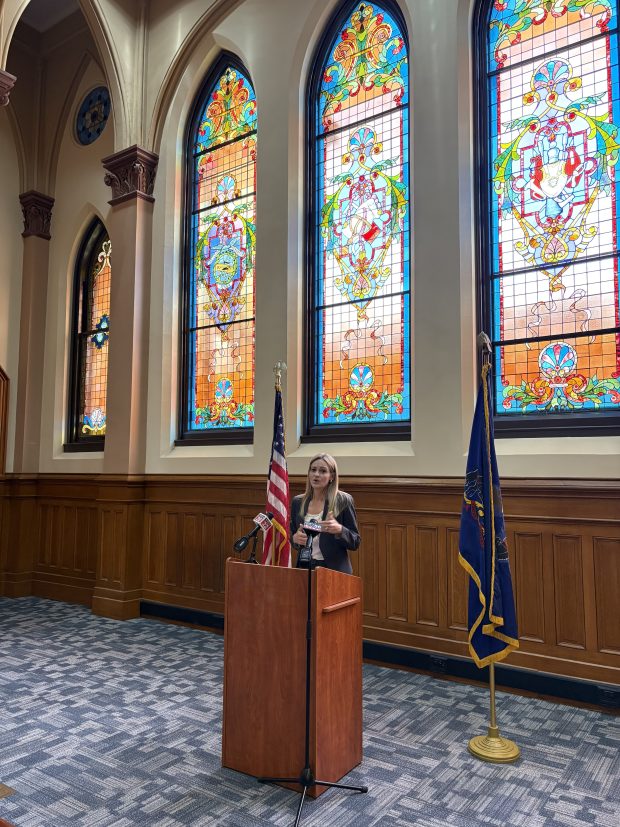 At Scranton City Hall on Wednesday, Aug. 12, 2026, Mayor Paige Gebhardt Cognetti discusses a five-year financial projection of city finances completed recently by the nonprofit Pennsylvania Economy League. (JIM LOCKWOOD / STAFF PHOTO)