
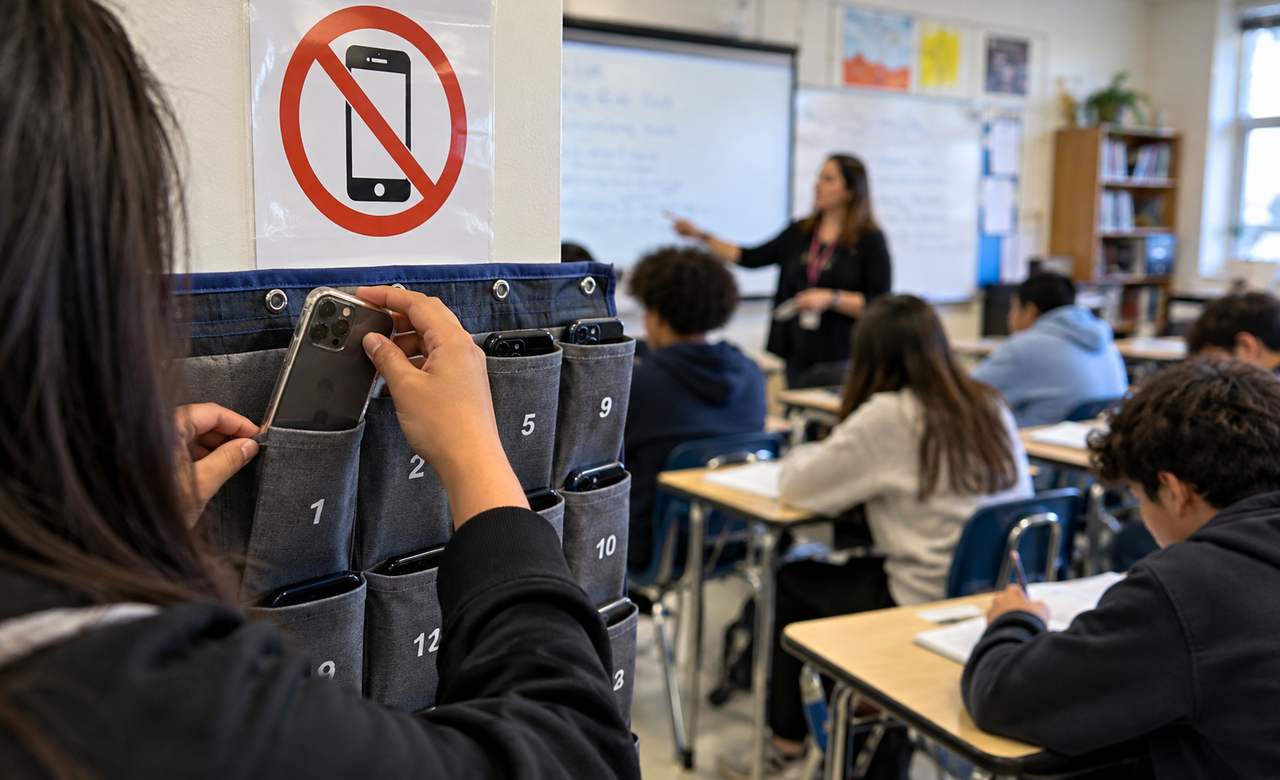
Cellphone use in Pennsylvania schools will no longer be left entirely to the discretion of individual institutions. On October 26, 2026, Gov. Josh Shapiro signed Act 117, stemming from Senate Bill 1014, requiring schools to establish restrictions on the use of personal mobile devices throughout the entire school day. The measure applies to public, charter, cyber charter, and private schools and must be implemented by the beginning of the 2027–2028 school year. Its goal is to reduce classroom distractions and reclaim time for learning and student interaction.
The ban will extend beyond classroom hours. The legislation covers lunch periods, recess, and transitions between classrooms, requiring school districts to establish rules that apply throughout the entire school day. The change also presents an administrative challenge: each institution will have to determine how it will restrict possession of devices, monitor compliance, and communicate its procedures to the school community.
In Philadelphia, the Board of Education has already outlined the next steps. In a statement published on October 22, it said it would work with principals, educators, students, and families to develop a districtwide policy that must be considered and approved before the 2027–2028 school year. The district currently allows individual schools to establish their own restrictions, but the new legislation will require a framework that meets state requirements.
Medical and Educational Exceptions
The law does not impose a ban without exceptions. Students may use personal devices when they have a medical need documented by a healthcare professional or when cellphone use is part of the accommodations outlined in an Individualized Education Program (IEP) or a service agreement under Section 504. English learners may also use their devices when necessary for translation or other language-learning activities.
Educational use will be permitted under specific conditions. A teacher must request authorization, and the principal must approve it when a device is necessary for an educational activity but school-provided equipment is unavailable or insufficient. The authorization must be limited to a specific situation and period; it cannot become a routine practice. The regulations also allow school authorities to approve extraordinary exceptions for up to one day, following a prior request from the principal.
Another important provision is that the law does not require schools to physically confiscate cellphones. Each institution must determine how it will restrict possession and use, as well as establish monitoring and enforcement procedures. Policies must be published on school websites, and families must receive written information explaining how to contact their children during the school day and how to sign up for emergency notifications.
The Challenge for Teachers and Families
Support for the measure centers on academic attention, school climate, and student well-being. The Pennsylvania State Education Association backed the law, arguing that reducing interruptions can help keep classrooms focused on instruction. The organization represents educators and school employees across the state.
However, the law’s effectiveness will depend on its day-to-day implementation. Teachers will need consistent rules for addressing violations, while families must understand the official channels for contacting their children in an emergency. In a diverse city such as Philadelphia, exceptions for students with medical, educational, or language-related needs will also require clear and accessible procedures.
The law provides for public participation before school policies are adopted or amended. Parents, students, employees, and organizations representing school workers must have opportunities to express their views. This does not mean every concern will be resolved, but it creates a forum for discussing how to enforce the restrictions without overlooking the specific needs of each school community.
Philadelphia has until the beginning of the 2027–2028 school year to adapt its rules. The question is no longer whether schools must restrict cellphone use, but how to make the policy work in practice. Its success will depend on ensuring that digital discipline goes beyond taking phones away and helps strengthen instruction, communication, and relationships within schools.