
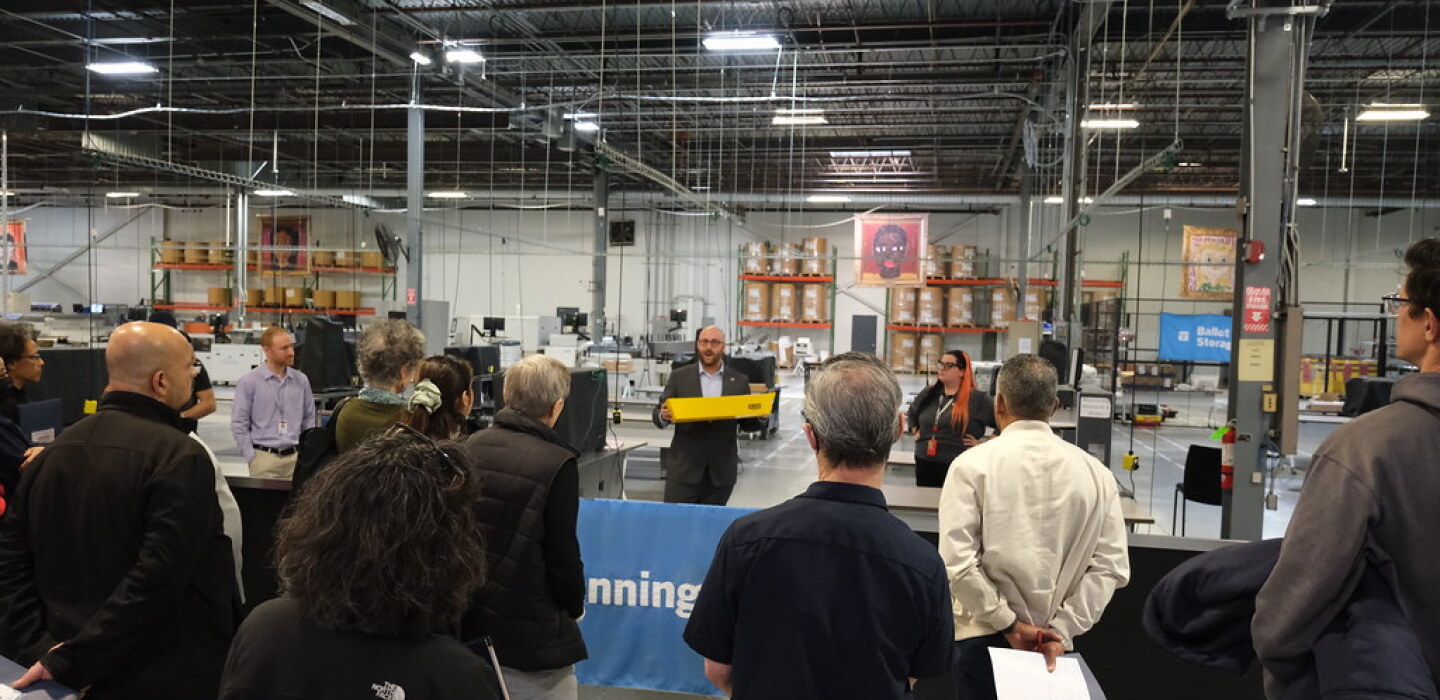
Pennsylvania was a hot spot for controversy and fights over 2020 presidential election outcomes.
Four House races in the state are in play as Democrats hope to flip the balance of power in the chamber.
Election officials have built on lessons learned in 2020 to set the stage for a safe and secure election and ease voter concerns about federal interference at polls.
While Philadelphia City Commissioner Seth Bluestein was counting 2020 ballots at the city convention center, police were stationed outside his home to make sure his wife and children were safe. He hadn’t expected death threats to be part of the job when he began elections work in 2012, but they didn’t deter him. “I’m committed to continuing in this job because of those experiences,” Bluestein says.
On Nov. 4, Donald Trump claimed he was winning Pennsylvania by nearly 700,000 votes — when 2 million or more ballots were yet to be counted. When counts didn’t bear this out, he filed a lawsuit seeking to prevent certification of the state’s presidential election results.
These accusations of fraud were an unprecedented challenge for Bluestein and many other election officials across the country that year. He had to manage them along with all the normal challenges of election administration — as well implementing no-excuse mail voting, new election machines and keeping voters safe during a pandemic.
In 2026, Pennsylvania is again poised to be a battleground. “We have to be a lot more skilled in cybersecurity, physical security, communications,” he says. “These are all things that, while they may have been important in the past, were not always on our radar to the degree that they are now.”
Business as Usual, With Twists
Preparing for the 2026 election has been a “pretty normal” experience, Bluestein says, much easier than getting ready for elections during the pandemic. The main difference is voter concerns about federal involvement before or on Election Day.
Philadelphia County is one of four in Pennsylvania where the Department of Justice (DOJ) plans to send federal election monitors. They will have a passive role, Bluestein says, observing compliance with federal laws around accessibility and civil rights issues. They can speak with voters after they vote, but not before.
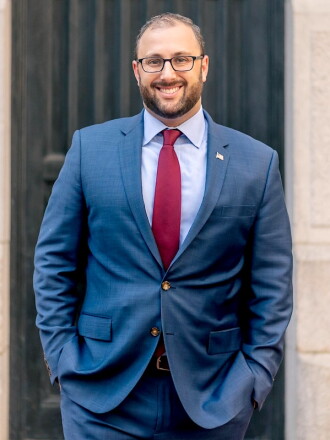
Seth Bluestein says Philadelphia voters “should have confidence in their ability to go to the polling place and vote without interference.”
(Seth Bluestein)
Monitors have been sent to election jurisdictions for many years, says Kathy Boockvar, secretary of state in Pennsylvania in 2020. But Steve Bannon stoked new fears among some officials when he said earlier this year that Immigration and Customs Enforcement (ICE) agents would be deployed to polls during the midterms. The administration has since said it will not send immigration agents to the polls, and election officials do not expect to see them.
It is a federal crime for DOJ observers to be armed, Boockvar says. Pennsylvania law also bars federal or state troops, armed or unarmed, from places of election during the time of the election — unless they are voting. Police cannot be within 100 feet of a polling place unless they have been called to preserve the peace.
Boockvar has traveled the country to deliver training sessions to election officials as a member of the Committee for Safe and Secure Elections. These include working through responses to possible Election Day scenarios. Many jurisdictions have wanted to talk through a hypothetical scenario where federal agents show up at a polling place, she says.
As a pre-emptive effort, Bluestein’s office has provided information to poll workers about what to do in case they encounter ICE at a polling place, but he isn’t expecting problems.
“The most important thing for the voters to know is that Election Day is safe,” says Lisa Deeley, another city commissioner. “People should vote without fear of intimidation; we want people to participate in spite of all the rhetoric.”
The county mailed ballots earlier than it ever had before, Bluestein says, and has already received 60 percent back. Satellite election offices made it easy to request one in person, and ballot boxes are readily available to anyone concerned about postal service delays.
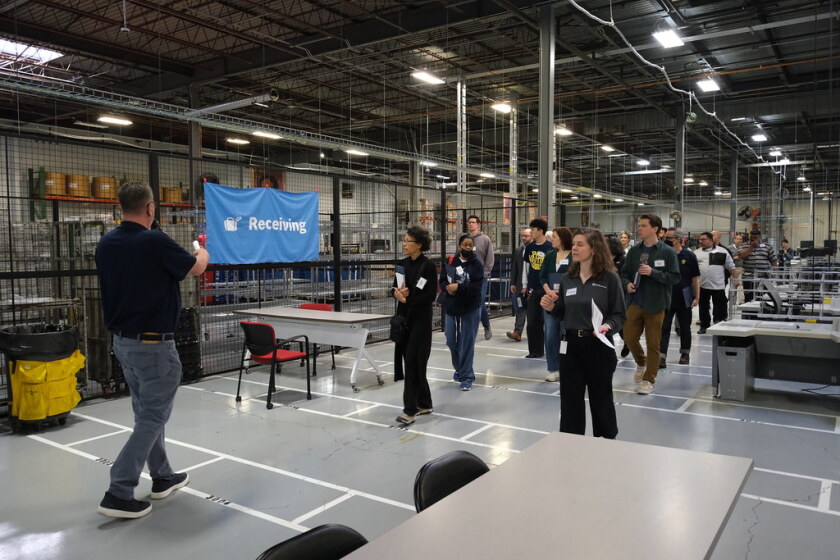
Walking the states of election processing, part of a Philadelphia “Election Academy” designed to help members of the public better understand election administration and build trust in elections.
(City Commissioner’s Office)
Too Busy to Worry
Lehigh County, where Michael Paston is chief clerk, is home to one of the four Pennsylvania House districts Democrats hope to flip. This increases the potential for post-election controversy, but Paston’s staff are too busy to be nervous about what lies ahead.
“We’re here six or seven days a week, 12-plus hours a day, so there isn’t time for that,” he says. “They’re professionals and they know what they have to get done.”
DOJ monitors will also be coming to Lehigh County. Contact with the department has been straightforward and non-adversarial, Paston says. “There’s no reason to think ICE will be here,” he adds. “It would be a complete waste of their resources to go to polls to try to arrest illegals because illegals don’t vote.”
The county had an open house two weeks ago, inviting voters in to see how its vote-counting equipment works. “We felt it was really important, with so much misinformation and disinformation around the electoral process, that the best way to treat that issue was to open up our doors and show that we have nothing to hide,” Lehigh County Executive Josh Siegel told a local news outlet that covered the event.
Campaign spending, press and commercials are all in high gear, Paston says, but inside his walls, this election is the same as any other. “It’s the same process,” he says, “regardless of what the repercussions politically may be.”
Like Bluestein, Paston has had to address poll worker security concerns by helping them understand what the DOJ monitors will do and the laws that forbid firearms at polling places. “They’re reading in the paper that they are going to have federal monitors, and they don’t know what that means, what’s going to happen.”
The judge of elections at each polling place is responsible for administering the election as well as ensuring everyone stays safe over the 13 hours it’s open. “They like to have as much information going in as possible,” Paston says, “which is expected.”
There’s no reason for Lehigh County voters to not have confidence, Paston says. The people who work for him are committed to the election, not who wins or loses. “We just want the ballots to be counted properly and then say, ‘Here it is, this is what the people want and this is who they voted for.’”
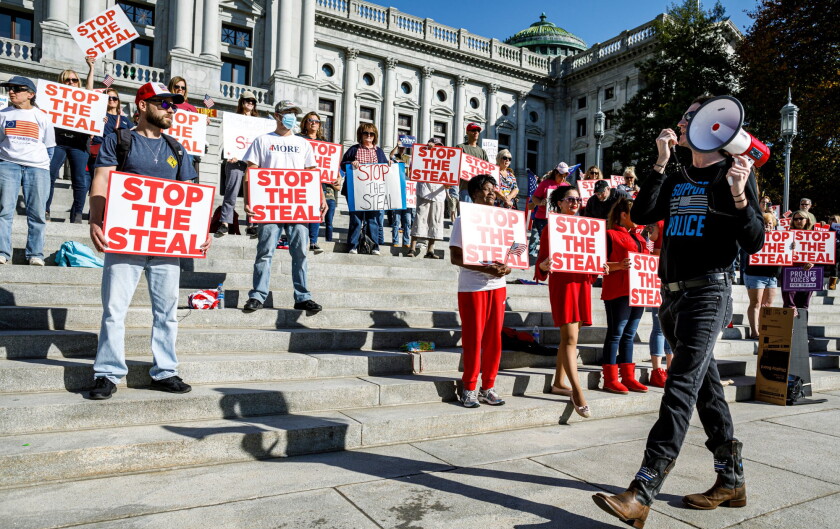
Events like this 2020 “Stop the Steal” rally weren’t organized following the 2024 election, but it remains to be seen what might come if Democrats prevail in key Pennsylvania House races.
(Dan Gleiter/TNS)
In the Shadow of 2020
Even six years later, election officials are living in the shadow of the 2020 election cycle, Bluestein says. This has led them to prepare for circumstances they wouldn’t have considered in prior years.
The training Boockvar has led encompasses everything from conflict de-escalation, bomb threats and drones to envelopes filled with white powder and what to do if a third party disrupts election processes.
“Election officials like certainty,” Bluestein says. There was a lot of uncertainty throughout the summer and fall about what to expect from the federal government, but a week before the elections things are in good shape. “People know what they need to do,” he says, “they’ve run elections before, so they are ready to do the job and get everything across the finish line.”
For Deeley, Election Day is one of Philadelphia’s best days. “It’s a day all about community, as Philadelphia as Rocky and Tastykakes.”
“We do everything we can to make sure that it is always a great day,” she says, “and Nov. 3 won’t be any different.”