
Prepare for Pennsylvania winter with tips for safer travel, cold-weather safety, and emergency planning.

A Pennsylvania winter can change its mood in a matter of hours. Snow that looks beautiful from the window can bury roads and keep families at home. Freezing rain can turn a familiar drive into a dangerous trip—or knock out the power. And when cold and wind arrive together, even a short time outdoors can put your health at risk.
Winter Weather Awareness Week is a good time to prepare before the next storm is in the forecast. A few simple steps now can make a difficult day safer for you and the people around you.
Get your car ready before the roads turn slick
Winter driving leaves little room for last-minute fixes. The National Weather Service says nearly three out of every four winter weather-related deaths happen on highways.
When roads are snowy or icy, slow down, leave extra space, and give yourself more time to reach your destination.
Here is a checklist to help you get your vehicle ready for the winter weather.
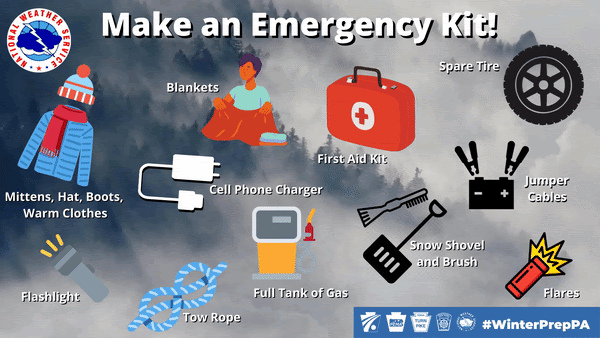
Check your vehicle’s tires, brakes, windshield wipers, antifreeze, and overall condition. Keep the gas tank at least half full, and stock the car with supplies in case you become stranded: a blanket or sleeping bag, first-aid kit, flashlight with fresh batteries, shovel, ice scraper and brush, booster cables, tow rope, sand or cat litter for traction, paper towels, and high-energy nonperishable snacks.
Before leaving, tell someone where you’re going and when you expect to arrive. When possible, travel with someone and stick to main roads.
If you get stuck, stay with your vehicle
A stranded car can be easier for rescuers to find than a person walking through a storm. Stay inside unless you can clearly see a safe shelter nearby. Tie a brightly colored cloth to the antenna to make your vehicle more visible.
If you run the engine for heat, do so for only a few minutes each hour. Crack a window slightly and check that snow hasn’t blocked the tailpipe. Those steps help lower the risk of carbon monoxide building up inside the car.
Dress for the weather you’ll feel
Cold temperatures are only part of the story. Wind can make the air feel much colder and raise the risk of frostbite and hypothermia. Dress in several loose layers, and remember a hat, warm socks, and mittens—often warmer than gloves. If you’re heading outdoors, cover exposed skin and take breaks somewhere warm.
Treat frozen water with caution
A frozen pond or lake can look solid while hiding thin or uneven ice. Ice strength depends on more than its appearance: thickness, temperature, snow cover, and the way weight is distributed all matter. The National Weather Service lists four inches as a minimum recommendation for a person, with more needed for snowmobiles, ATVs, and vehicles. Ice conditions can change across the same body of water, so don’t rely on a single measurement or assume it’s safe.
Make a plan before the forecast turns urgent
Keep emergency supplies at home and in your car, know how you’ll receive weather alerts, and talk with your household about what to do if travel becomes unsafe or the power goes out. The National Weather Service has a helpful emergency kit guide to help you get started.
Winter is part of life in Pennsylvania, but being caught unprepared doesn’t have to be. Use Winter Weather Awareness Week to check your supplies, tune up your vehicle, and make a plan. When the next storm arrives, those small preparations can make a big difference.