
Bethlehem residents have lost access to Supplemental Nutrition Assistance Program benefits, forcing more families to rely on local food pantries already operating at limited capacity.
According to the Commonwealth of Pennsylvania, SNAP, formerly known as food stamps, provides monthly grocery benefits to more than 2 million individuals in Pennsylvania. The Federal Budget Reconciliation bill passed by Congress in July 2025, cut the funding for these benefits.
In Northampton County, more than 1,800 people are projected to lose SNAP due to federal changes, according to the Commonwealth.
The cuts were exacerbated by the government shutdown which began on Oct. 1 due to a stalemate between House of Representatives Republicans and Democrats over healthcare subsidies, according to NPR.
Amid a pending House vote to end the shutdown, the Supreme Court has extended a funding freeze on the SNAP program, according to NBC.
Pennsylvania’s Department of Human Services states SNAP is critical to the food security infrastructure, providing nine meals for every one meal offered through the charitable food network.
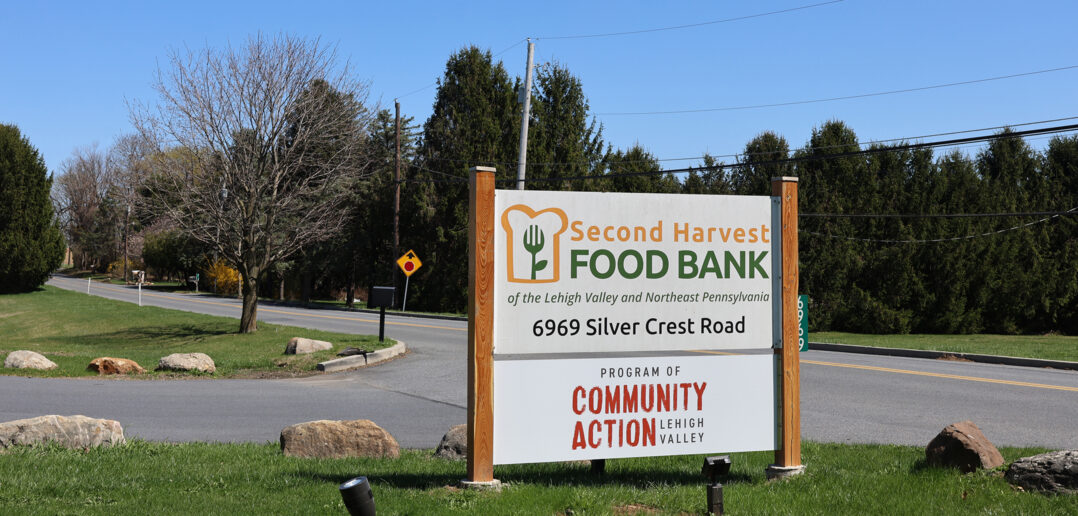
Nicole Felino, the community services manager for Second Harvest Food Bank of the Lehigh Valley and Northeast Pennsylvania, said the past few months have brought a wave of uncertainty for both food banks and the families they serve.
Second Harvest, one of nine Feeding Pennsylvania food banks, distributes roughly 1.5 million pounds of food each month from its facility in Nazareth.
Felino said the food is delivered to about 200 partner pantries across six counties — Northampton, Lehigh, Carbon, Monroe, Pike and Wayne — which handle direct service to families in need.
Felino oversees this network, serving as a liaison between Second Harvest and its local partner agencies.
She said the food bank began noticing increased demand immediately after residents of Pennsylvania were notified SNAP benefits would end on Oct. 16. Felino said she expects the demonstrated need to grow rapidly in the coming weeks.
“We’ve already seen more people walking through pantry doors and more calls coming in,” Felino said.
She also said without clear communication from the government, many families might mistake the lapse in benefits for theft or fraud.
“When someone goes to the grocery store and their card shows a zero balance, they might think their benefits were stolen,” Felino said. “But in reality, the funding is just on hold until the government reopens.”
To address the confusion, Second Harvest has begun distributing flyers to local food pantries, explaining that SNAP benefits are temporarily paused, not removed.
Paula Johnson, the executive director of the Northeast Community Center located in Bethlehem, said this education initiative is crucial because SNAP serves as the initial solution for food insecurity, allowing families to buy culturally and nutritionally appropriate groceries.
“Food pantries were never designed to replace SNAP,” she said. “They’re meant to be supplemental, providing three to five days of food. Now, with benefits paused, we’ve become the first line of defense.”
The food bank recently purchased large quantities of shelf-stable items like rice, beans and canned chicken, as well as fresh produce such as cabbage, carrots and onions to quickly restock local pantries.
Staff have also reached out to grocery and wholesale distributors for surplus donations.
Felino said while food banks are doing everything possible to meet the need, community support is vital.
“We don’t want anyone in Bethlehem — or anywhere in the (Lehigh) Valley — to go hungry,” Felino said. “If you can donate food or funds, now is the time.”
Johnson has spent the last 11 years in North Bethlehem’s Marvine-Pembroke housing development leading efforts to keep families fed.
The Northeast Community Center sits inside a Bethlehem Housing Authority building, holding 775 low-income units that house approximately 2,000 residents all living below the poverty line.
“Our role here is to meet people’s needs directly,” Johnson said. “Right now, food is the biggest one.”
Johnson said the organization is preparing for what could become a crisis.
As a partner of Second Harvest Food Bank of the Lehigh Valley, the Northeast Community Center depends on that network for most of its food supply. With Second Harvest reporting its shelves 60% empty, Johnson said the ripple effects are immediate.
“We were already seeing fewer donations,” Johnson said. “The Boy Scouts used to bring in a huge collection every November, but their troop disbanded. Food and monetary donations are both down and now SNAP is paused. It’s like a double whammy.”
In response, Johnson and her team launched a community-wide call to action.
With the help of a newly hired marketing and development coordinator, the center has organized food collection drives across the city. Bethlehem City Hall and all three Bethlehem Area Public Library branches are now drop-off sites. Local churches and Girl Scout troops are also collecting food.
Johnson said the strain on food pantries is intensifying. The community center currently serves about 350 families each month, a number she expects will rise. The situation, she said, feels reminiscent of the early days of COVID-19 except this time, there’s no emergency funding or government relief to cushion the blow.
A $5 billion contingency fund for the SNAP Program exists, but President Trump’s administration refuses to tap it, saying it will leave little funding left for future emergencies and food shortages.
Johnson said she could feel the tension among families at the pantry.
“People were panicking,” she said. “They told me, ‘Groceries are too expensive. If SNAP goes away, I don’t know how I’ll feed my kids.’ One woman said, ‘If there’s no food here, my kids could die.’ It sounds dramatic, but that’s the reality.”
She said her focus now is on education and transparency, as people need to understand what’s happening and how to help.
Joseph Tramontana, the board president of the Fountain Hill Community Grocery Partnership, said food is going to be even more prioritized for families already dependent on food banks. ,
The Fountain Hill Community Grocery Partnership serves 176 households within the Fountain Hill area. They’ve just recently added 88 new individuals to their list of clientele.
The partnership works with Second Harvest to provide their supply of food and also relies on donations from individuals and churches within the community. With the loss of SNAP benefits, Tramontana said the need for the partnership is sure to increase.
“Whether we can sustain that, I don’t know,” Tramontana said. “When we’re out of food, they’re out of food.”
With the influx of people relying on food banks to feed themselves and their families, Tramontana said governmental supplements would help the pantries out, ensuring that they’re able to serve the community.
If pantries aren’t able to keep up with the increasing demand for food with many already struggling to do so, he said there are impacts that extend beyond hunger.
TramonThe job of keeping children fed falls on their parents, who Tramontana said often neglect their own needs to keep their kids fed with the assistance of their community.
“If the family can’t feed their children, I think that’s going to have an effect on their ability for education,” Tramontana said. “They’re not going to be going to school, they’re going to be staying home in order to get something to eat.”
Second Harvest Food Bank is in collaboration with the Lehigh Valley Community Foundation, United Way and other nonprofits to form an emergency coalition.
Together, they’re seeking funding for food assistance.
“We’re hopeful that funders can help create something like the emergency food grants we saw during COVID,” Johnson said. “In the meantime, we’re doing what we always do — helping however we can.”