
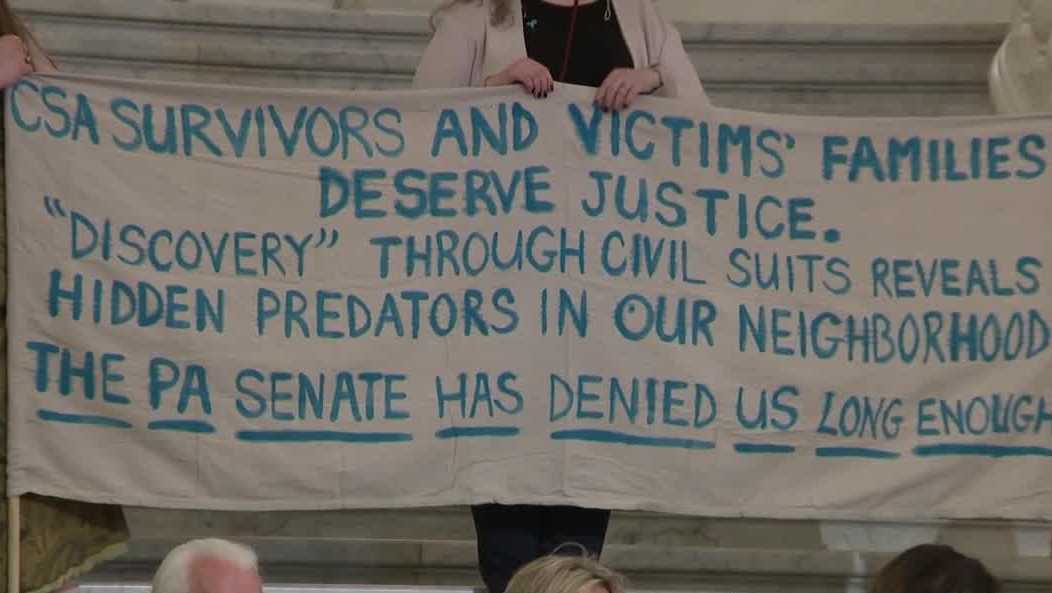
Survivors of childhood sexual abuse in Pennsylvania are hopeful that a change in control of the state Senate will help them win a long-sought opportunity to sue over claims that are too old to bring to court under current law.
 HARRISBURG, Pa. —
Survivors of childhood sexual abuse in Pennsylvania are hopeful that a change in control of the state Senate will help them win a long-sought opportunity to sue over claims that are too old to bring to court under current law.
 Renewed hope for survivors
Democrats won control of the Senate in Tuesday’s election and retained their majority in the state House. Gov. Josh Shapiro, a Democrat, said the day after the election that helping survivors pursue lawsuits would be among his priorities for the coming year.
“We will allow survivors of abuse the ability to confront their abusers in court,” Shapiro said.
Steven Leasure, a survivor from Cumberland County, has long urged lawmakers to open a two-year window for people to file civil lawsuits over childhood sexual abuse, even if the statute of limitations on their claims has expired.
“I’m cautiously optimistic that it’ll happen,” Leasure said. “I think it had bipartisan support.”
Leasure said many survivors were children when they were abused and did not know about the deadlines for filing a lawsuit. He said the opportunity to seek damages is not the only reason survivors want access to the courts.
“I think that most all of us just want to bring to light what some of these organizations did and who they hid,” he said. “And, you know, have our day in court.”
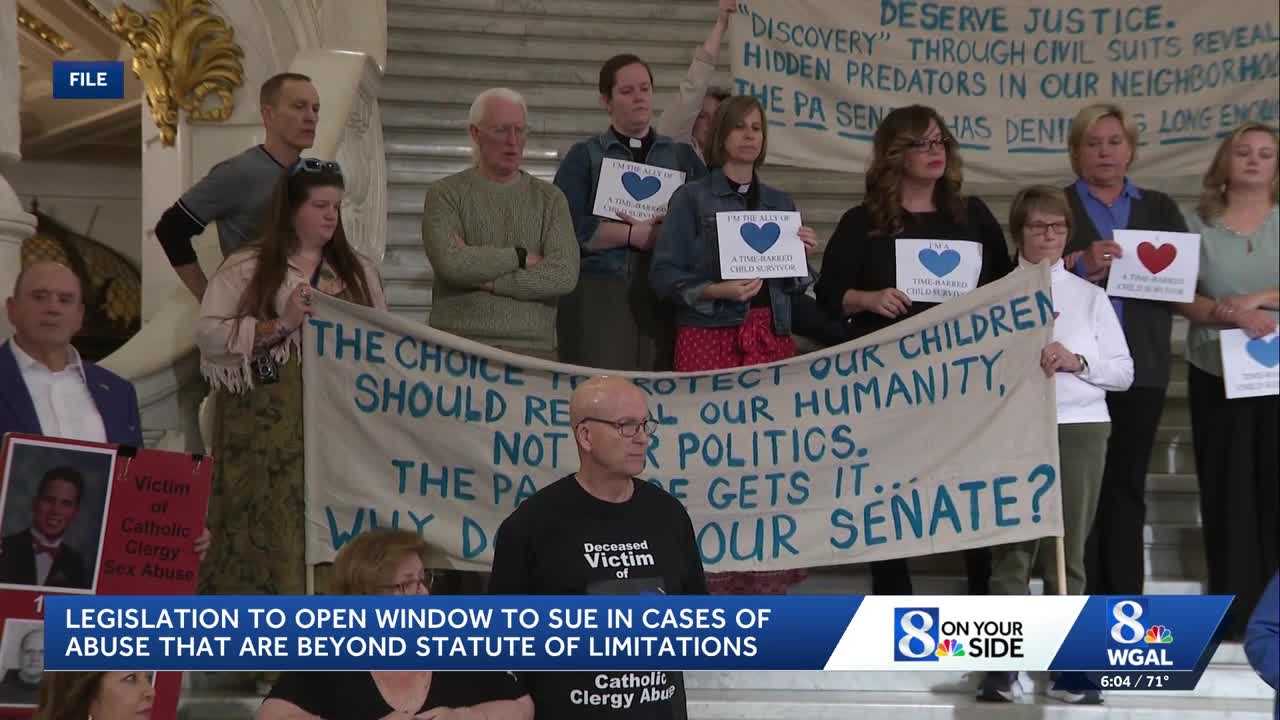 Years of stalled efforts
The push for a two-year window gained momentum after a 2018 Pennsylvania grand jury report detailed decades of child sexual abuse by Catholic clergy and cover-ups by church leaders. The report recommended giving survivors with expired claims an opportunity to sue.
Efforts to enact a window have stalled amid political disagreements. In 2021, a proposed constitutional amendment was derailed after the state Department of State failed to advertise it as required, forcing the amendment process to start over.
State Rep. Nate Davidson, D-Harrisburg, has sponsored proposals to create the window both through a regular law and through a constitutional amendment.
“I’ve been very frustrated by all the good bipartisan bills we sent to the Senate to wither on the vine,” Davidson said.
Senate Republican leaders have favored pursuing the window through a constitutional amendment and have sought to advance it alongside a voter identification measure. Some Republicans have questioned whether a window created through a regular law would withstand a court challenge.
What happens next
Davidson said he hopes the incoming Democratic Senate majority will allow lawmakers to advance the proposal without tying it to other issues. The new legislative session begins in January.
“We can finally deliver the charge that we were given in 2018 from the grand jury report to give those survivors who were denied access to our court system the opportunity to pursue justice,” he said.
A constitutional amendment must pass both chambers in two consecutive legislative sessions before it can go to voters. If the Senate approves the proposal before the current session ends Nov. 30, and both chambers pass it again early next year, it could appear on the ballot in the 2027 primary election.