
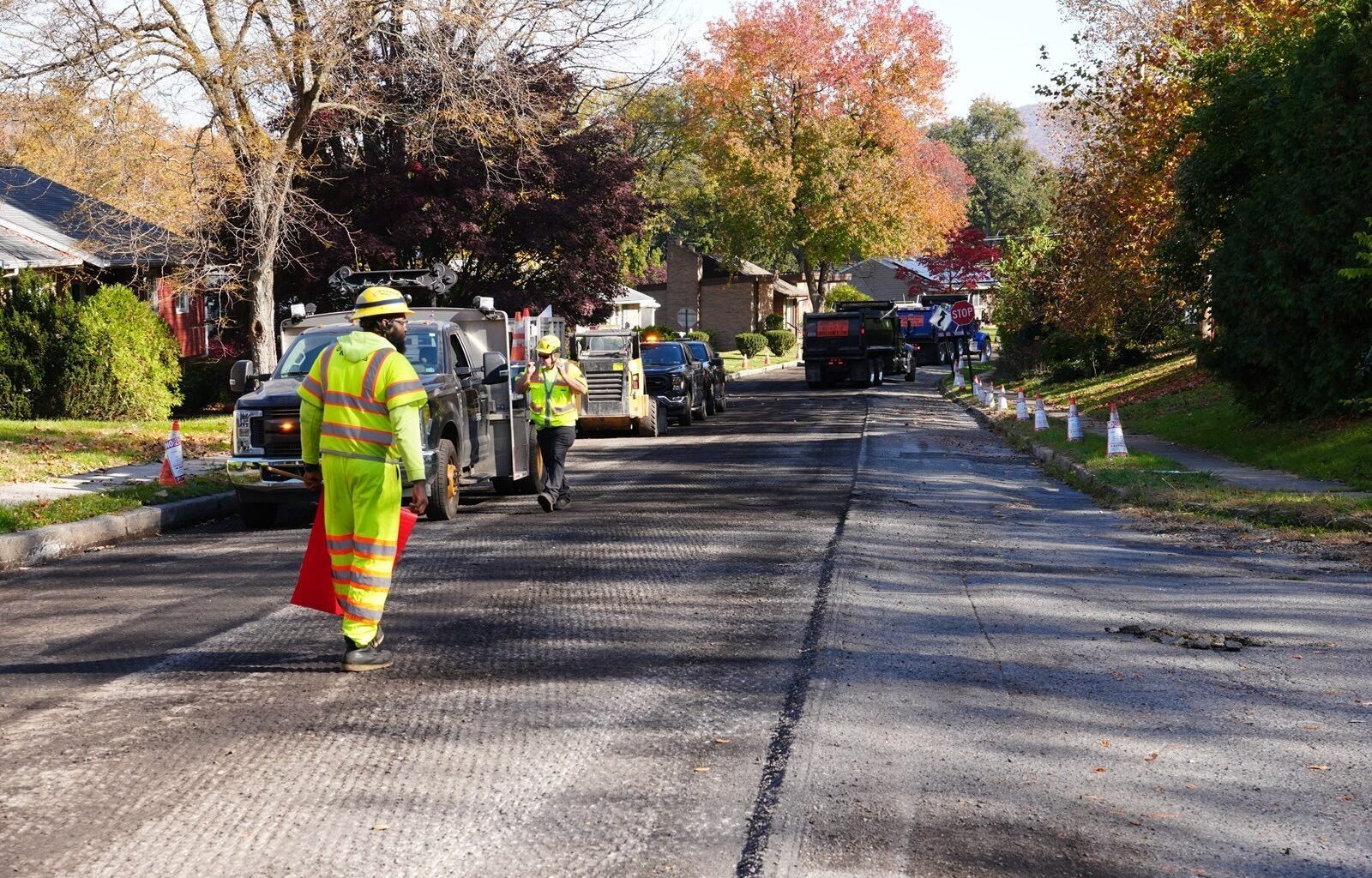
Reading has launched a $2.1 million street paving project that will improve roads in neighborhoods throughout the city.
Mayor Eddie Moran announced the start of the project Monday during a news conference at Summit Chase Drive and Joan Terrace, where work is scheduled to begin.
The project, funded through the state’s Liquid Fuels program, includes milling and resurfacing 15 sections of roadway, including two separate stretches of Ritter Street.
“One of the concerns I hear from residents regularly is the condition of our streets,” Moran said in a release. “Potholes, deteriorating pavement and roads that are long overdue for improvements are issues people deal with every day.”
The mayor said the project is an important step toward addressing those concerns.
“Our streets are part of the foundation of our neighborhoods, and investing in them makes a difference in residents’ everyday lives,” he said.
The following streets are scheduled for improvements:
• Summit Chase Drive: Joan Terrace to the cul-de-sac.
• Joan Terrace: Old Wyomissing to Parkside.
• Orange Street: Muhlenberg Street to Cotton Street.
• Blair Avenue: Schuylkill to Monroe Street.
• Thorn Street: Douglass Street to Oley Street.
• Brookline Plaza: Lancaster Avenue to Liggett Avenue.
• Ritter Street: Greenwich Street to Green Street.
• Ritter Street: Greenwich Street to Windsor Street.
• Reed Street: Buttonwood Street to Walnut Street.
• Canal Street: Riverfront Drive to Seventh Street.
• Hudson Street: Second Street to Thorn Street.
• Pear Street: Elm Street to Buttonwood Street.
• Clymer Street: Hill Road to Mineral Springs Road.
• Gerry Street: McClellan Street to Hancock Boulevard.
• Rose Street: Walnut Street to Buttonwood Street.
Crews will remove the existing top layer of asphalt and replace it with new pavement.
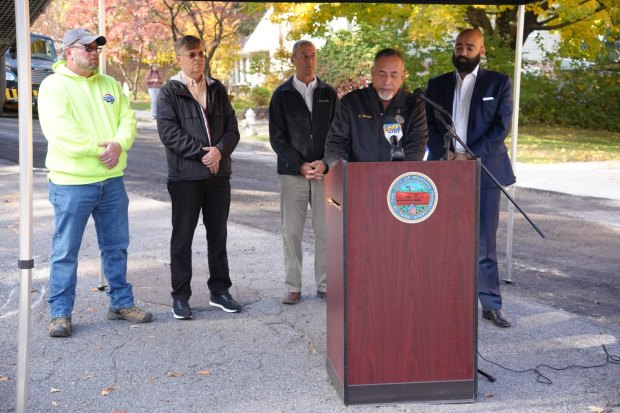 Mayor Eddie Moran and city officials launched a $2.1 million street paving project Monday. Fifteen roads throughout the city will be paved and improved. (Courtesy of Reading)
The project also includes installing ramps compliant with the Americans with Disabilities Act at intersections where accessible ramps are not in place.
Paving is expected to be completed by the end of November, while installation of the accessibility ramps is anticipated to continue through mid-2027.
Residents should expect temporary traffic and parking restrictions as construction progresses. City officials said additional information about work schedules and potential disruptions will be released as it becomes available.
“These improvements are about more than just smoother roads,” Moran said. “They help improve traffic safety, enhance the appearance of our neighborhoods and support property values.”
The project is part of the city’s ongoing investment in neighborhood infrastructure.
According to the administration, Reading has paved 26.25 miles of streets since Moran took office in January 2020.
“Revitalization means investing in every part of our city, including the streets and neighborhoods where our residents live,” the mayor said.